Xu Collection, Lower Volume
Radical: Leaf (yè)
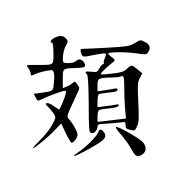
Kui
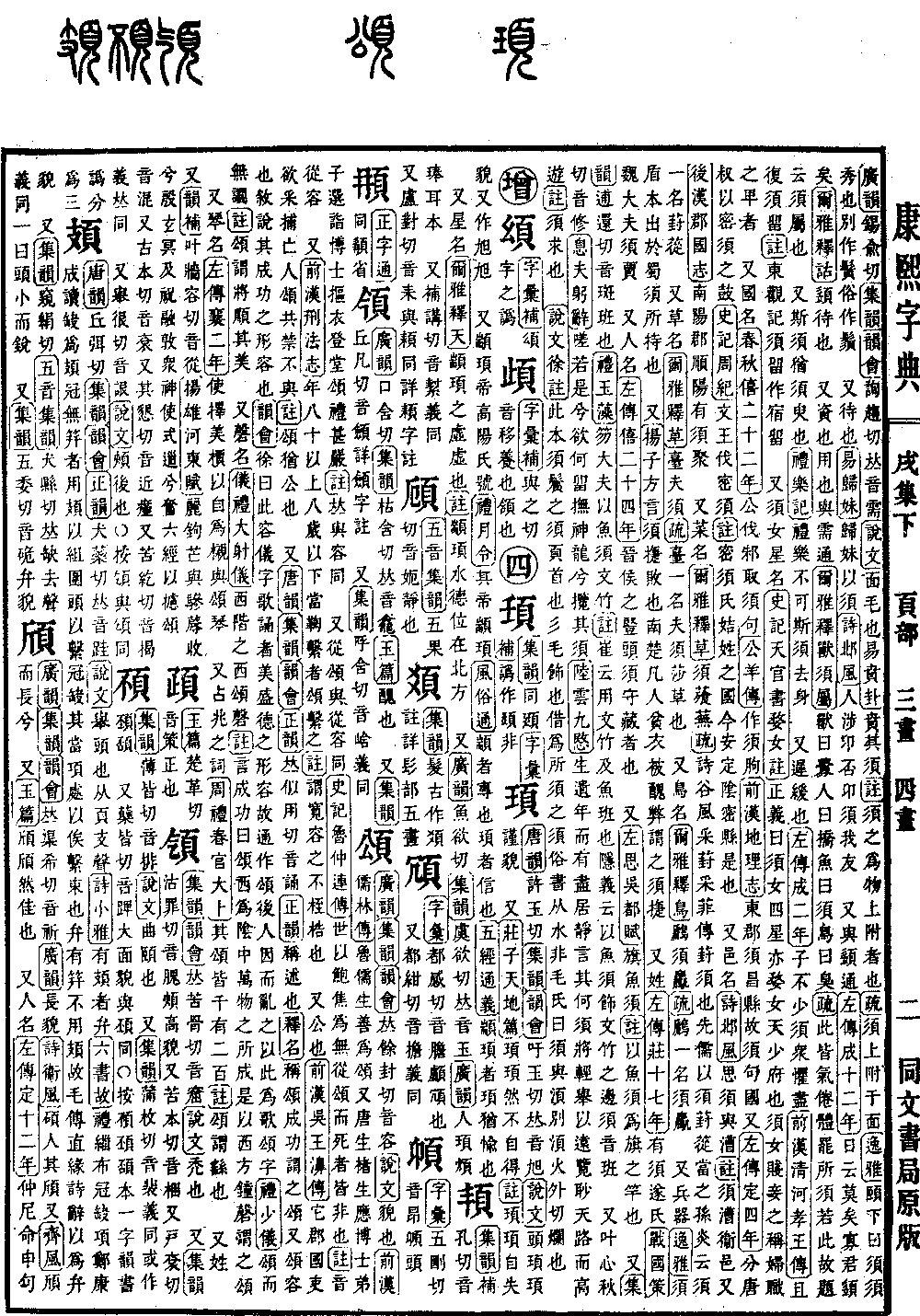
Kangxi strokes: 13
Page 1400, Entry 16
Pronounced kui (rising tone).
According to the Explaining Graphs and Analyzing Characters (Shuowen Jiezi): The action of raising one's head. Derived from Leaf, with Zhi acting as a phonetic component.
In the Book of Odes (Shijing), Xiaoya section: There is the kui-style ceremonial cap.
According to the Six Categories of Writing (Liushu Gu): In the ritual system, the black cloth cap is worn on the crown of the head. Zheng Kangcheng reads this as kui. A cap without a hairpin uses a kui, which consists of a silk ribbon wrapped around the head to secure the cap. At the position on the cap corresponding to the nape of the neck, it is used to bind and fasten it. A cap with a hairpin does not require a kui; therefore, the Mao Commentary interprets the text of the poem directly as the appearance of the cap.
Also pronounced juan (falling tone) and pronounced xuan (falling tone). The meaning is the same.
Another theory suggests it refers to a head that is small and pointed.
Also pronounced gui (rising tone). The appearance of a cap.