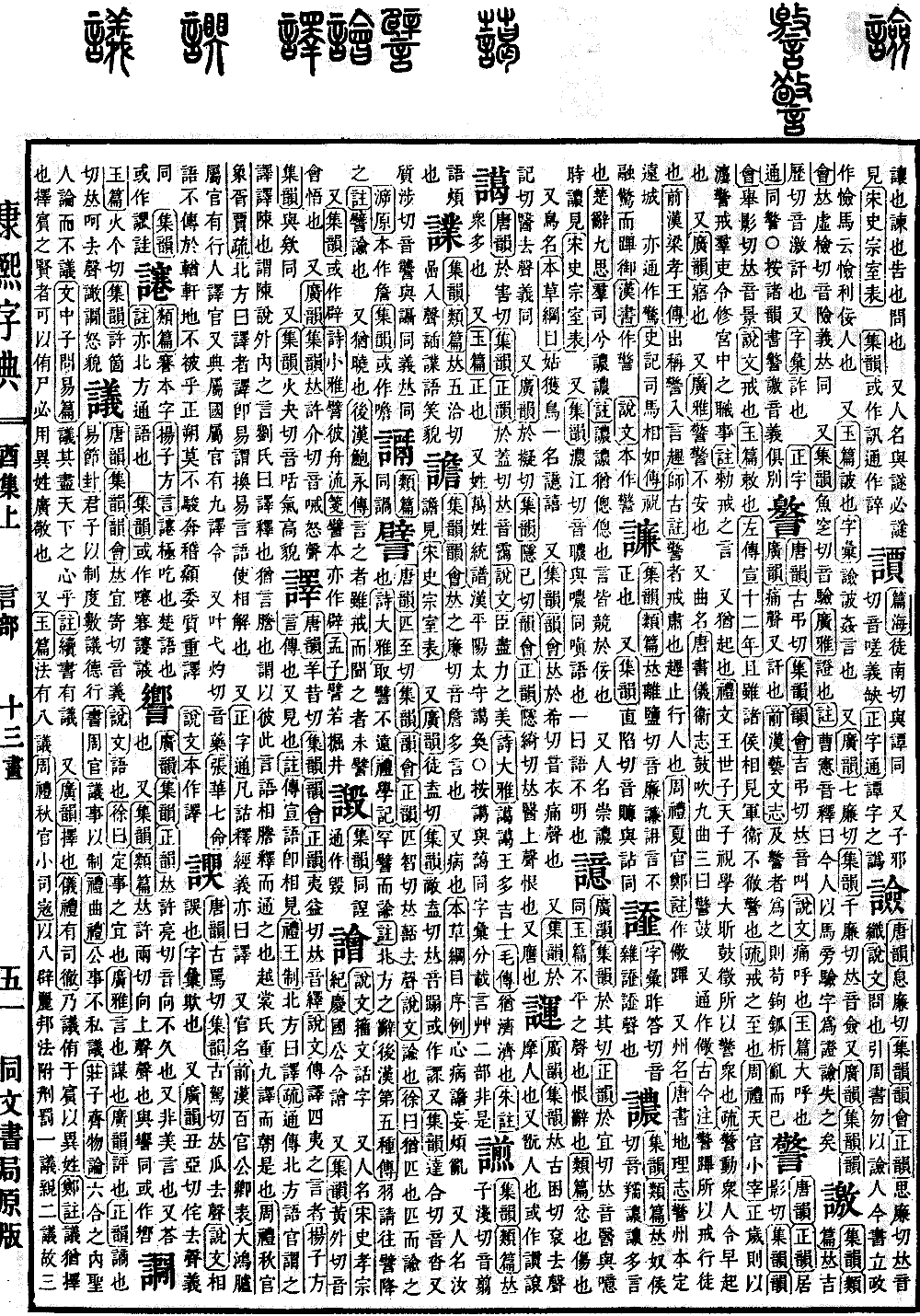
You Collection, Upper Volume
Radical: Speech (yán)
Translation: 20 strokes
Page 1183, Entry 01
Tang Rhymes (Tangyun): Pronounced yi. Collected Rhymes (Jiyun), Rhyme Meetings (Yunhui), and Correct Rhymes (Zhengyun): Pronounced yi. Pronounced yi (falling tone).
According to the Explaining Graphs and Analyzing Characters (Shuowen): A person who conveys the languages of minority groups from the four corners of the earth.
According to the Dialects (Fangyan) by Yang Xiong: To convey. Also, to meet. The commentary states: To convey and announce words is to meet.
According to the Book of Rites (Liji), Regulations of the King: In the north, it is called yi. The sub-commentary states: An official who conveys and communicates the language of the north is called yi. Yi means to explain. It refers to explaining different internal and external languages. Liu says: Yi means to explain. It is like saying to copy. It refers to copying and explaining each other's languages to communicate. The Yueshang tribe coming to pay court after multiple translations is an example.
According to the sub-commentary by Jia Gongyan on the Rites of Zhou (Zhouli), Autumn Official, Xiangxu: In the north, it is called yi. Yi means change, referring to changing language to make them mutually intelligible.
Also, according to the Zhengzitong: Anything that explains the meaning of classics is also called yi.
Also, an official title. According to the Tables of Officials and Ministers in the History of the Former Han (Qianhan), the Grand Master of Ceremonies had subordinate officials called travelers and translators. Also, the Director of Dependent States had subordinate officials called the Nine Translators.
Also, rhyming with the pronunciation yue. According to the Seven Exhortations (Qi Ming) by Zhang Hua: When language does not pass through the light carriage envoys, and the land does not accept the imperial calendar, there is no one who does not rush to knock their heads and offer gifts after multiple translations.
The original form of the character according to the Explaining Graphs and Analyzing Characters (Shuowen) was written with the graph for change.