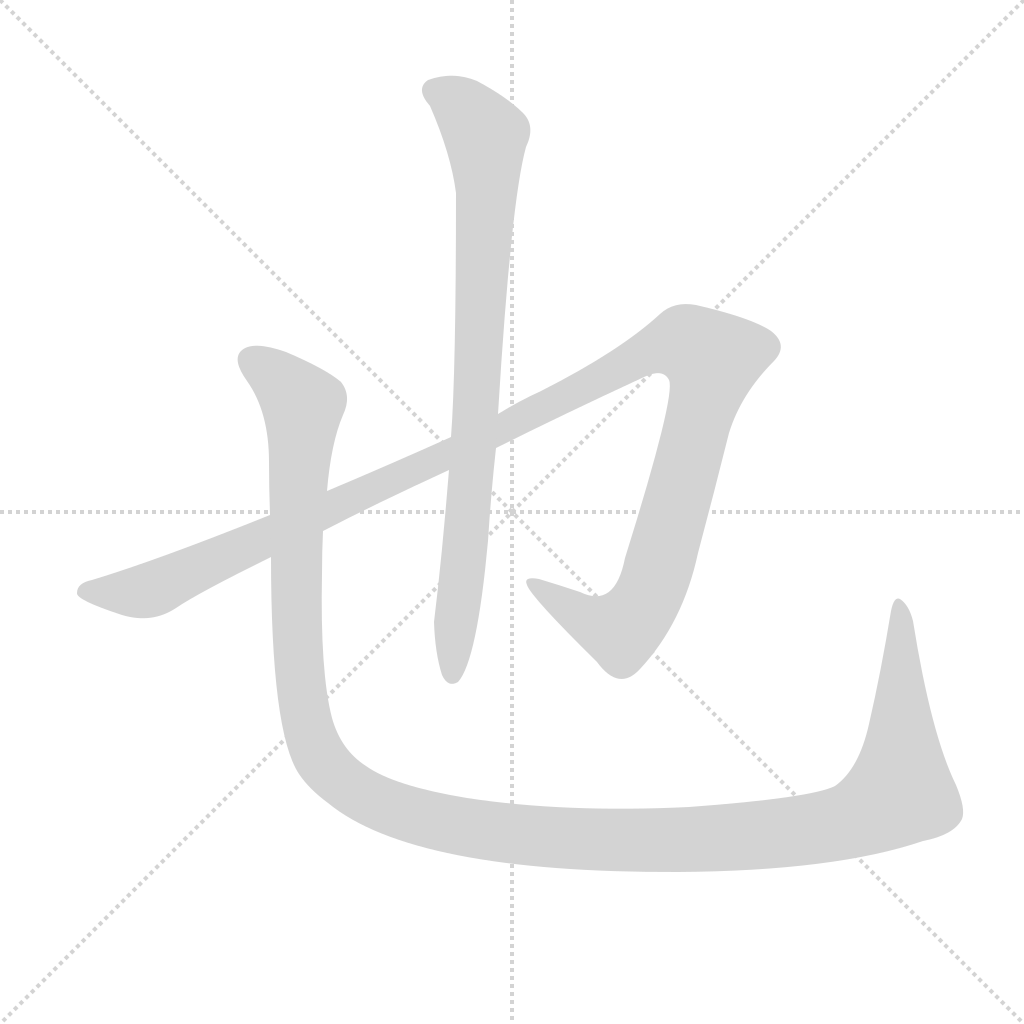
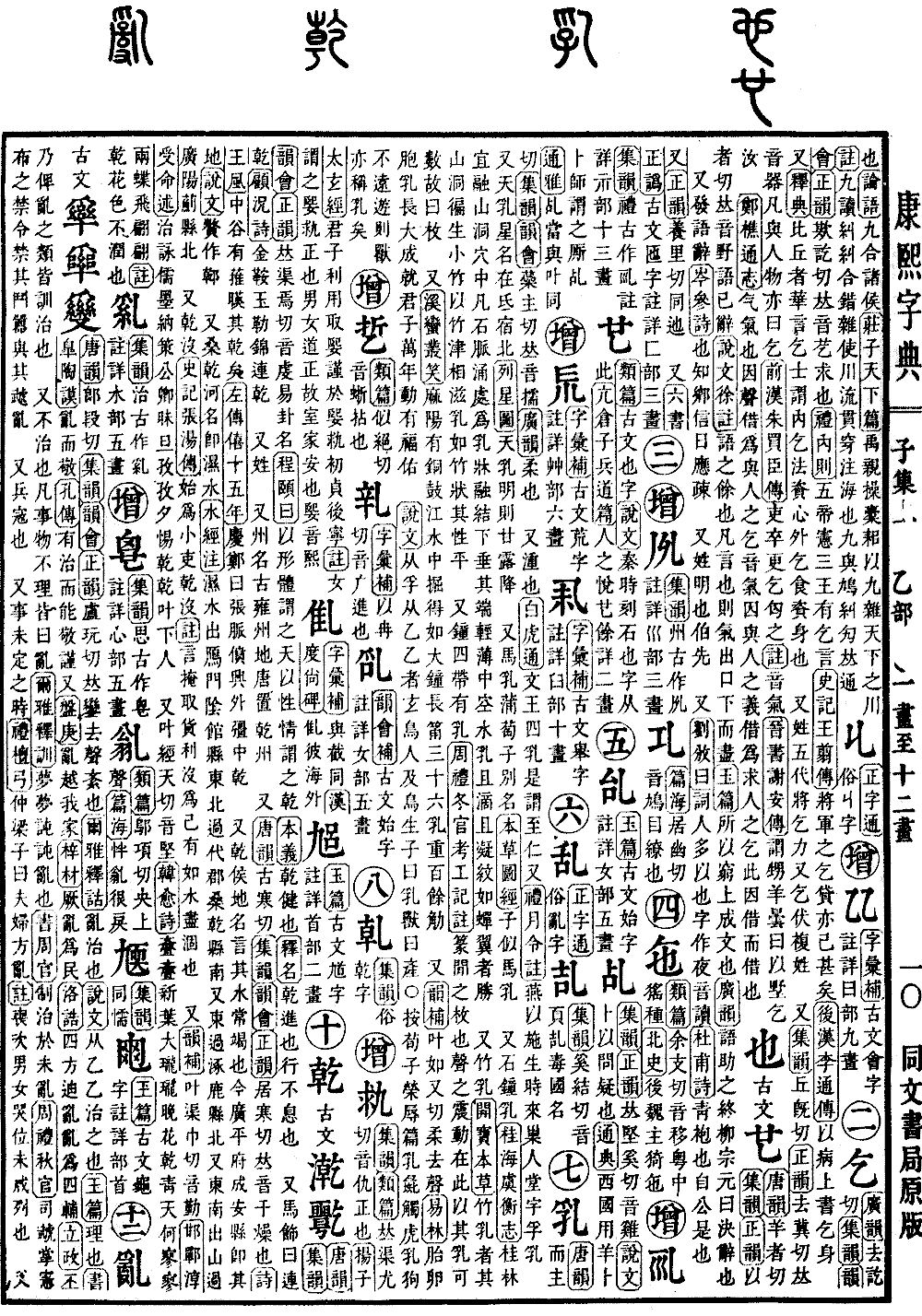
Zi Collection, Page Position: Upper. Radical: Second (yǐ). 3 strokes. Page 84, Column 4.
Tang Rhymes (Tangyun) indicates the pronunciation as yang-zhe. Collected Rhymes (Jiyun) and Correct Rhymes (Zhengyun) indicate the pronunciation as yi-zhe. It is pronounced similar to ye.
Definition: A function word indicating the end of a sentence. Xu Xuan's commentary on Explaining Graphs and Analyzing Characters (Shuowen Jiezi) states it refers to the lingering sound of a sentence. Whenever the word ye is spoken, the breath is expelled from the mouth and comes to an end. Jade Chapters (Yupian) explains it as an auxiliary particle used to conclude the preceding text and form a sentence. Expanded Rhymes (Guangyun) describes it as a sentential auxiliary for termination. Liu Zongyuan refers to it as a decisive term, which is a modal particle expressing judgment.
Also used as an initial particle. An example from a poem by Cen Shen: Indeed I know news from home should be sparse.
Also a surname. There was a person named Ye Boxian during the Ming Dynasty.
Additionally, according to the records of Liu Ban: Literati often pronounce the word ye with the sound of ye (night). An example from a poem by Du Fu: The blue robe itself is also from the office, follows this pronunciation.
Furthermore, Correct Rhymes (Zhengyun) provides the pronunciation yang-li, which is interchangeable with the word yi (winding).
Moreover, Correcting Errors in the Six Scripts (Liushu Zheng'e) points out that ye is the ancient form of the character yi (a water vessel). A detailed commentary can be found under Radical: Box (fāng) at the three-stroke section.