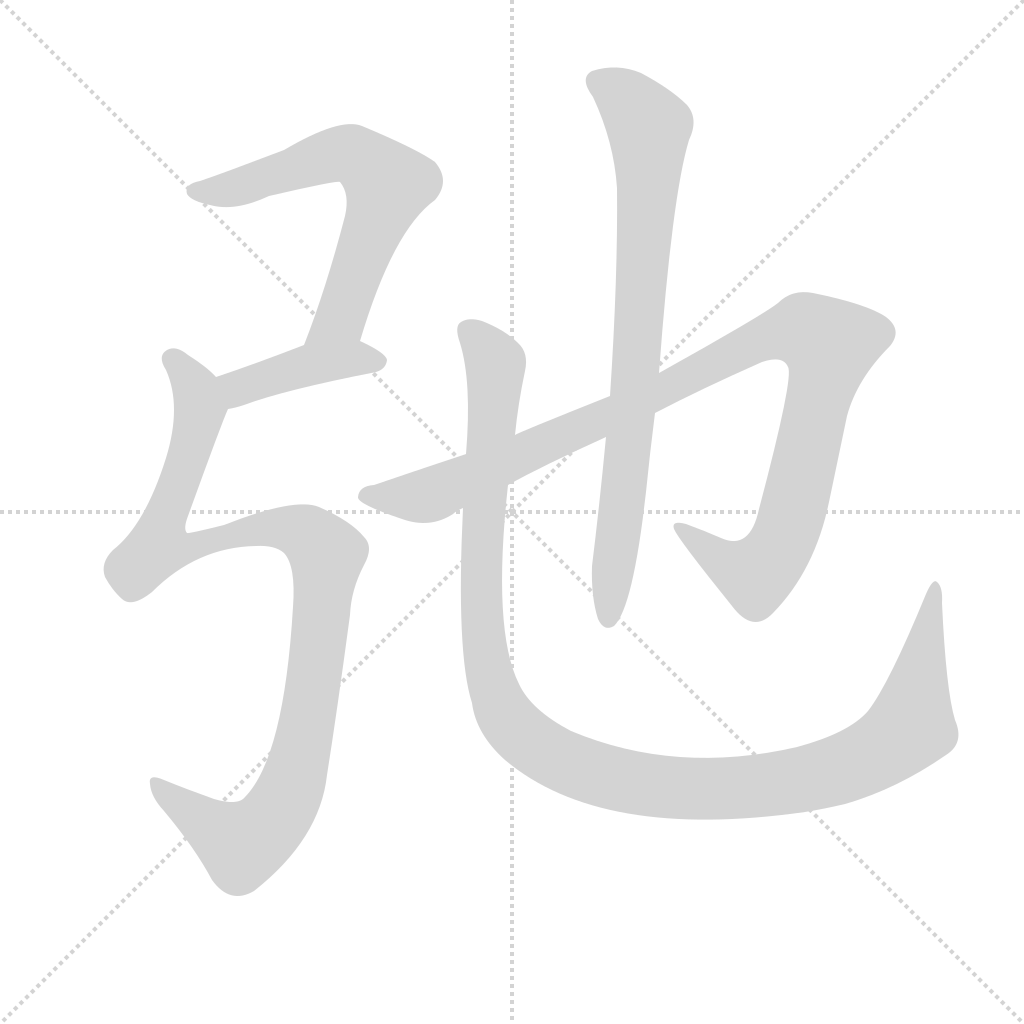
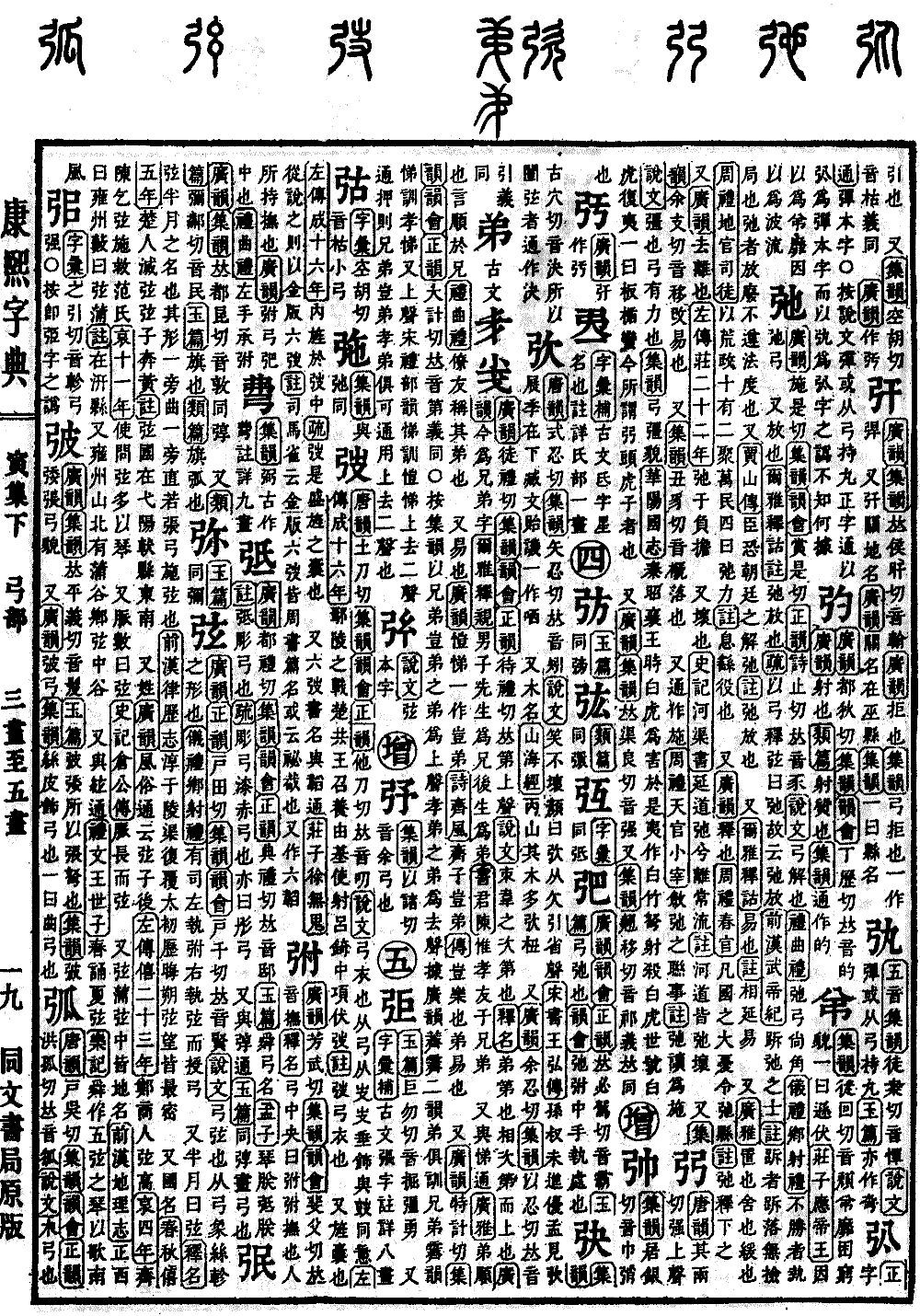
Yin Collection, Lower Volume
Radical: Bow (gōng)
Kangxi strokes: 6
Page 357, Entry 06
Pronounced shǐ.
According to the Shuo Wen Jiezi (Explaining Single and Analyzing Compound Characters), it means to unstring a bow.
In the Book of Rites (Liji), it is written: when holding an unstrung bow, the horn ends should be kept upright.
In the Book of Etiquette and Ceremonial (Yili), it is written: those who do not win shall hold an unstrung bow.
Also means to relax or release.
In the commentary to the Erya (Approaching Elegance), it is written: to relax is to let go.
In the sub-commentary, it explains: when a bow is released from its string, it is called relaxation, hence it is defined as relaxation or release.
In the History of the Former Han (Qianshu), specifically the Annals of Emperor Wu, it mentions unrestrained and lax men. The commentary explains: those who are unrestrained are those who are loose and lack proper conduct. Those who are lax are those who are released or abandoned and do not follow laws or regulations.
In the Biography of Jia Shan, it is written: I fear that the imperial court will become loose and lax. The commentary explains: to be lax is to be released.
Also means to change. The commentary explains: to delay or exchange.
Also means to place, to abandon, or to slacken.
In the Rites of Zhou (Zhouli), specifically the Ministry of Earth, Minister of Instruction, it discusses the twelve policies to gather the people during times of famine, the fourth of which is to relax labor. The commentary explains: this means to suspend forced labor.
Also means to release.
In the Rites of Zhou (Zhouli), specifically the Ministry of Spring, it mentions that for any great national mourning, orders are given to lower the musical instruments. The commentary explains: to lower means to release and take down.
Also means to depart or separate.
In the Zuo Tradition (Zuozhuan), specifically the twenty-second year of Duke Zhuang, it mentions abandoning one's burden.
Also means to collapse or ruin.
In the Records of the Grand Historian (Shiji), specifically the Treatise on the Yellow River and Canals, it mentions that the path of the channel collapsed and moved away from its regular flow. The commentary explains: the river channels all collapsed or were ruined.
Pronounced yí. To change or alter.
Pronounced chǐ. To fall or drop.
Also used interchangeably with the character for extend or apply (shī).
In the Rites of Zhou (Zhouli), specifically the Ministry of Heaven, Assistant Prime Minister, it mentions collecting and settling affairs. The commentary explains: here, the character is read as extend or apply.