Chen Collection, Middle Volume
Radical: Tree (mù)
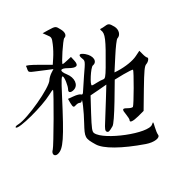
杝
Kangxi Strokes: 7
Page 512, Entry 10
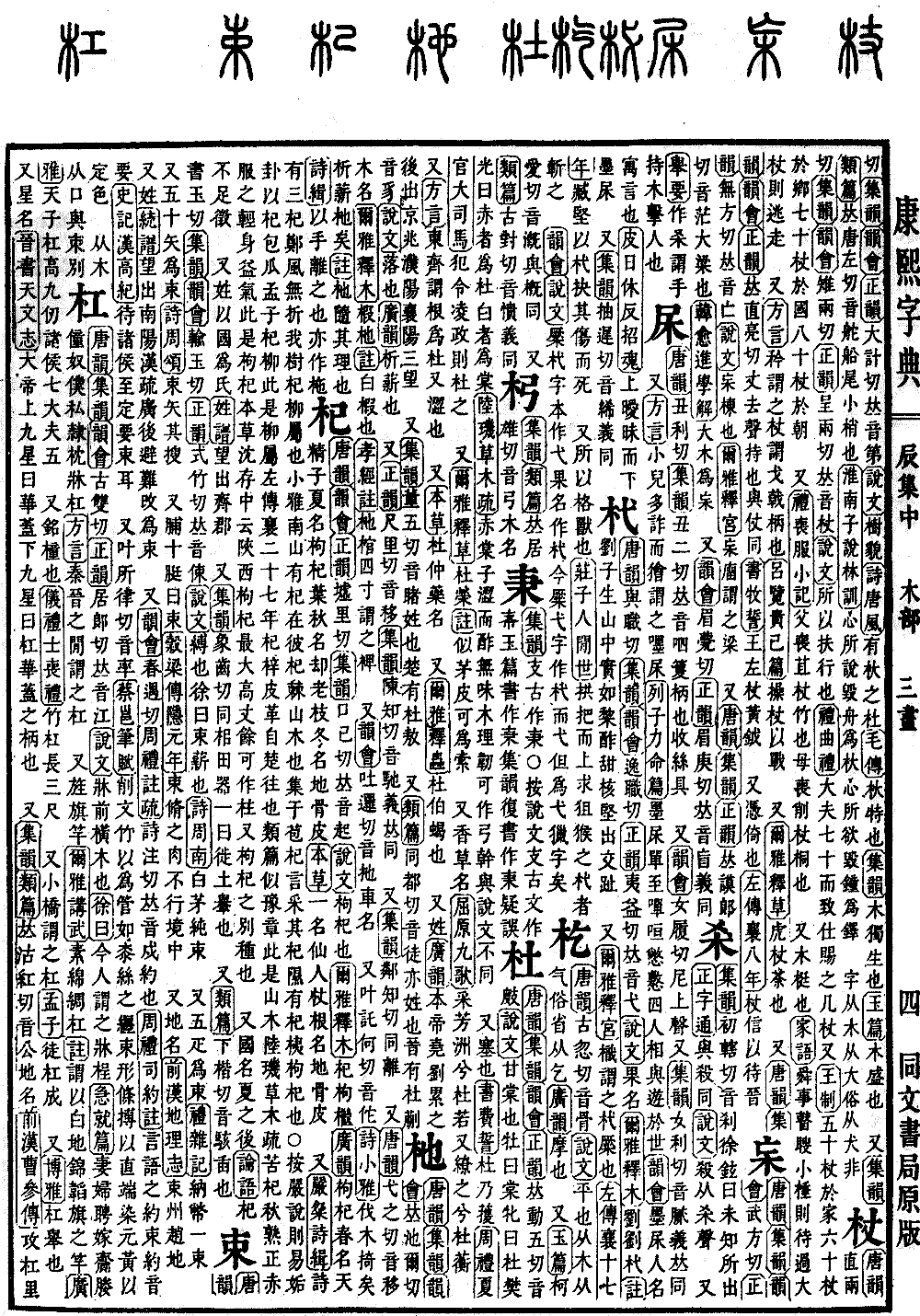
Tang Rhymes (Tangyun), Collection of Rhymes (Jiyun), and Rhyme Meeting (Yunhui): Pronounced zhi (rising tone).
Shuowen (Explaining Graphs and Analyzing Characters): To fall.
Guangyun (Expanded Rhymes): To split firewood.
Also, Correct Rhymes (Zhengyun): Pronounced chi (rising tone).
Collection of Rhymes (Jiyun): Pronounced chi (rising tone). The meaning is the same.
Also, Collection of Rhymes (Jiyun): Pronounced li (rising tone), same as li.
Also, Tang Rhymes (Tangyun): Pronounced yi. A name of a tree.
Erya (Approaching Elegance), Explaining Trees: The jia tree is the yi tree.
Note: It is the white jia tree.
Note on the Classic of Filial Piety (Xiaojing): A coffin four inches thick is called a bi.
Also, Rhyme Meeting (Yunhui): Pronounced tuo. A type of carriage.
Also, rhyming with tuo he: Pronounced tuo.
Book of Odes (Shijing), Minor Odes: Felling the tree and pulling it, splitting the firewood and separating it.
Note: Yi means to follow its grain.
Exegesis of the Odes (Shiji): To separate it with the hands. Also written as yi.
Correction: Correct Rhymes (Zhengyun) states chi (rising tone), pronounced yi. I caution that chi (rising tone) cannot be pronounced yi, therefore I have corrected it to pronounce chi (rising tone).