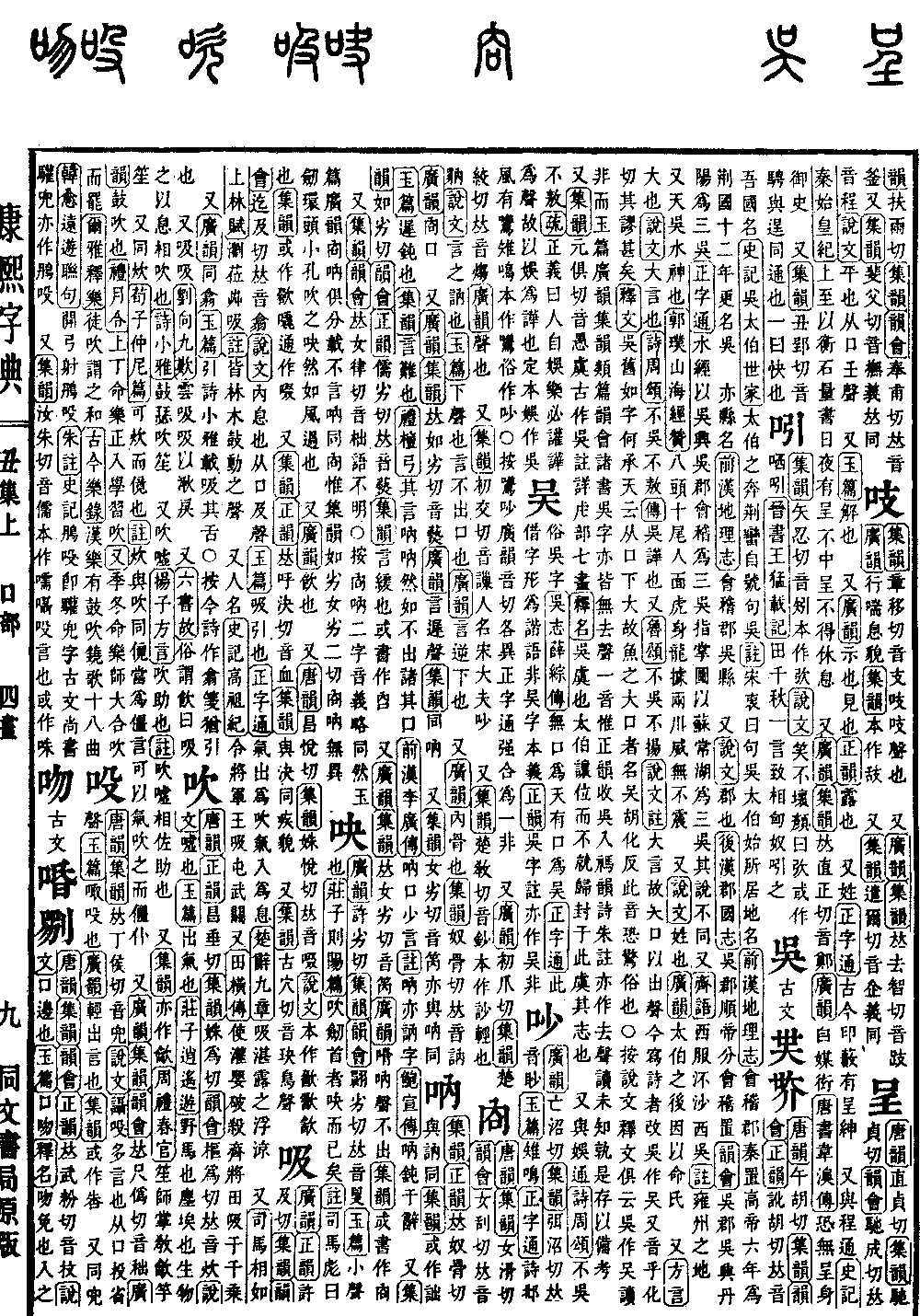
Chou Collection, Upper Volume
Radical: Mouth (kǒu)
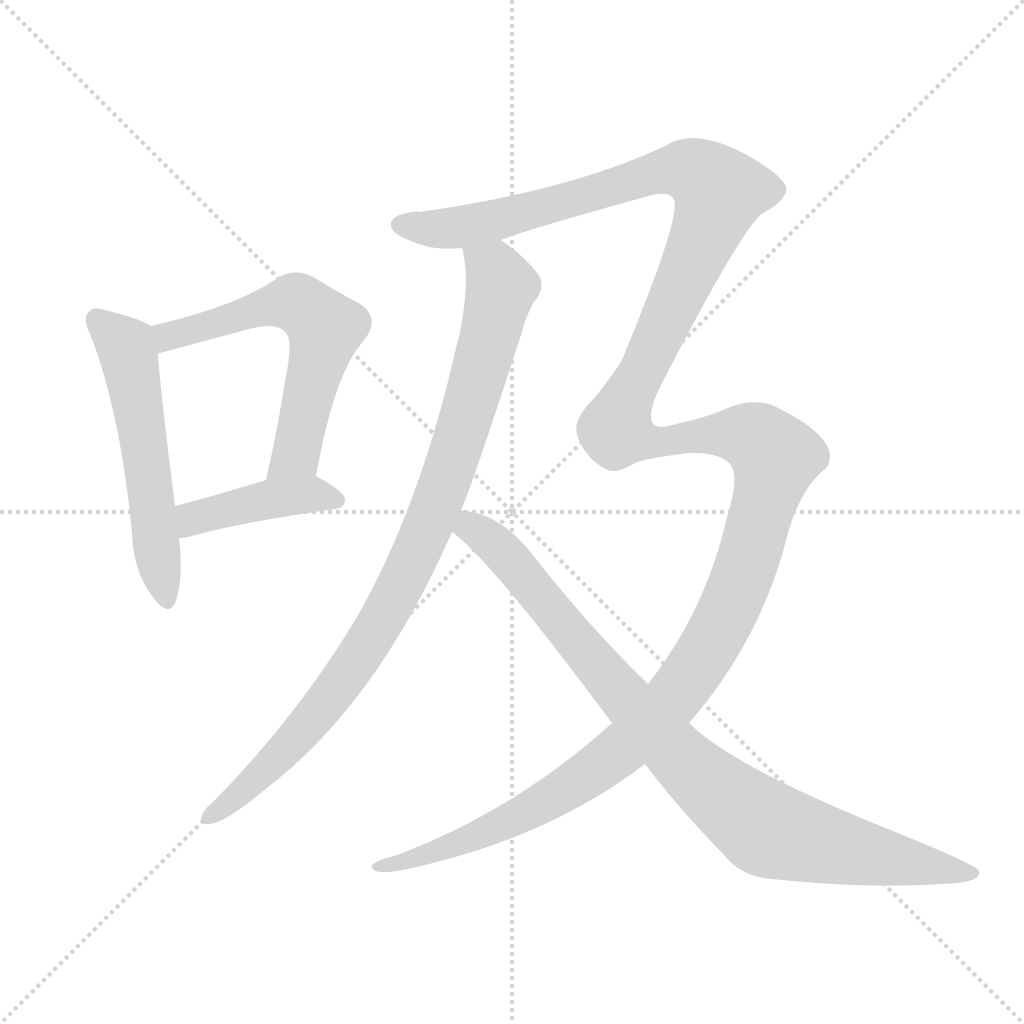
Character: 吸
Kangxi stroke count: 7
Page 179, Entry 12
Pronounced xi.
According to the Shuowen Jiezi (Analytical Dictionary of Characters), it means to inhale. It is formed from the radical for mouth and a phonetic element.
According to the Yupian (Jade Chapter), it means to draw in.
According to the Zhengzitong (Proper Character Guide), when breath exits it is called blowing, and when breath enters it is called inhaling.
In the Nine Chapters (Jiuzhang) of the Songs of Chu (Chuci): To inhale the floating coolness of the deep dew.
Also, in the Shanglin Rhapsody (Shanglin Fu) by Sima Xiangru: Rustling and shaking, a sound of movement. Note: These all refer to the sound of forest trees moving.
Also used in personal names. In the Records of the Grand Historian (Shiji), Biography of Emperor Gaozu: Ordered General Wang Xi to garrison at Wu Pass.
Also, in the Biography of Tian Heng: Sent Guan Ying to defeat and kill the Qi general Tian Xi at Qiansheng.
Also, according to the Guangyun (Broad Rhymes), it is the same as the character xi (to harmonize or to close).
According to the Yupian, it quotes the Book of Odes (Shijing), Lesser Odes: To pull back his tongue. Note: In the current version of the Book of Odes, the character used is xi (to harmonize/close). The commentary states it means to draw in.
Also, xi-xi (gasping or agitated): In the Nine Laments (Jiutan) by Liu Xiang: Clouds gathering and swirling in an agitated manner.
Also, according to the Liushu Gu (Origins of the Six Writings), it is commonly used to mean to drink.