Xu Collection, Upper Volume
Radical: Metal (jīn)
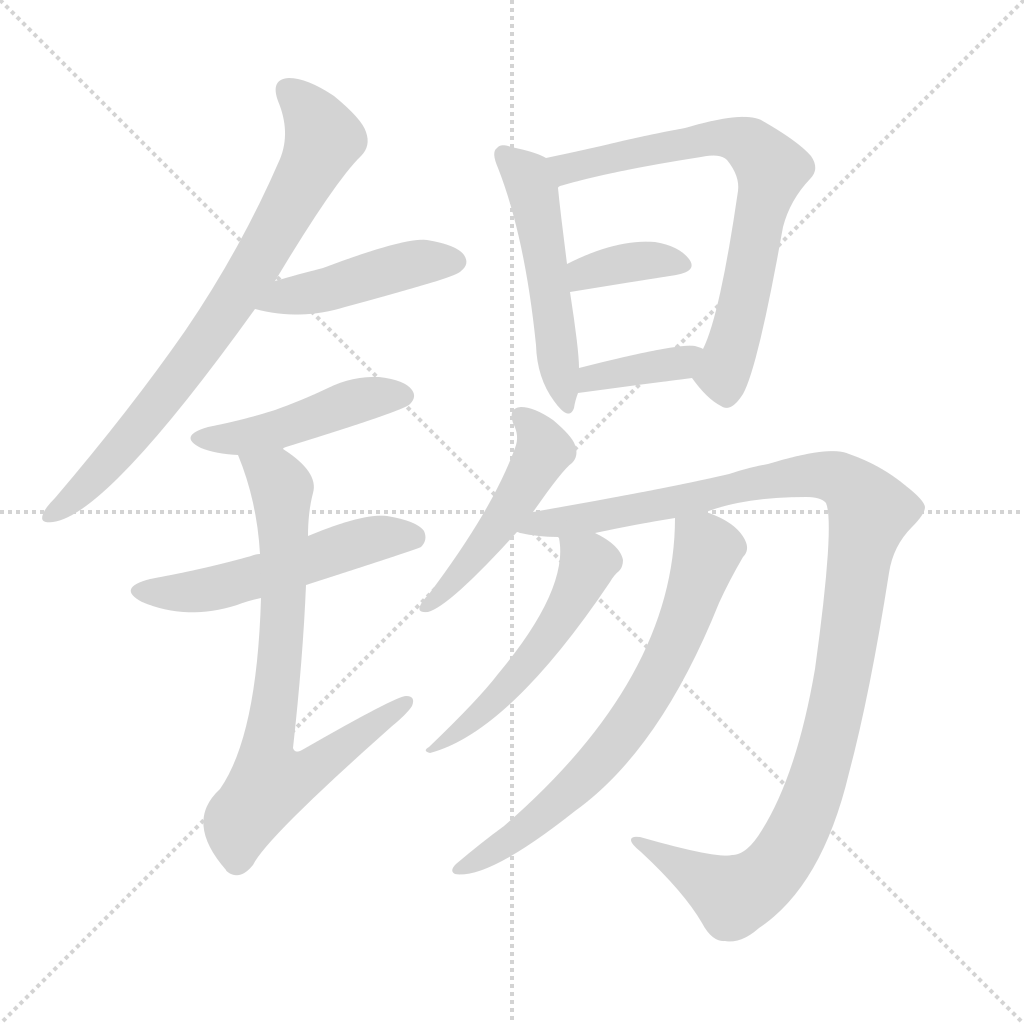
Tin (Xī)
Kangxi Strokes: 16
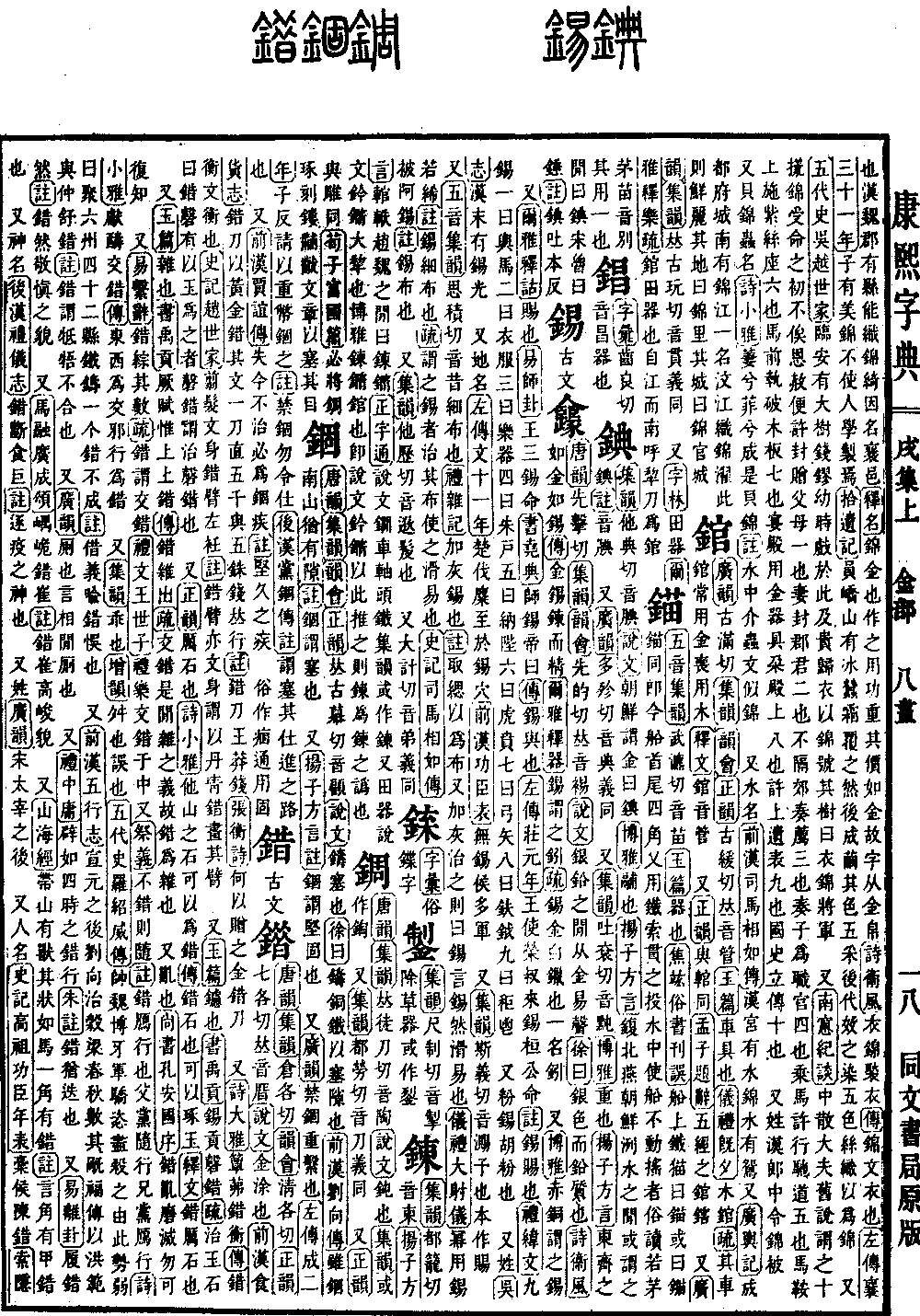
Page 1312, Entry 01
Ancient form. Pronounced xī.
According to the Book of Tang (Tangyun): Pronounced xī. According to the Collection of Rhymes (Jiyun) and the Compendium of Rhymes (Yunhui): Pronounced xī.
According to the Explaining Graphs and Analyzing Characters (Shuowen): A substance between silver and lead. Composed of the radical for metal with yi acting as a phonetic component.
Xu says: It has the color of silver and the quality of lead.
Book of Odes (Shijing), Odes of Wei: Like gold and like tin.
Commentary: Gold and tin are refined to become pure.
Erhu: Dictionary of Definitions (Erya): Tin is also known as yin.
Commentary: Tin is white lead metal. Another name for it is yin.
Also, according to the Broad Record of Things (Boya): Red copper is also called tin.
Also, according to the Erhu: Dictionary of Definitions (Erya): It means to bestow.
Book of Changes (Yijing), Shi Hexagram: The king bestowed commands three times.
Book of Documents (Shujing), Canon of Yao: The ministers suggested to the Emperor.
Commentary: To bestow means to give.
Zuo Commentary (Zuozhuan), First Year of Duke Zhuang: The King sent Rong Shu to bestow the mandate upon Duke Huan.
Note: To bestow means to grant.
Book of Rites (Liji), Weiwen: The Nine Bestowals are: first, carriages and horses; second, clothing; third, musical instruments; fourth, red doors; fifth, ceremonial steps; sixth, guards; seventh, bows and arrows; eighth, axes and halberds; ninth, black millet wine.
Also, powder tin refers to white lead powder.
Also, a surname.
Records of the Three Kingdoms (Wuzhi): In the late Han dynasty, there was someone named Xi Guang.
Also, a place name.
Zuo Commentary (Zuozhuan), Eleventh Year of Duke Wen: The state of Chu attacked the state of Jun, reaching as far as Xixue.
History of the Former Han (Qianhan), Table of Meritorious Officials: The Marquis of Wuxi, Duojun.
Also, according to the Collection of Rhymes (Jiyun): Pronounced sī. To give. Originally written as bestow.
Also, according to the Five Sounds Collection of Rhymes (Wuyinjiyun): Pronounced xī. Fine cloth.
Book of Rites (Liji), Miscellaneous Records: Adding ashes to the fine cloth.
Note: Taking ramie to make cloth, and then treating it with ashes, it is called xi, meaning it is smooth and soft.
Ceremonial and Rituals (Yili), Great Archery Rites: The covers are made of xi or ramie cloth.
Note: Xi is fine cloth.
Commentary: It is called xi because treating the cloth makes it smooth and easy to handle.
Records of the Grand Historian (Shiji), Biography of Sima Xiangru: Wearing fine cloth.
Note: Xi means cloth.
Also, according to the Collection of Rhymes (Jiyun): Pronounced tì. A hairpiece.
Also, pronounced dì. Meaning is the same.
Verification: Zuo Commentary (Zuozhuan), Eleventh Year of Duke Wen: Chu attacked the state of Jun, reaching as far as Xixue. In accordance with the original text, the character for Mi has been corrected to the character for Jun.