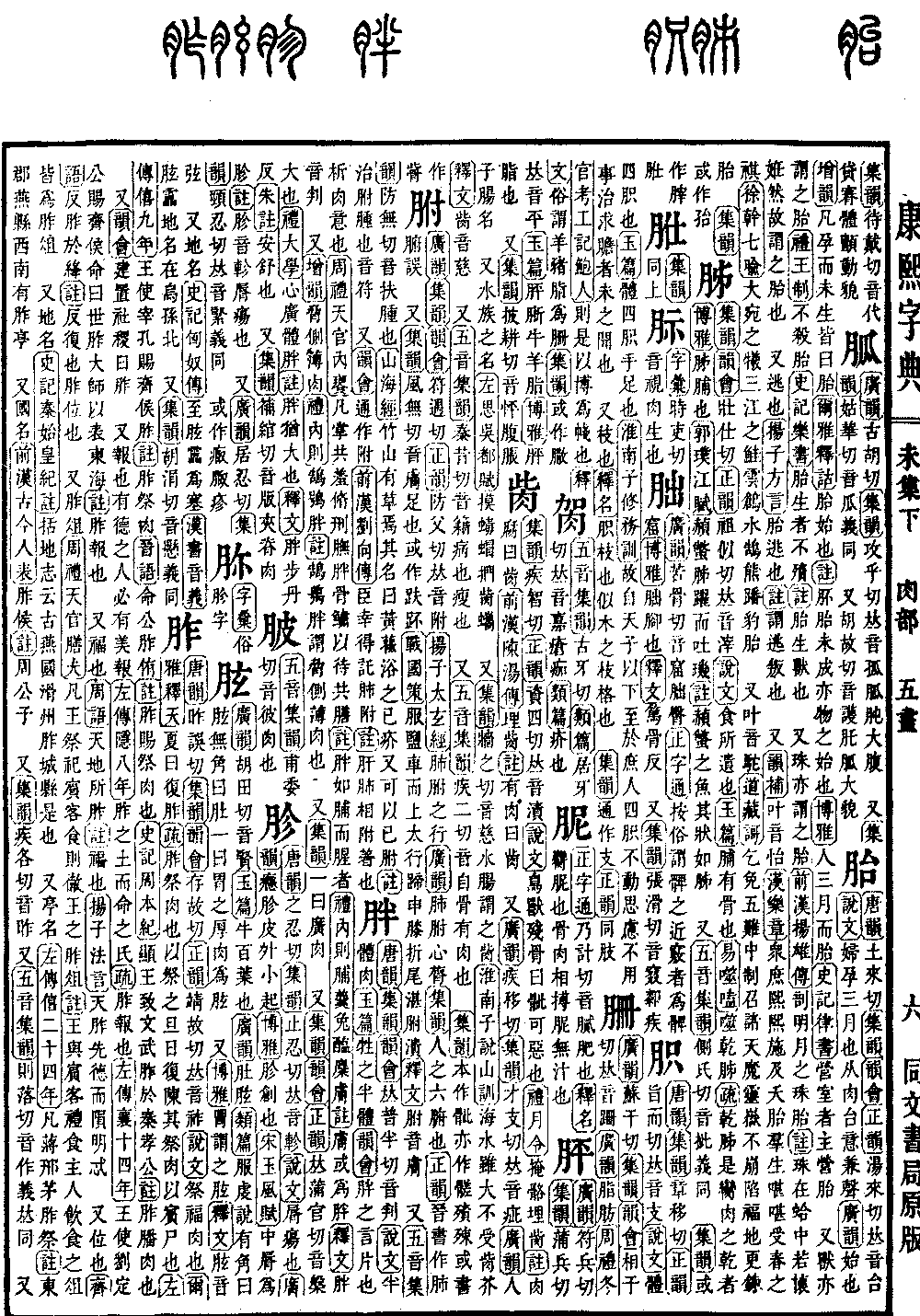
Wei Collection, Lower Volume
Radical: Meat (ròu)
Kangxi Strokes: 11
Page 978, Entry 02
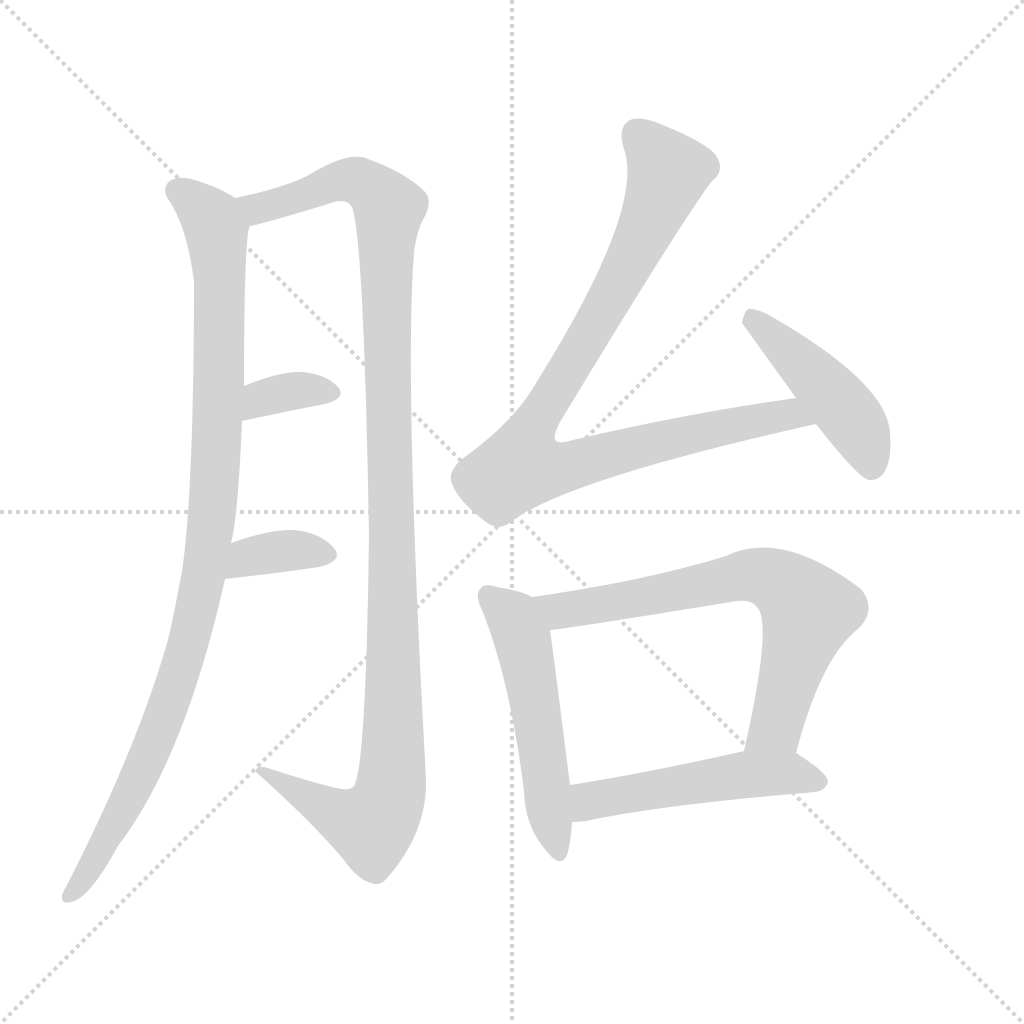
Pronounced tai.
According to the Explaining Graphs and Analyzing Characters (Shuowen Jiezi), it refers to a woman three months pregnant. The character is formed with the radical for meat, while the phonetic component indicates both meaning and sound.
According to the Broad Rhymes (Guangyun), it means beginning.
According to the Expanded Rhymes (Zengyun), anything pregnant but not yet born is called tai.
Erya, Explaining Ancient Terms (Erya Shigu): Tai means beginning.
Commentary: An embryo not yet fully formed is the initial state of a thing.
According to the Erudite Antiquities (Boya), a human pregnancy of three months is called tai.
Records of the Grand Historian (Shiji), Treatise on the Pitch Pipes (Lüshu): The Ying Chamber star governs the gestation of embryos.
Additionally, the young of animals are also called tai.
Book of Rites (Liji), Royal Regulations (Wangzhi): Do not kill pregnant animals.
Records of the Grand Historian (Shiji), Treatise on Music (Yueshu): Viviparous animals do not die from difficult labor.
Commentary: Viviparous refers to animals.
Additionally, pearls are also called tai.
History of the Former Han (Qian Hanshu), Biography of Yang Xiong: Splitting open the bright, moon-like pearl embryo.
Commentary: Pearls inside an oyster shell are like being pregnant, thus they are called tai.
It also carries the meaning of avoiding or fleeing.
Yangzi, Dialects (Fangyan): Tai means to flee.
Commentary: This refers to fleeing and rebelling.
Additionally, in the Rhyme Supplement (Yunbu), it rhymes with yi.
Han Music Chapter: The people are harmonious and joyful, with grace extending to young children and the unborn. All things are flourishing, receiving the blessings of spring.
Xu Gan, Seven Persuasions (Qiyu): Sacrificial animals from Dayuan, fish and salmon from the three rivers. The crane among the clouds and the swan on the water, bear paws and leopard fetuses.
It also rhymes with tuo.
Daoist Canon Songs (Daozang Ge): Seeking relief from the five calamities, subduing the summoned demons from all directions. The spiritual mountain will not collapse or sink, and the blessed land is even better for cultivating the immortal embryo.
According to the Compilation of Rhymes (Jiyun), it is sometimes written in a variant form (tai).