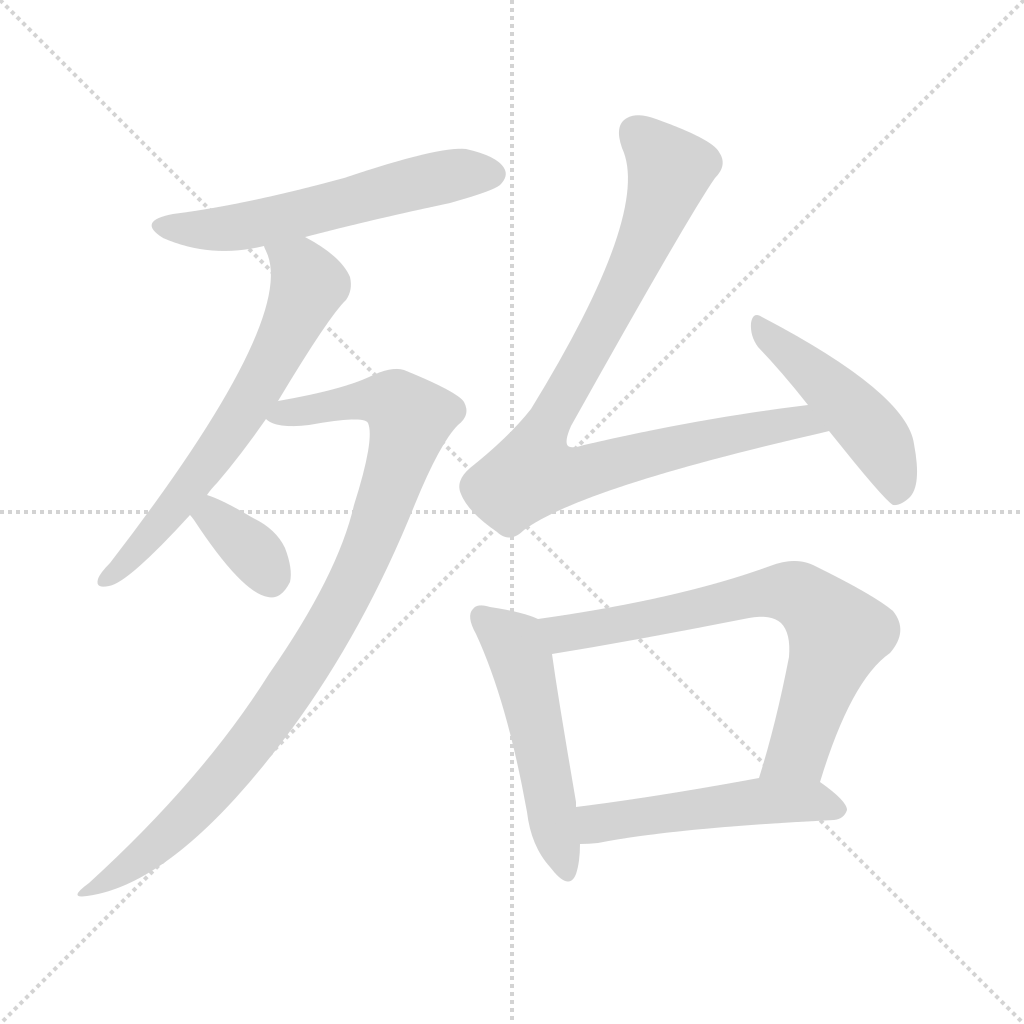
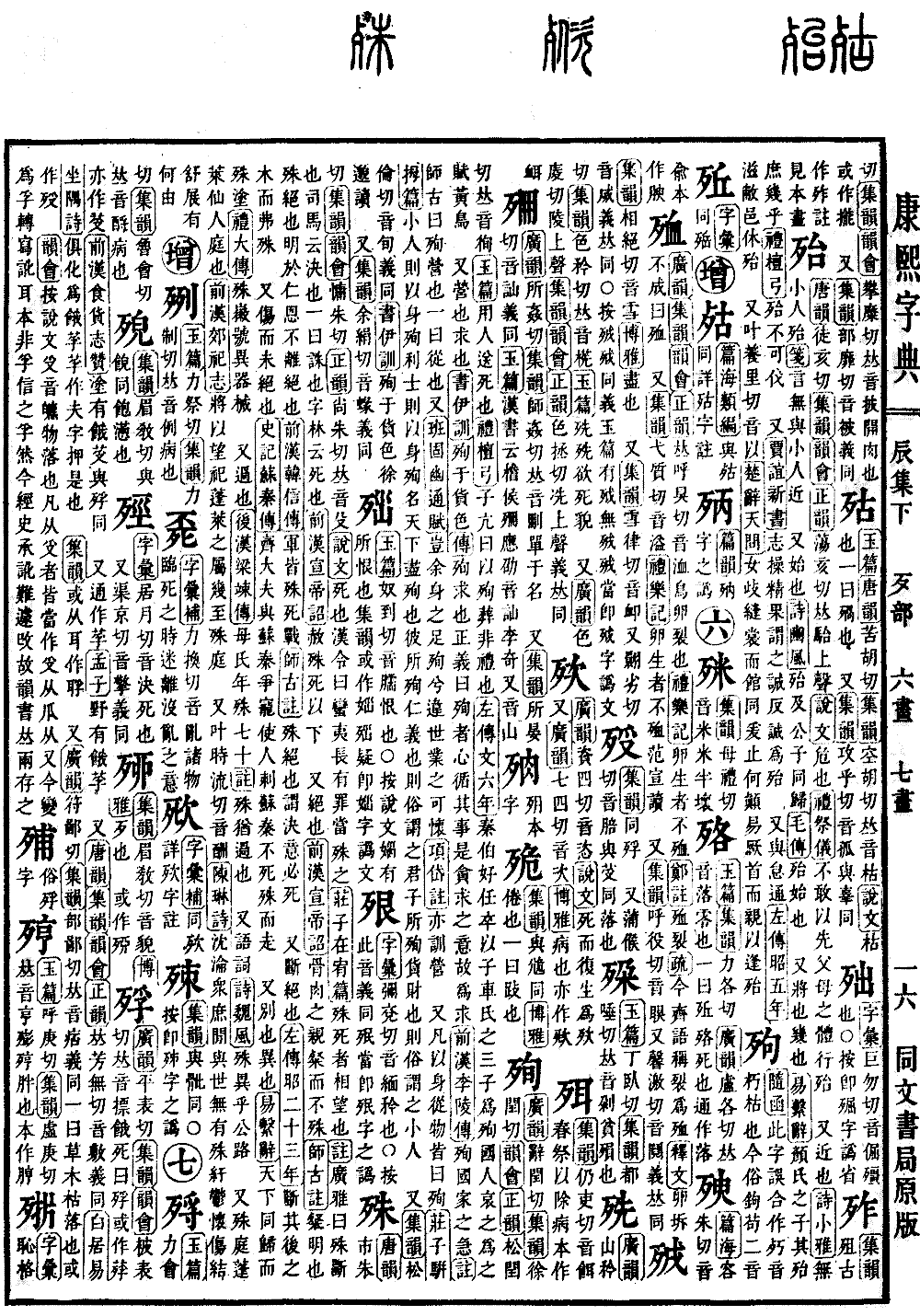
Chen Collection, Lower Volume
Radical: Bad (dǎi)
Kangxi Strokes: 9
Page 580, Entry 04
Pronounced dài (rising tone).
Shuowen Jiezi (Dictionary of Explaining Graphs): The meaning is danger.
Book of Rites (Liji), Sacrificial Meaning: One does not dare to use the remains of one's late parents to perform dangerous acts.
Also means near or approaching.
Book of Odes (Shijing), Minor Odes of the Kingdom: Do not approach petty people.
Commentary (Jian): This speaks of not drawing near to petty people.
Also means beginning.
Book of Odes (Shijing), Odes of Bin: Just beginning to return with the young lord.
Mao Commentary: Dài means the start.
Also indicates about to, or nearly.
Book of Changes (Yijing), Appended Remarks: The son of the Yan family is almost (there, approaching the realm of the sages).
Book of Rites (Liji), Tan Gong: It is likely not possible to wage war.
Also from Jia Yi, New Book (Xinshu): Ambition and integrity that are sincere and resolute are called sincerity, and the opposite of sincerity is called dai.
Also interchangeable with the character for lazy (dài).
Zuo Commentary (Zuozhuan), Fifth Year of Duke Zhao: Causing our state to become exhausted and lazy.
Also pronounced yǐ (rising tone).
Songs of Chu (Chuchu), Heavenly Questions: Nüqi sewed garments, and two people lived in the same hall. Why did she suddenly lose her head, and encounter such a perilous fate?
Textual Research: In the Book of Rites (Liji), Sacrificial Meaning, the text reads: One does not dare use the remains of one's late parents to perform dangerous acts. We have corrected the original text from Sacrificial Ceremonies to Sacrificial Meaning accordingly.