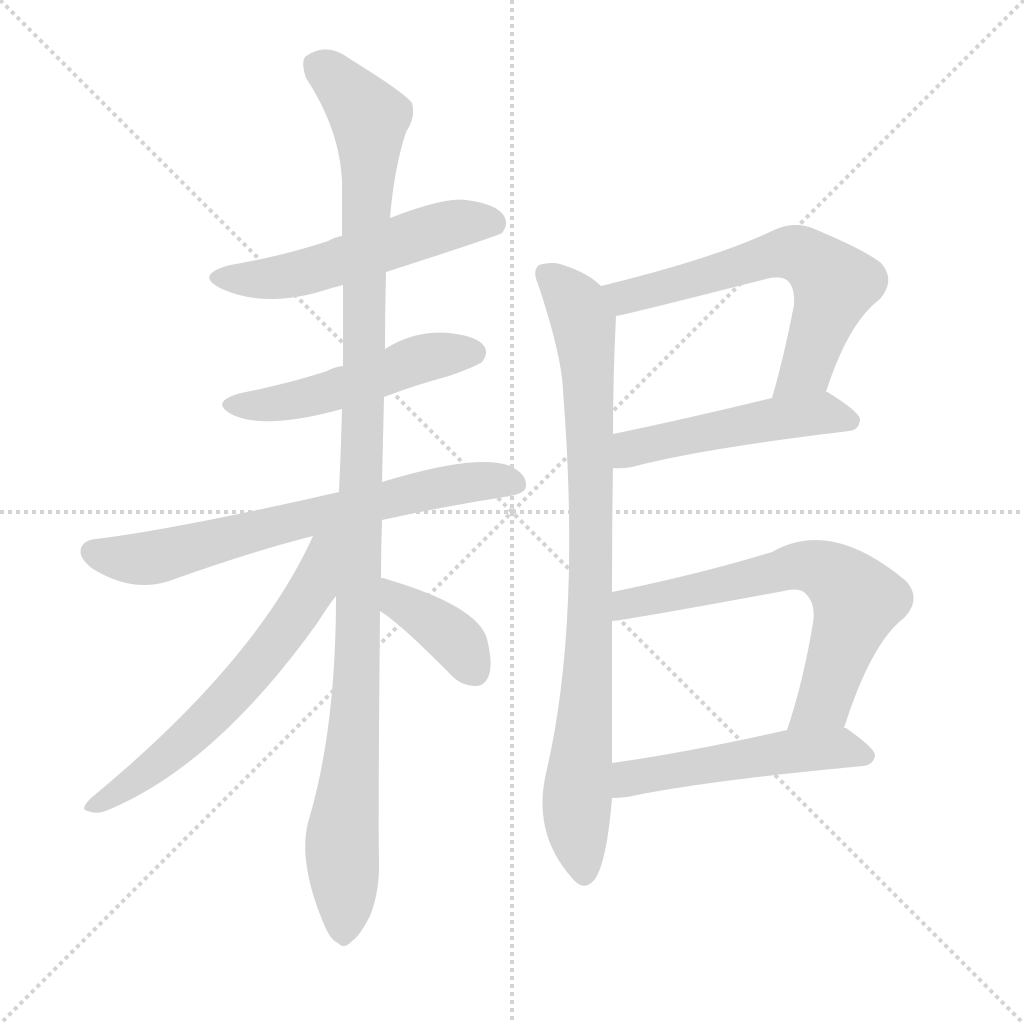
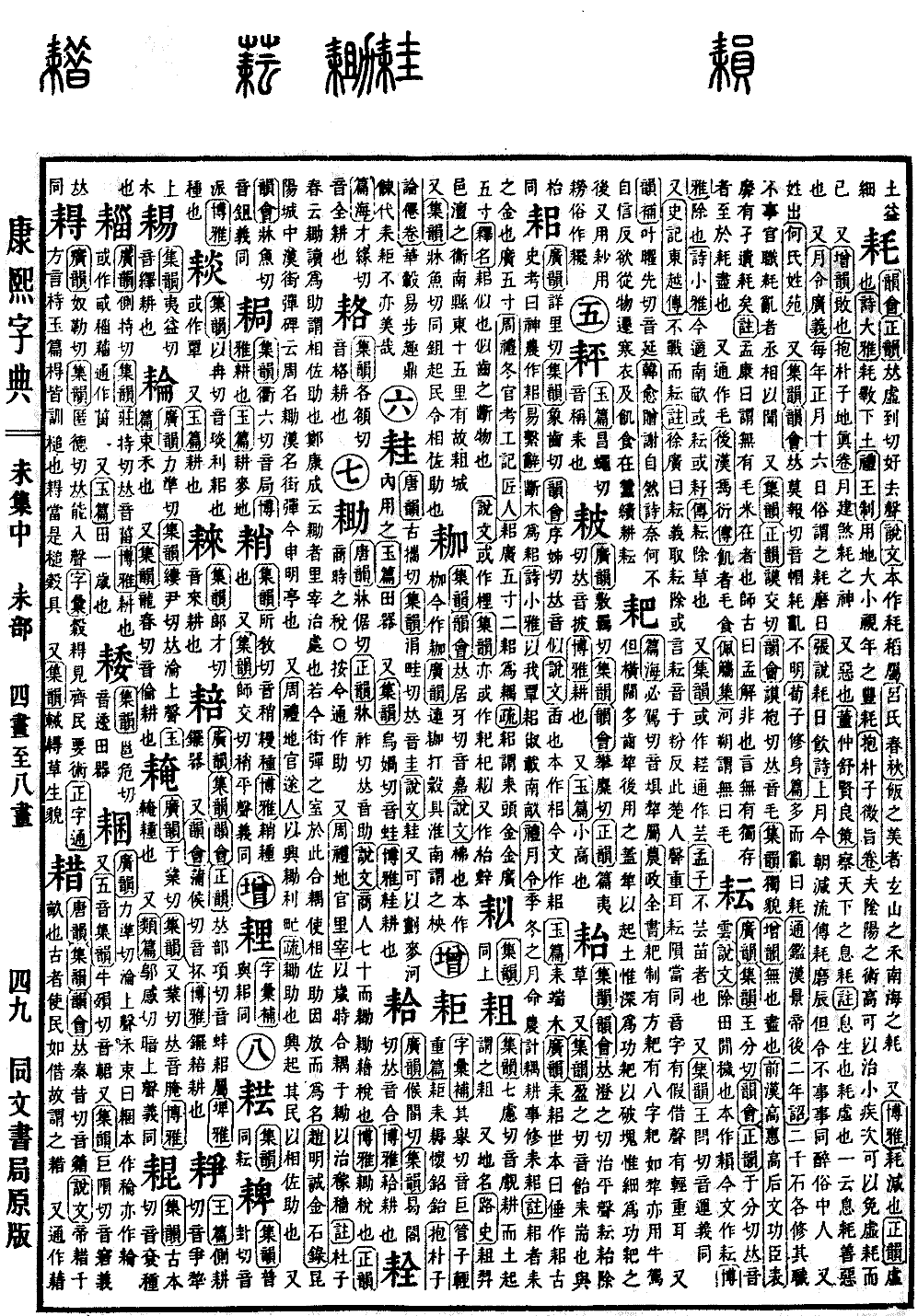
Wei Collection, Lower Volume
Radical: Plow (lěi)
Kangxi strokes: 11
Page 963, Entry 07
Pronounced si (rising tone)
Explaining the characters (Shuowen): Refers to a cha (a type of agricultural tool). Originally written in a variant form, now written as si.
Comprehensive dictionary (Yupian): Refers to the wooden part at the front of a lei (an ancient agricultural tool).
Broad rhymes (Guangyun): Lei-si (ancient agricultural tools). The Record of Genealogies (Shiben) states: Chui (an ancient craftsman) invented the si. The Examination of Ancient History (Gushikao) states: Shennong invented the si.
Book of Changes (Yijing), Appended Statements (Xici): Cutting and shaving wood to make a si.
Book of Odes (Shijing), Lesser Odes (Xiaoya): Using my sharp si, I began to plow the southern fields.
Book of Rites (Liji), Monthly Ordinances (Yueling): In the final month of winter, order the farmers to plan for the upcoming planting season and to repair the lei and the si.
Commentary: The si is the metal part of the lei. It is five inches wide.
Rites of Zhou (Zhouli), Winter Officials, Artificer's Record (Kaogongji), The Craftsman: The si is five inches wide; two si placed side by side is called an ou.
Sub-commentary: The si refers to the metal blade at the head of the lei; the metal blade is five inches wide.
Explanation of Names (Shiming): Si means to resemble; it cuts objects like teeth.
Explaining the characters (Shuowen): Sometimes also written in a variant form (li).
Collected Rhymes (Jiyun): Sometimes also written in a variant form, and also written in a variant form (tai).
Correction: In the Book of Changes (Yijing), Appended Statements (Xici), the text has been carefully corrected from duanmu to zhuomu (cutting wood).