Shen Collection, Upper Volume
Radical: Grass (cǎo)
Kangxi stroke count: 16
Page 1048, Entry 05
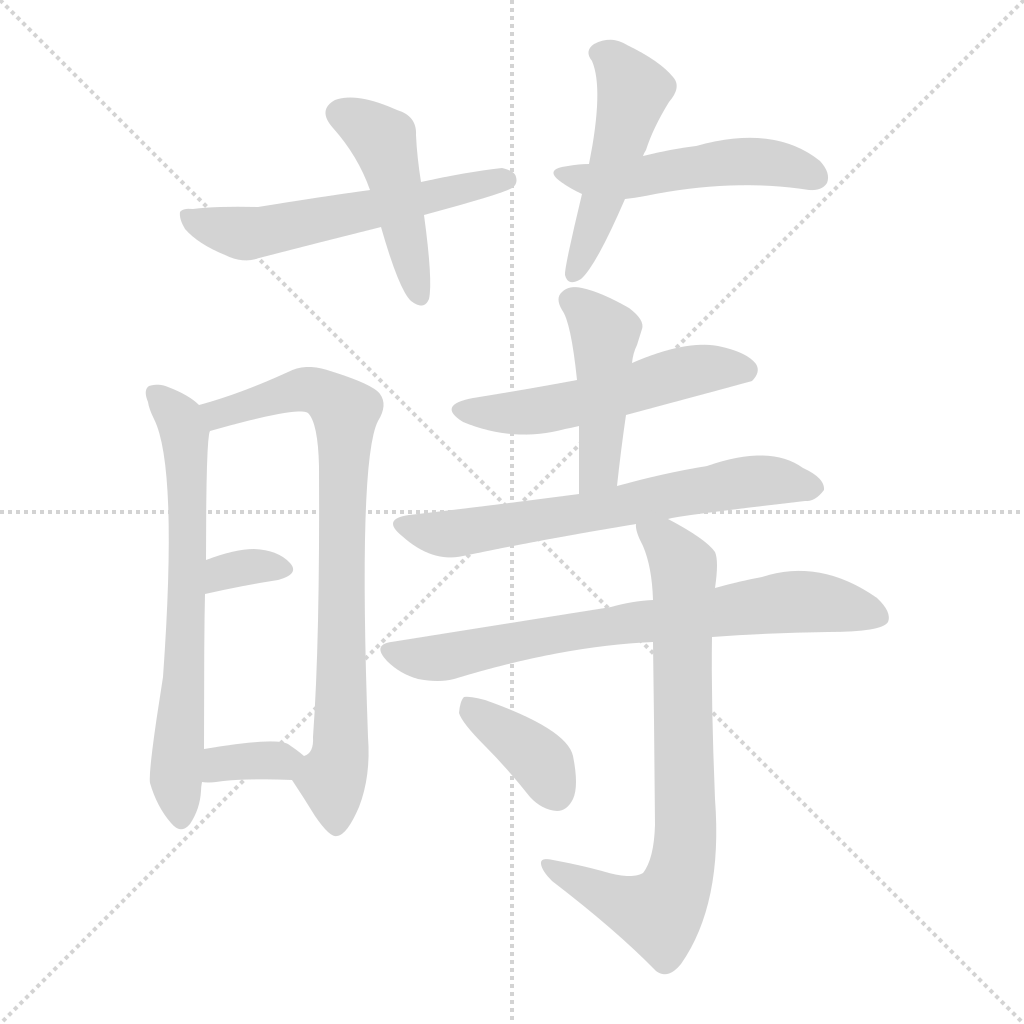
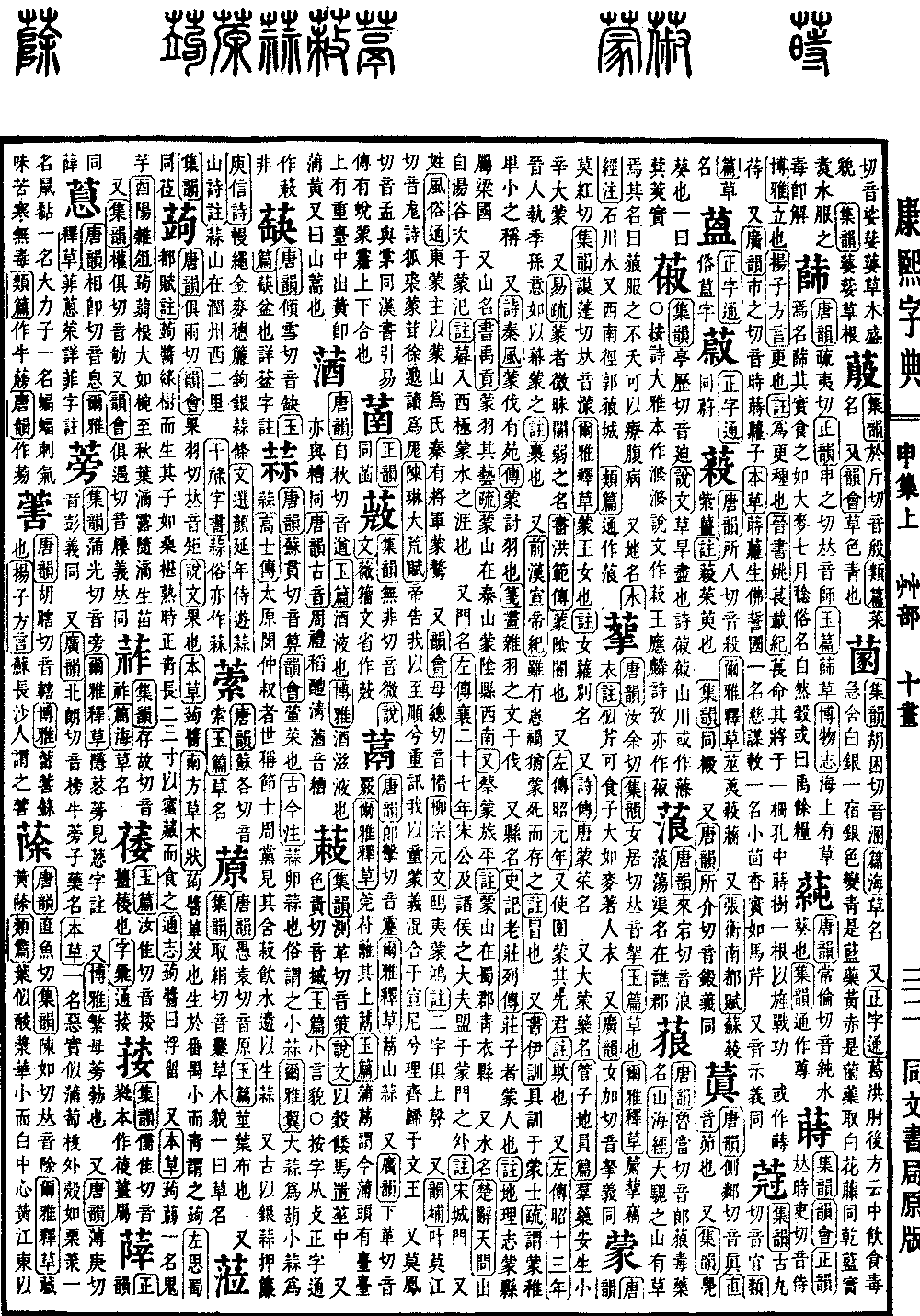
Collected Rhymes (Jiyun), Rhyme Meetings (Yunhui), and Orthodox Rhymes (Zhengyun) state it is pronounced shi (falling tone). Extensive Elegant (Boya) states it means to stand. In Dialect (Fangyan) by Yangzi, it means to change or replace. The commentary explains this as to replant. In the History of Jin (Jinshu), specifically the Records of Yao Chang, it is recorded that Chang ordered his general to plant one tree in the hole of a fence to mark his battle achievements. Sometimes written in a variant form.
Also, according to Broad Rhymes (Guangyun), it is pronounced shi. This refers to dill seeds. Compendium of Materia Medica (Bencao) states that dill grows in the country of Foshi; it is also called cimeichi and is known as small fennel, with fruit resembling caraway.
Also pronounced shi (falling tone). The meaning is the same.