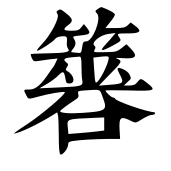
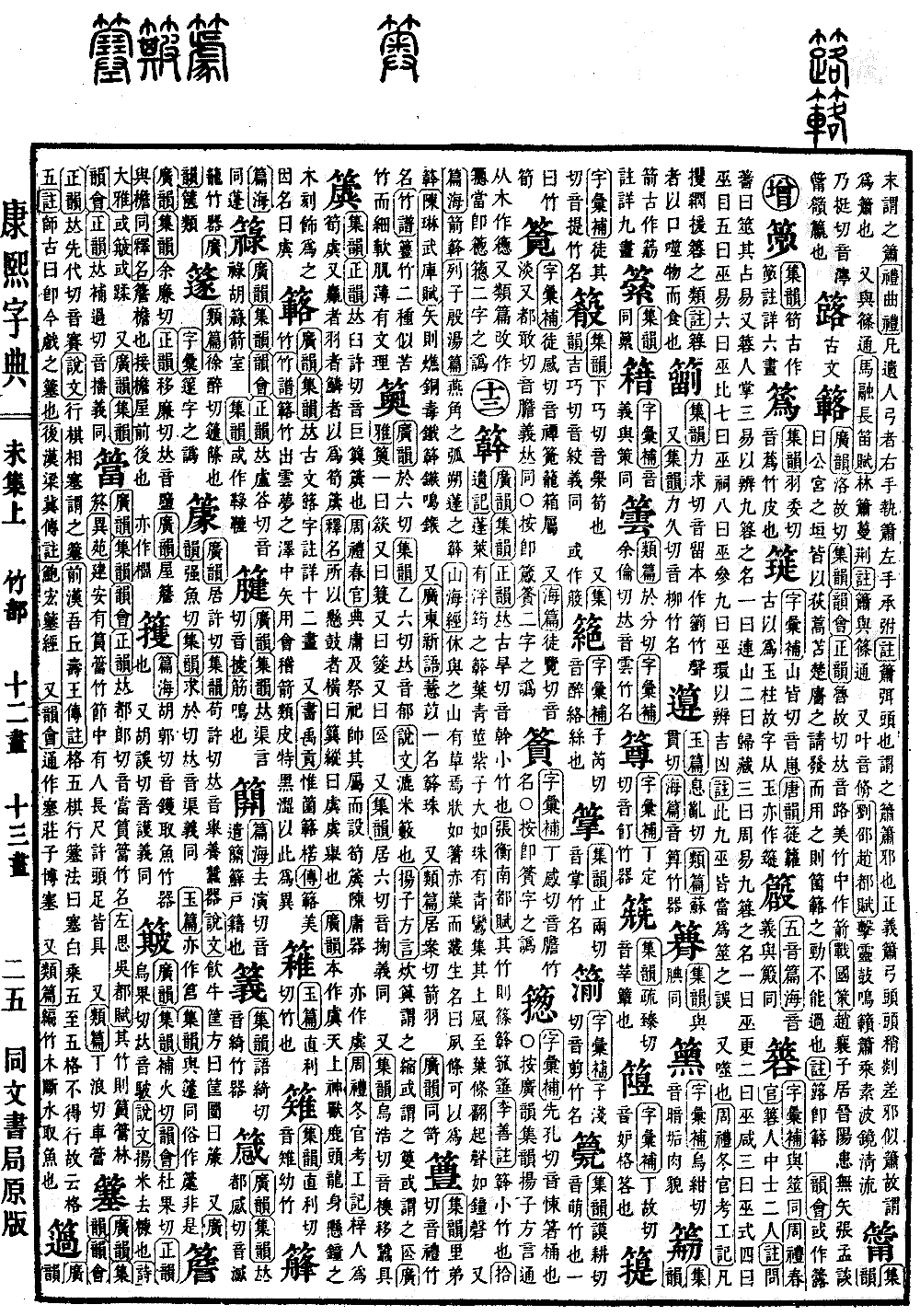
Wei Collection, Upper Volume
Radical: Bamboo (zhú)
Shi
Kangxi strokes: 18
Page 901, Entry 08
Compendium of Characters (Zihui bu): The same as the character for divination by yarrow stalks (shi).
Rites of Zhou (Zhouli), Spring Officials: Two middle-ranking officials are designated as Shi-men. Commentary: Using yarrow stalks for divination is called shi, and its methods of divination are based on the Book of Changes (Yijing).
Also, the Shi-men are in charge of three books of Changes to distinguish the names of nine types of divination methods: the first is called Lian Shan, the second is called Gui Cang, and the third is called Zhou Yi. The names of the nine divination methods are: first, Wu Geng; second, Wu Xian; third, Wu Shi; fourth, Wu Mu; fifth, Wu Yi; sixth, Wu Bi; seventh, Wu Ci; eighth, Wu Can; and ninth, Wu Huan, all used to distinguish between good and bad fortune. Commentary: These nine instances of the character wu are all erroneous writings of the character for divination by yarrow stalks (shi).
Also refers to biting.
Record of Trades (Kaogong ji) in the Winter Officials section of the Rites of Zhou (Zhouli): All categories involving grasping, striking, climbing, and biting actions. Commentary: Shi means to use the mouth to bite something to eat.