Yin Collection, Lower Volume
Radical: Step (chì)
Kangxi strokes: 12
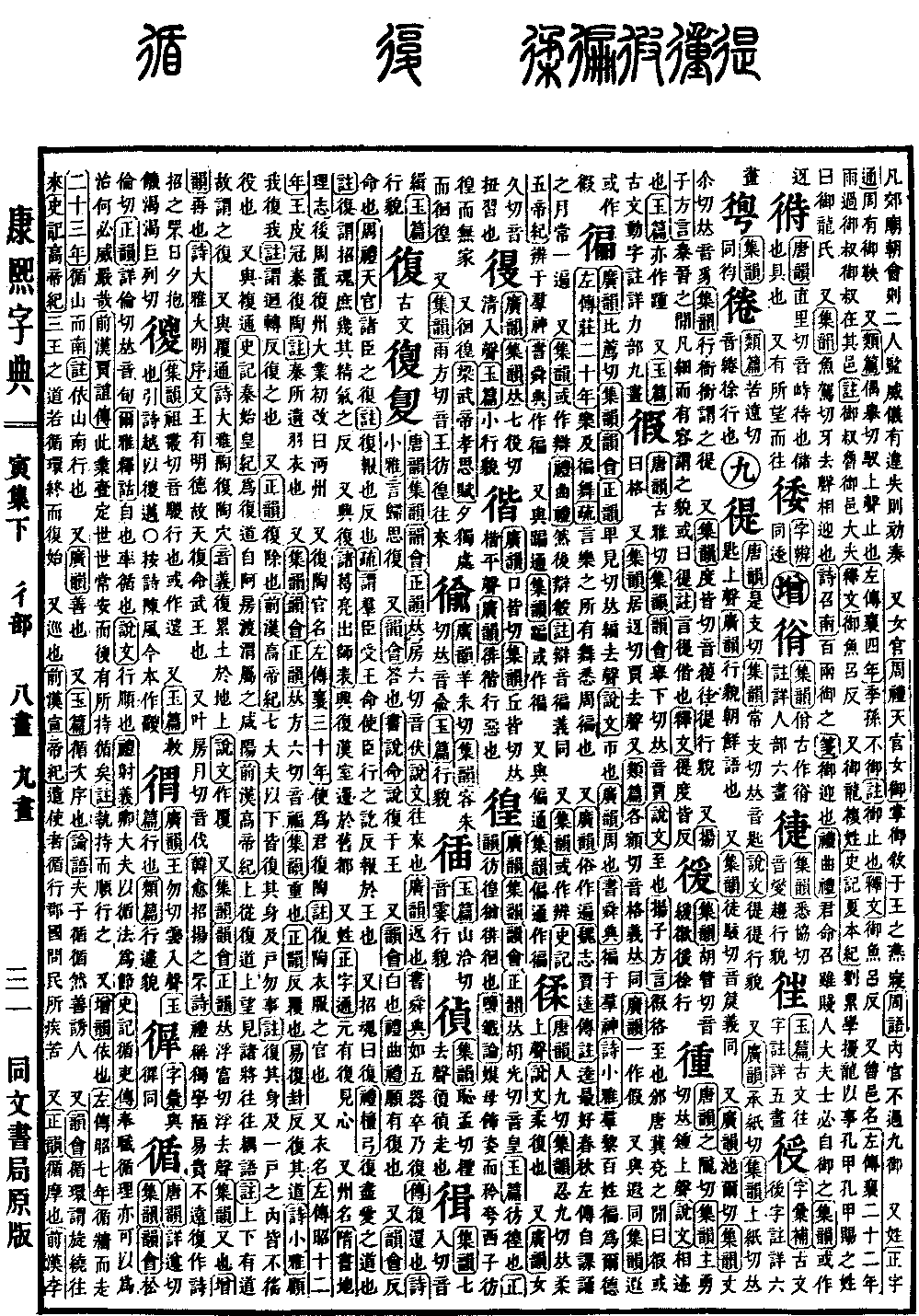
Page 369, Entry 09
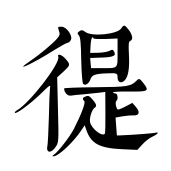
Tang Rhymes (Tangyun): Pronounced chi. Collected Rhymes (Jiyun): Pronounced chi, read the same as the character for spoon. Explained in Explaining Graphs and Analyzing Characters (Shuowen Jiezi) as: Didie, describing the appearance of walking.
Also in Extensive Rhymes (Guangyun): Pronounced chi. Collected Rhymes (Jiyun): Pronounced chi (rising tone). Explained in Extensive Rhymes (Guangyun) as: The appearance of walking. This is also a term used in the Korean language.
Also in Collected Rhymes (Jiyun): Pronounced tu, read the same as [variant character]. The meaning is the same.
Also in Extensive Rhymes (Guangyun): Pronounced chi. Collected Rhymes (Jiyun): Pronounced zhi, read the same as the character for leopard-cat. Explained in Collected Rhymes (Jiyun) as: The appearance of walking in a sway is called die.
Also in Collected Rhymes (Jiyun): Pronounced dujie. Wangdie, describing the appearance of walking.
Also recorded in Master Yang's Dialects (Fangyan): In the Qin and Jin regions, anything delicate and graceful is called mao, or is called die. Note: This describes the appearance of diexie. Explanation of Text (Shiwen): Die is pronounced dujie.