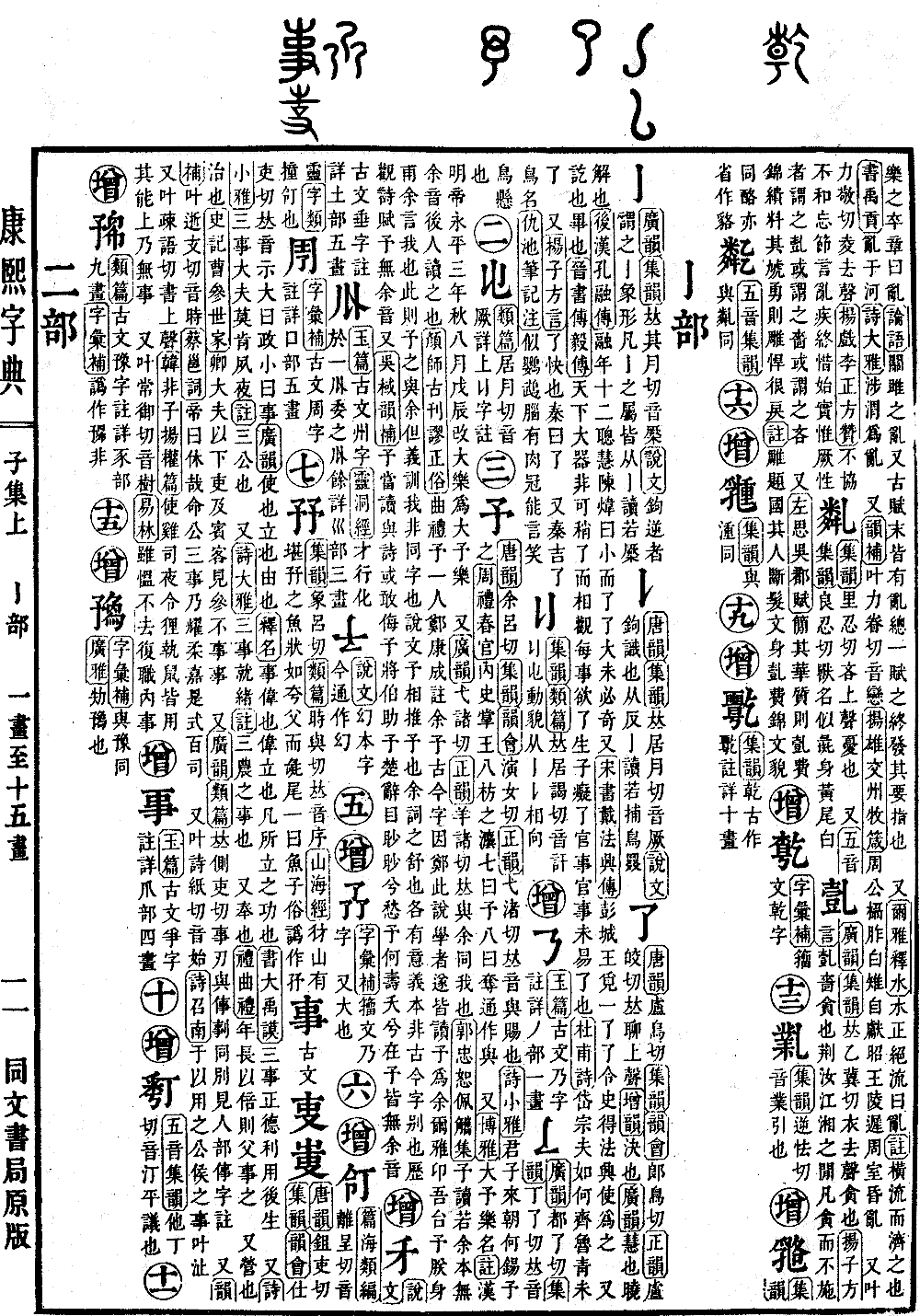
Zi Collection, Page Position: Upper
Radical: Hook (jué)
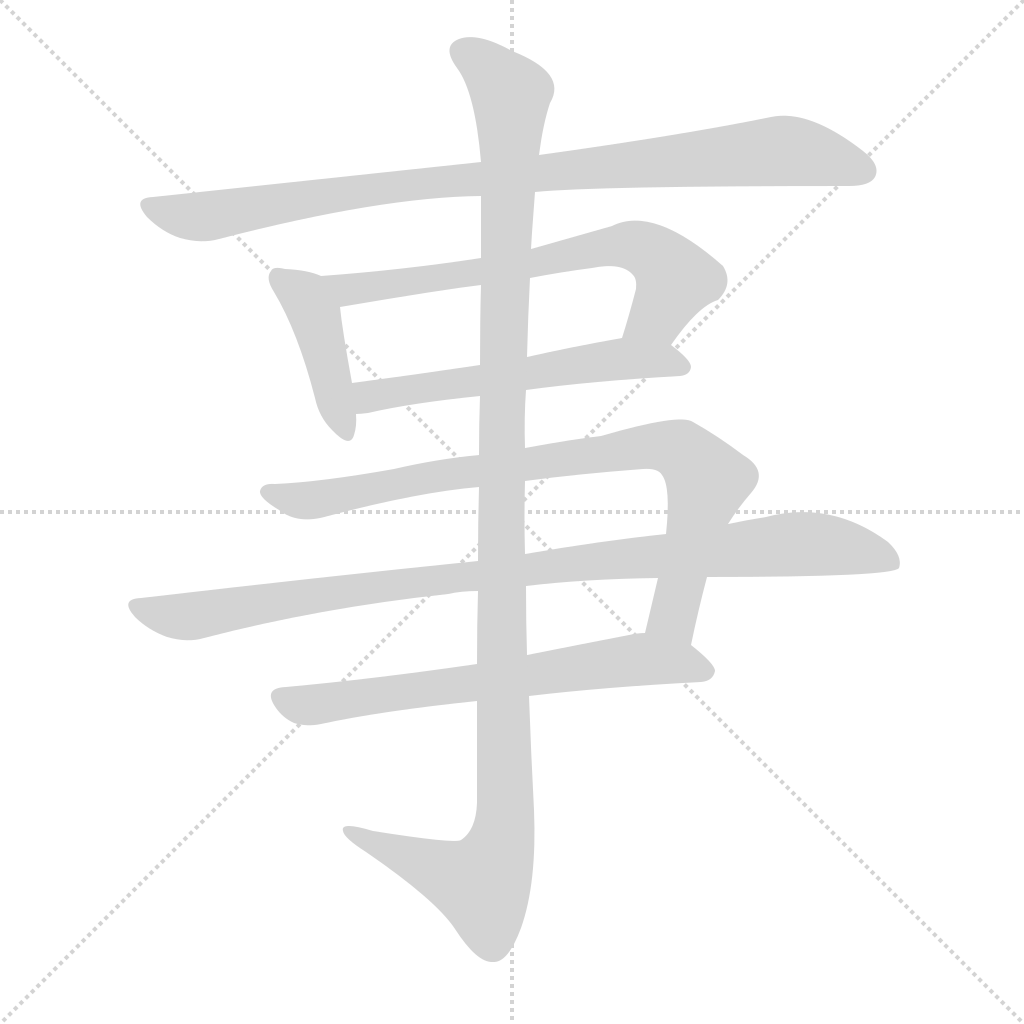
Character: Shì
Kangxi Dictionary Stroke Count: 8
Page 85, Column 24
The ancient script form is written as shì.
The Tangyun (Tangyun) phonetic notation is chú lì qiè; the Jiyun (Jiyun) and Yunhui (Yunhui) phonetic notation is shì lì qiè; pronounced the same as shì.
Large-scale affairs are called zhèng, while small-scale affairs are called shì.
The Guangyun (Guangyun) explains it as: to use, to establish, or cause.
The Shiming (Shiming) explains it as: Shì is the same as wěi, meaning to establish. It refers to the achievements and deeds established.
The Book of Documents (Shangshu) records: The six treasuries and the three matters are truly well-governed.
Also, the Book of Odes (Shijing) states: The Grand Officers of the three matters are unwilling to work diligently from morning to night. Note: Refers to the Three Ducal Ministers.
Also, the Book of Odes states: The three matters are in order. Note: Refers to the three tasks of agriculture.
Also means to carry out or to serve. The Book of Rites (Liji) says: For one who is twice your age, serve him with the etiquette due to a father.
Also means to manage or to govern. The Records of the Grand Historian (Shiji) records: Officials below the rank of high ministers and guests saw that Cao Can did not attend to administrative matters.
Also, the Guangyun and Leipian (Leipian) phonetic notation is zè lì qiè. The term shìrèn is the same as the characters pronounced zì or zì. See also the entry for zì under the Radical: Person (rén).
Also, the Yunbu (Yunbu) rhyming pronunciation is shì zhī qiè, pronounced the same as shí. A composition by Cai Yong says: The Emperor said, "How excellent! I appoint you to the three matters. Thus you manifest gentleness and excellence, serving as a model for all officials."
Also, the rhyming pronunciation is shī zhǐ qiè, pronounced the same as shǐ. The Book of Odes states: For what purpose is it used? For the affairs of the dukes and marquises. Rhymes with zhǐ.
Also, the rhyming pronunciation is shū yǔ qiè, pronounced in the rising tone of shū. The Hanfeizi (Hanfeizi) states: Let the rooster manage the night and the leopard-cat catch the mice. When each uses its own ability, the ruler has no matters to attend to.
Also, the rhyming pronunciation is cháng yù qiè, pronounced the same as shù. The Forest of Changes (Yilin) states: Although angry, he does not leave, and returns to his duties in internal affairs.
Textual Research: The original text from the Book of Documents, "The three matters of rectifying virtue, and the utilization of resources for the welfare of the people," was incorrect and did not flow with the following six characters. It has now been corrected according to the original text to read, "The six treasuries and the three matters are truly well-governed."