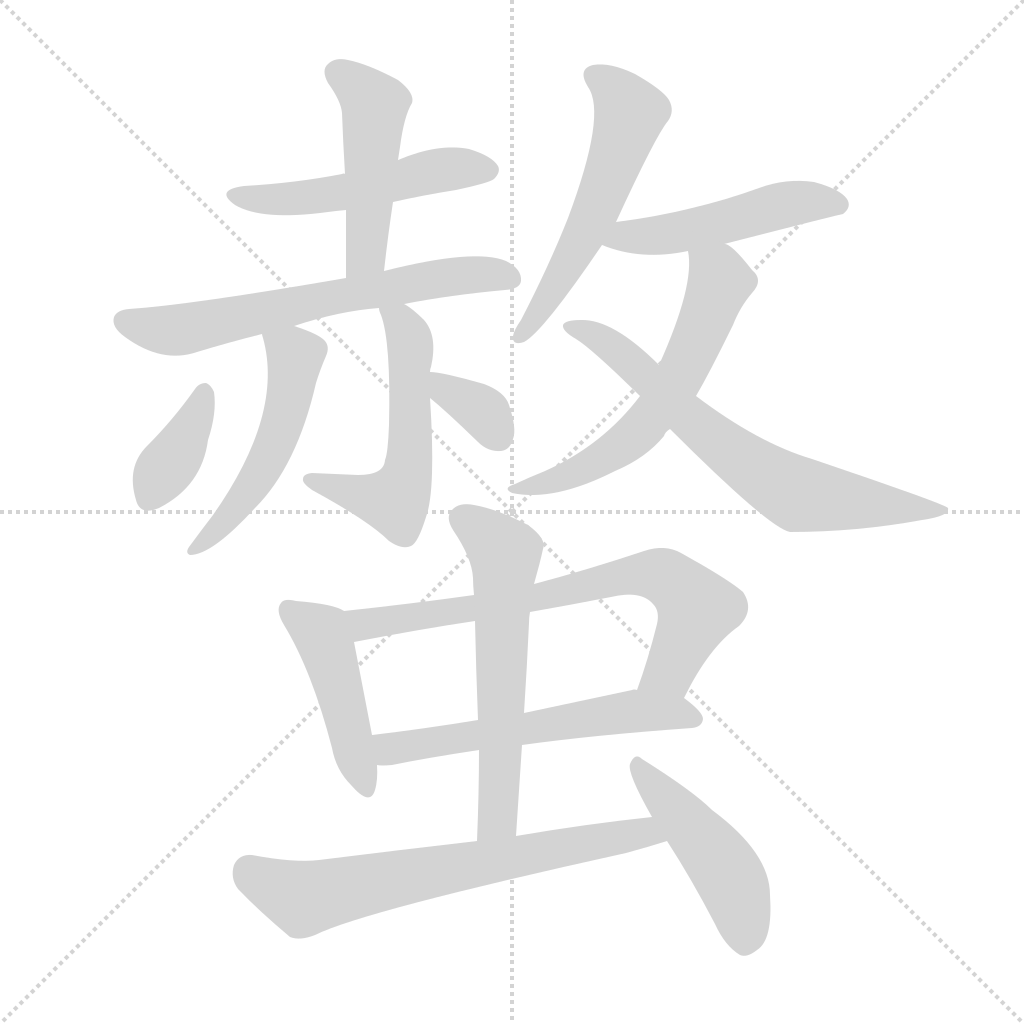
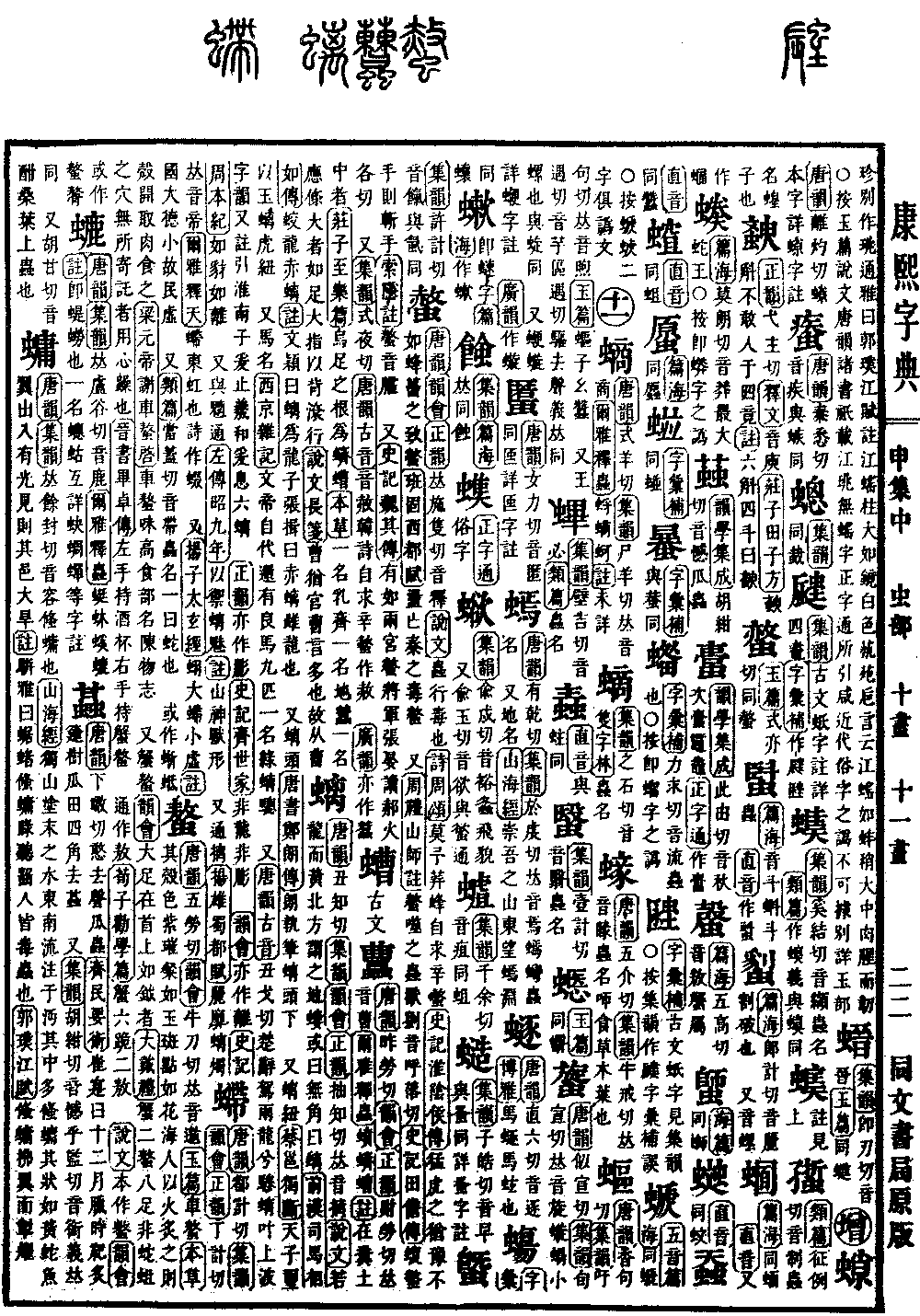
Shen Collection, Lower Volume. Radical: Insect (chóng). Character: shi. Kangxi strokes: 17. Page 1094, Entry 48.
Tang Dynasty Rhyme Dictionary (Tangyun), Collection of Rhymes (Yunhui), and Correct Rhymes (Zhengyun) state it is pronounced shi.
Analytical Dictionary of Characters (Shuowen) states it refers to the poisoning effect of an insect's movement.
Book of Odes (Shijing), Zhou Odes: No one can stop the stinging of bees; I have brought this pain upon myself.
Records of the Grand Historian (Shiji), Biography of the Marquis of Huaiyin: The hesitation of a fierce tiger is not as effective as the sting of a bee or scorpion.
Ban Gu, Western Capital Rhapsody (Xidu fu): Sweeping away the poisonous stings of the fallen Qin dynasty.
Also, Rites of Zhou (Zhou li), Commentary on the Mountain Masters: Insects and beasts that sting and bite. Liu pronounces this as huoluo.
Records of the Grand Historian (Shiji), Biography of Tian Dan: If a viper bites one's hand, one must cut off the hand.
Search for Mysteries (Suoyin) Commentary: Stung is pronounced huo.
Also, Records of the Grand Historian (Shiji), Biography of Marquis Weiqi: As if the two palaces were to sting the general. Zhang Yan reads it as hao, pronounced huoge.
Also, Collection of Rhymes (Jiyun) says it is pronounced shiye. Tang Dynasty Rhyme Dictionary (Tangyun) Ancient Pronunciation says it is pronounced she.
In the Han Version of the Book of Odes (Hanshi), the phrase I have brought this pain upon myself is written with the character pronounced she.
Broad Rhymes (Guangyun) states it is also written as huo.