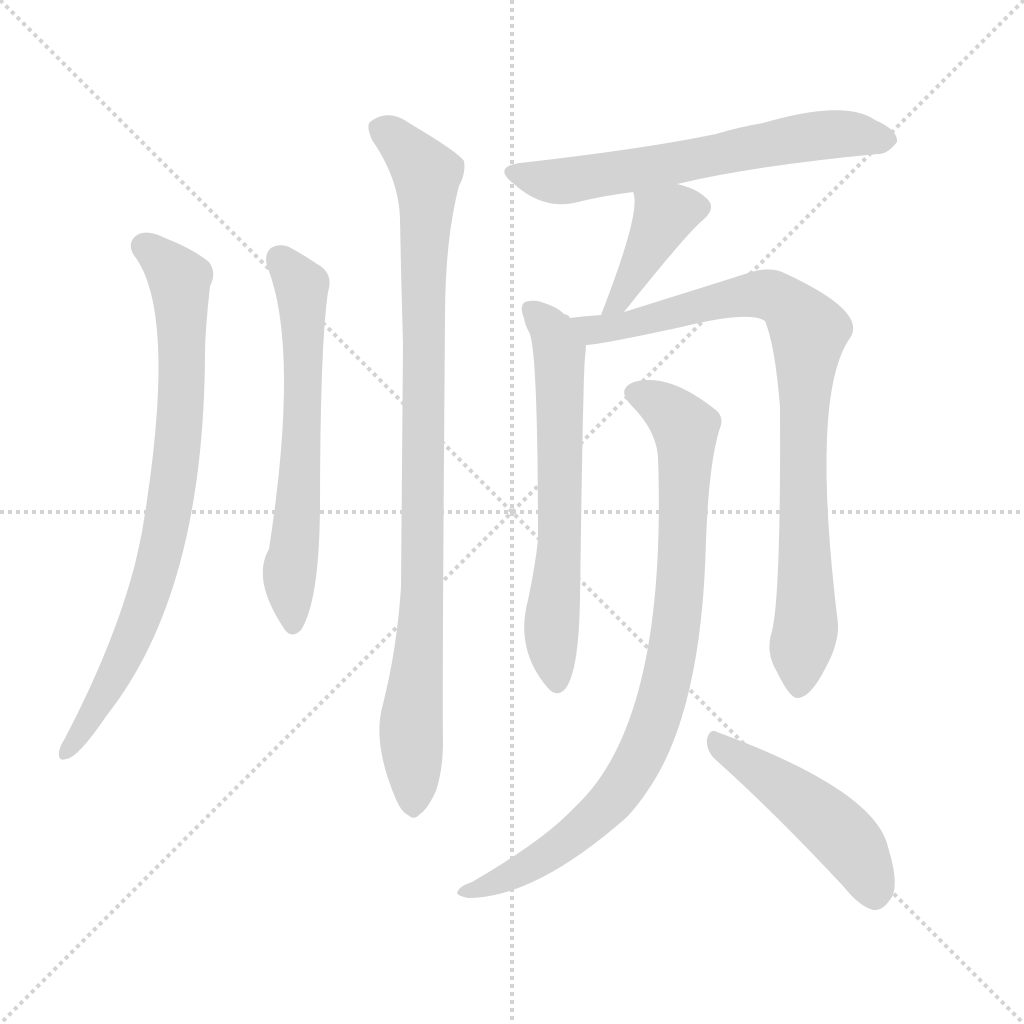
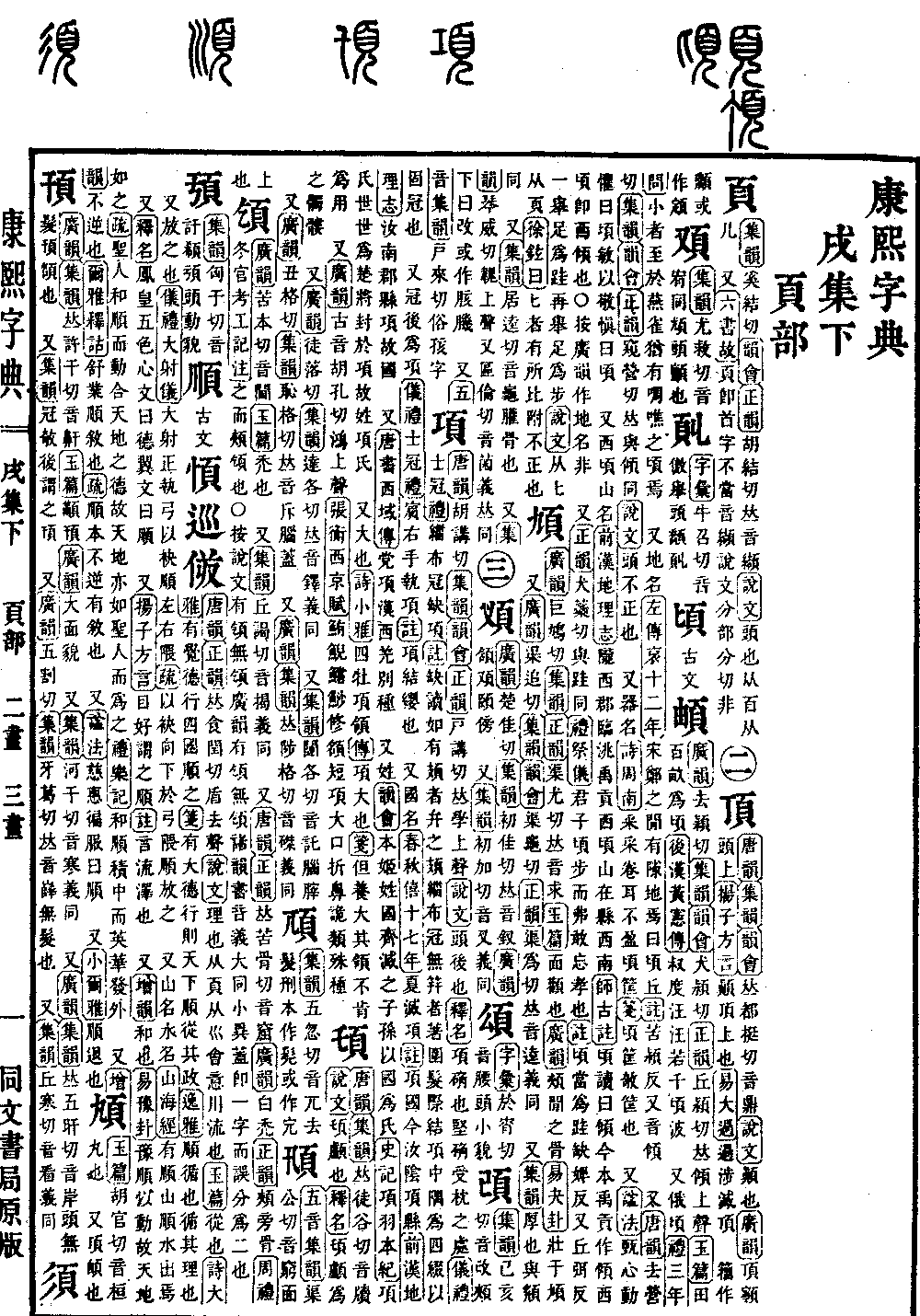
Xu Collection, Lower Volume
Radical: Page (yè)
Kangxi Strokes: 12
Page 1399, Entry 01
Ancient form: xún
Tang Rhymes (Tangyun) and Correct Rhymes (Zhengyun): Pronounced shun (falling tone).
Explanation of Characters (Shuowen): To govern or reason. Composed of the radicals for Page and River; the meaning is derived from the combination. It denotes the flow of a river.
Jade Chapters (Yupian): To follow.
Book of Odes (Shijing), Greater Odes (Daya): Possessing clear virtue, the four states follow it.
Commentary (Jian): If one possesses great virtue, then the world will follow and obey his governance.
Explanation of Names (Shiming): Shun means to comply, to follow its principle. It also means to release.
Book of Etiquette and Ceremonial (Yili), Grand Archery Ritual (Dashesheyi): The grand archery official holds the bow, and with the sleeve, follows along the left and right curves.
Sub-commentary (Shu): Holding the sleeve downward, one follows and releases it along the bow curve.
Also a mountain name and a river name. Classic of Mountains and Seas (Shanhaijing): There is Shun Mountain, from which the Shun River emerges.
Also, Explanation of Names (Shiming): The phoenix has five colors; the markings on its heart are called virtue, and the markings on its wings are called shun.
Also, Yangzi's Dialects (Fangyan): Beautiful eyes are called shun. Note: This refers to a flowing luster.
Also, Expanded Rhymes (Zengyun): To be harmonious.
Book of Changes (Yijing), Enthusiasm Hexagram (Yugua): Enthusiasm is harmonious and moves, thus heaven and earth follow it.
Sub-commentary (Shu): The sage is harmonious and acts; this conforms to the virtue of heaven and earth, thus heaven and earth also act in accordance with the sage.
Book of Rites (Liji), Record of Music (Yueji): Harmony and compliance accumulate within, and the inner beauty shines outward.
Also, Expanded Rhymes (Zengyun): To not be contrary.
Erya, Explanation of Words (Shigu): To stretch out an occupation is shun, meaning ordered.
Sub-commentary (Shu): Shun means not being contrary and having order.
Also, Method of Posthumous Titles (Shifa): To be compassionate, benevolent, and universally submissive is called shun.
Also, Lesser Erya (Xiao Erya): Shun means to retreat.
Textual Research: In the entry for Yi Ya, it states shun means to follow. Note: The phrase actually comes from Explanation of Names (Shiming). I have now changed Yi Ya to Explanation of Names (Shiming). Erya, Explanation of Words (Shigu): To stretch out an occupation is shun, meaning ordered. Sub-commentary: Shun originally meant not being contrary and having order. Note: Following the original text, I have changed shun ben to shun zhe.