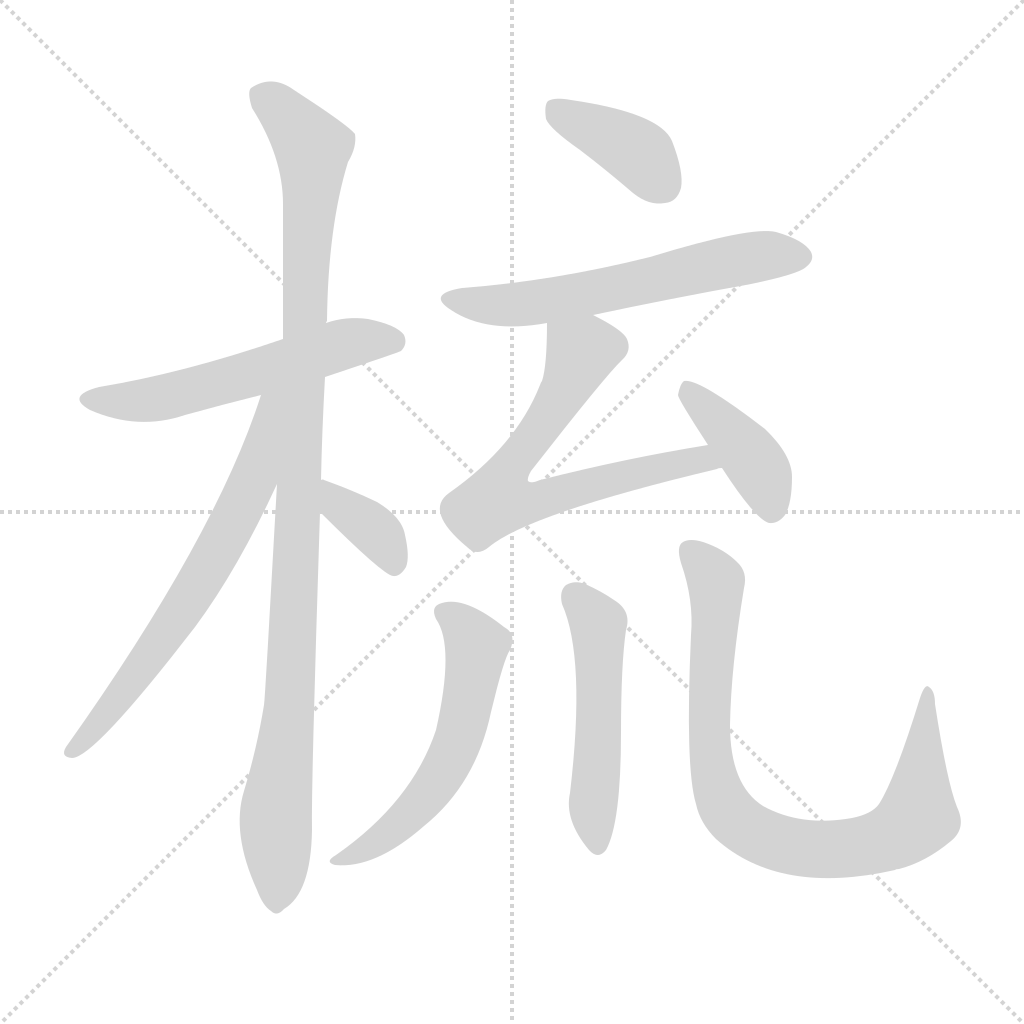
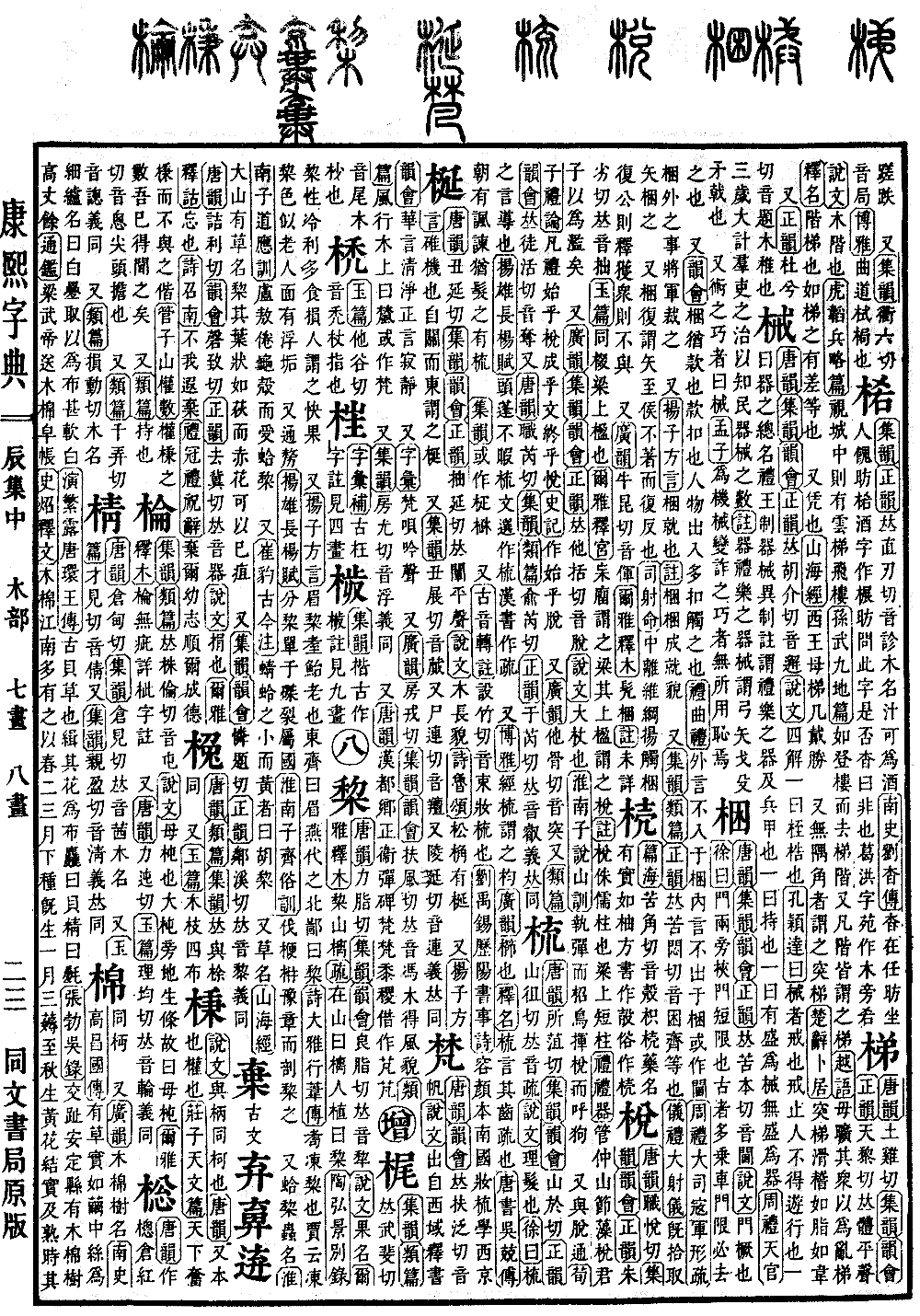
Chen Collection, Middle Volume. Radical: Tree (mù). Kangxi stroke count: 11. Page 531, Entry 07.
Pronounced shu. Pronounced shu. Pronounced shu. The pronunciation is the same as the word for sparse.
Shuowen Jiezi (Explaining Graphs and Analyzing Characters) states: To groom or comb the hair.
Xu states: The act of combing implies the meaning of guiding or directing.
In the Changyang Fu (Rhapsody on the Long Poplar Palace) by Yang Xiong, it is written: Hair in disarray, with no time to comb. In the Anthology of Literature (Wenxuan), it is written as shu (comb). In the Book of Han (Hanshu), it is written as shu (sparse).
Furthermore, the Guangya (Broad Refinement) states: The tool used for grooming hair is called a jin.
The Guangyun (Broad Rhymes) states: A comb.
The Shiming (Explanations of Names) states: A comb (shu), so named because its teeth are relatively sparse.
In the Old Book of Tang (Tangshu), in the biography of Wu Jing: When the imperial court offers admonitions, it is like hair having a comb.
The Jiyun (Collected Rhymes) states: Sometimes it is written as a variant form.
Furthermore, according to the Guyin Zhuanzhu (Ancient Phonetic Commentary), it is pronounced shu, with the same sound as the word for bundle. This refers to the act of grooming or applying makeup.
In the poem Liyang Shushi by Liu Yuxi: My appearance is originally that of a southerner, yet I groom and dress in the style of the capital.