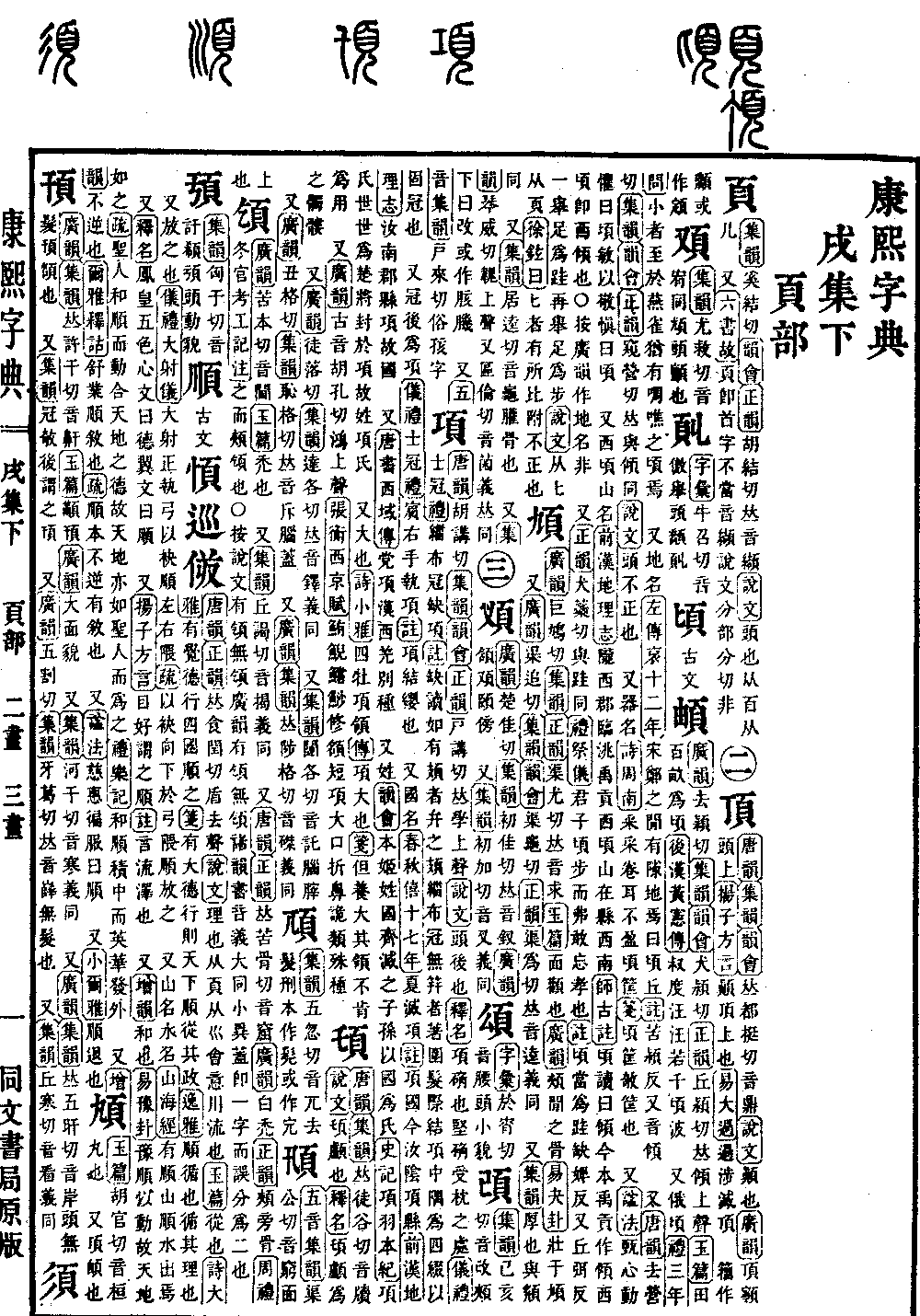
Xu Collection, Lower Volume
Radical: Page (yè)
Kangxi Strokes: 12
Page 1399, Entry 17
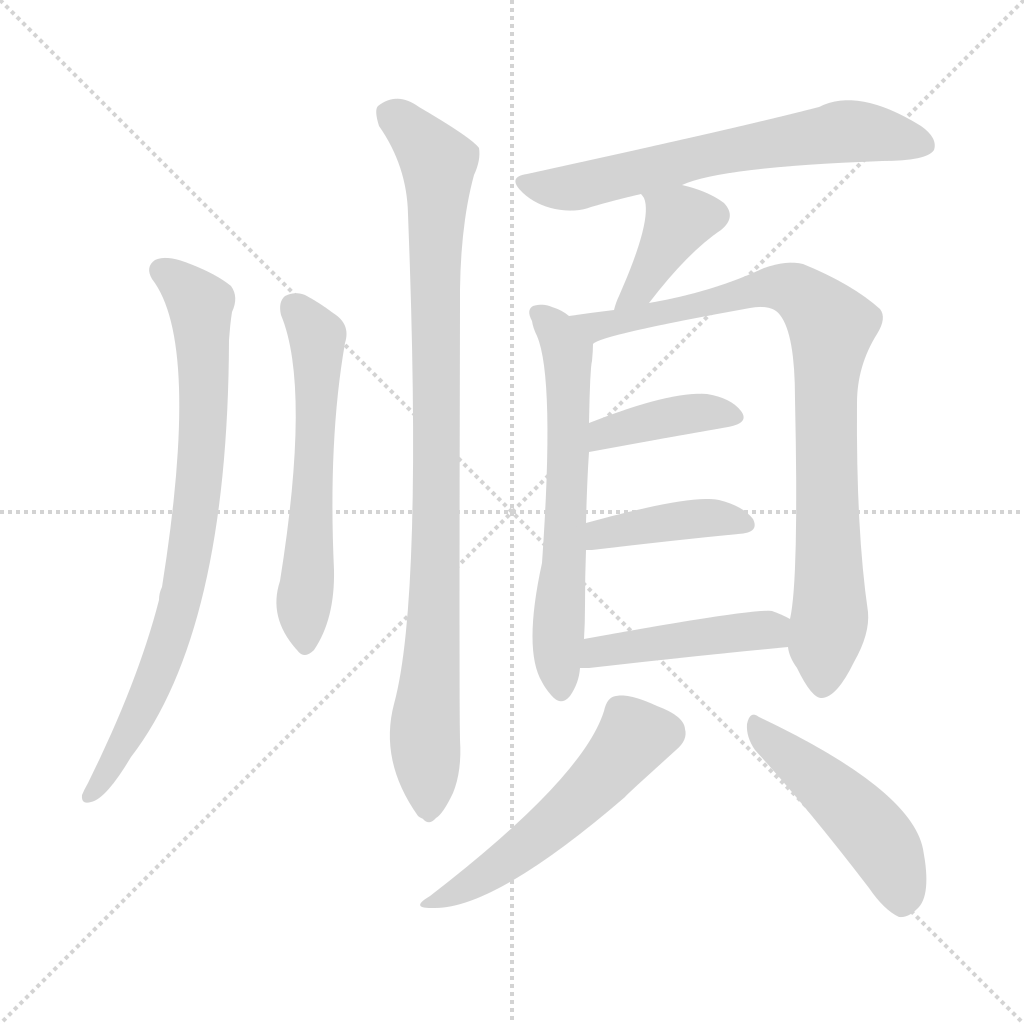
Ancient form of the character for patrol (xún).
Pronounced shun (falling tone).
Shuowen Jiezi (Explanation of Simple and Compound Characters): To manage or put in order. Composed of the radicals for page and river, a compound ideograph. River indicates flow.
Yupian (Jade Chapters): To follow.
Book of Odes (Shijing), Great Odes: Possessing magnificent virtuous conduct, the four states comply with it.
Commentary: When one possesses great virtuous conduct, the world submits to their governance.
Shiming (Explication of Names): Shun means to follow or to observe the principle of something. It also means to release.
Book of Etiquette and Ceremonial (Yili), Great Archery Rites: The official in charge of the great archery held the bow, using his sleeve to align the left and right corners.
Sub-commentary: Using the sleeve to direct downward, aligning the bow at the corner.
Also, the name of a mountain and a river.
Classic of Mountains and Seas (Shanhaijing): There is Shun Mountain, from which the Shun River flows.
Also, according to Shiming: The markings on the heart of a phoenix are called virtue, and the markings on its wings are called shun.
Also, Yangzi Dialect (Fangyan): Beautiful eyes are called shun.
Note: Referring to a gaze that is fluid and lively.
Also, Zengyun (Added Rhymes): Harmony.
Book of Changes (Yijing), Yu Hexagram: When pleasure follows the principle of harmony to act, heaven and earth respond accordingly.
Sub-commentary: When the sage acts in harmony and compliance, it matches the virtue of heaven and earth, thus heaven and earth follow the sage.
Record of Music (Yueji): When harmony and compliance accumulate within the heart, the brilliance is revealed externally.
Also, Zengyun: Not acting in opposition.
Erya (Approaching Elegance), Interpretation of Ancient Terms: To relax, to follow, to be in order.
Sub-commentary: Shun means to be without resistance and to have proper sequence.
Also, Posthumous Titles Ordinance: To be benevolent and kind, causing all to submit, is called shun.
Also, Xiao Erya (Little Erya): Shun means to retreat.
Editorial Revision: Yiya: Shun means to follow. Note: This phrase appears in Shiming; Yiya has been corrected to Shiming. Erya, Interpretation of Ancient Terms: To relax, to follow, to be in order. Sub-commentary: Shun originally means to be without resistance and to have proper sequence. Note: According to the original text, Shun originally was corrected to Shun is.