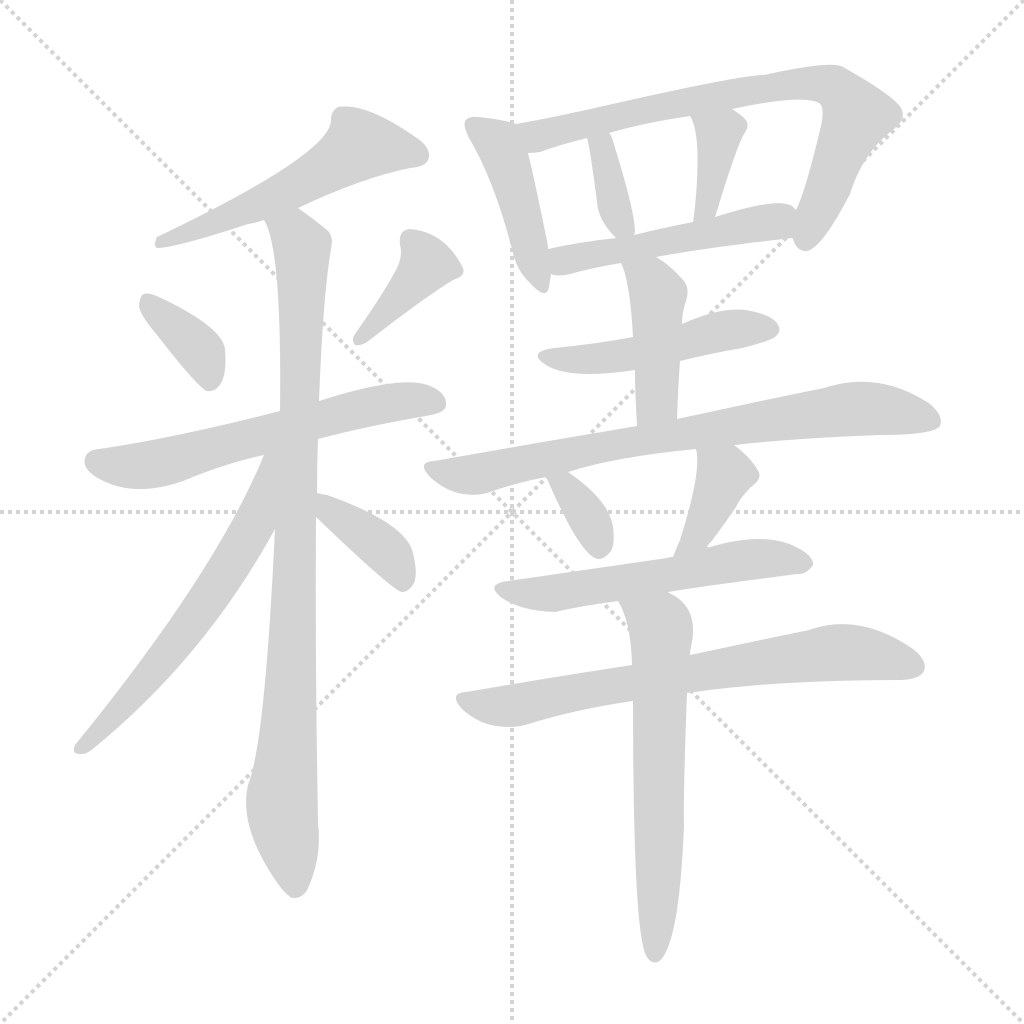
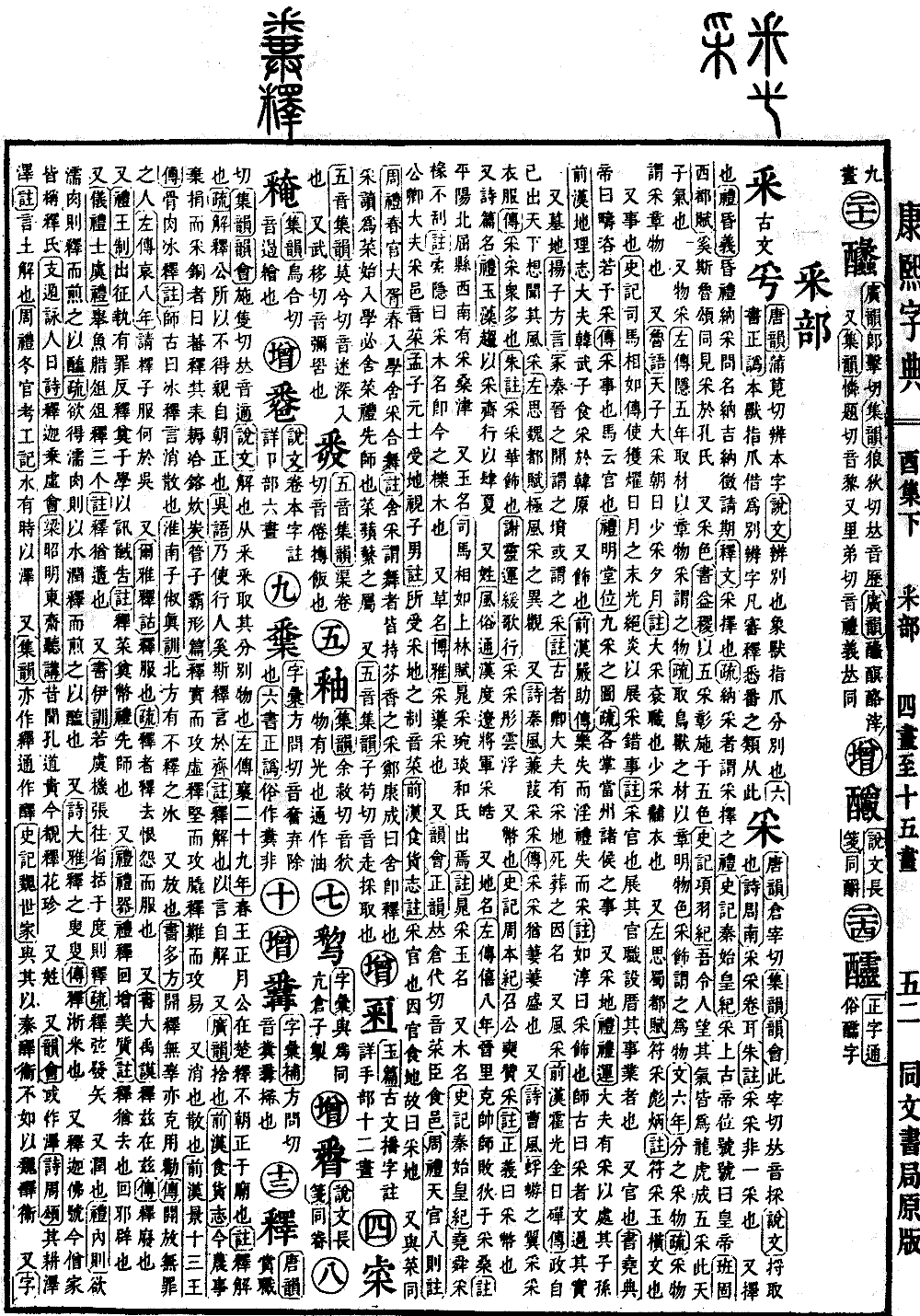
You Collection, Lower Volume
Radical: Variegated (biàn)
Kangxi Strokes: 20
Page 1290, Entry 17
Pronounced shì.
According to the Explaining Graphs and Analyzing Characters (Shuowen Jiezi), it means to untie or explain. It is derived from the radical for variegated (biàn), implying the selection and differentiation of things.
From the Zuo Tradition (Zuozhuan), twenty-ninth year of Duke Xiang: In the spring, the first month of the king, the Duke was in Chu, and he neglected to hold the court ceremony at the temple. The commentary explains: "Neglected" means to relax or untie. The sub-commentary explains: This explains why the Duke could not personally attend the court ceremony.
From the Discourses of Wu (Wuyu): Then he sent the envoy Xisi to explain his words to the state of Qi. The commentary explains: "Explain" means to untie or resolve. It means to clarify oneself through words.
Also from the Broad Rhymes (Guangyun), it means to let go or discard.
From the History of the Former Han (Qianhan), Treatise on Food and Money: Nowadays agricultural affairs are abandoned, and those who mine copper multiply daily; they discard their plows and hoes, smelting and cooking with charcoal.
From the Guanzi, chapter on Hegemonic Patterns: Discard the solid and attack the void; discard the firm and attack the fragile; discard the difficult and attack the easy.
It also means to vanish or disperse.
From the History of the Former Han, Biographies of the Thirteen Princes of Jing: The flesh and blood melted away like ice. The commentary by Yan Shigu states: Melting like ice refers to vanishing or dispersing.
From the Huainanzi, chapter on the Nature of Truth: In the north, there is ice that does not melt.
It also means to set free.
From the Book of Documents (Shujing), Multi-region: Release the innocent, and you will be able to encourage the people. The commentary states: Openly release the innocent people.
From the Zuo Tradition, eighth year of Duke Ai: Please release Zifu He from the state of Wu.
From the Erya, chapter on Explaining Ancient Words: To release is to submit. The sub-commentary explains: To release means to let go of hatred and resentment and to submit.
From the Book of Documents (Shujing), The Great Plan of Yu: Release this, rest here. The commentary states: Release means to abandon.
From the Book of Rites (Liji), Royal Regulations: When returning from a military campaign having captured the guilty, one must offer a ritual meal at the school to report the prisoners and the ears of the slain. The commentary states: Offering vegetables and ritual gifts is a way to honor the former masters.
From the Book of Rites (Liji), Ritual Vessels: Rituals discard what is crooked and increase the beauty of one's character. The commentary states: Discard means to remove. Crooked refers to deviance.
From the Ceremonial and Rituals (Yili), Rituals for the Departed Scholar: Lift the tray of dried fish and meat, and leave out three pieces. The commentary states: Leave out means to exclude or omit.
From the Book of Documents (Shujing), Admonitions of Yi: Like drawing a bowstring, when one goes to inspect the notches against the measurements, then one releases the string. The sub-commentary explains: Release the string and discharge the arrow.
It also means to moisten.
From the Book of Rites (Liji), Inner Chapters: If one wishes to moisten meat, one must soak it and then fry it with salted sauce. The sub-commentary explains: To obtain moistened meat, one uses water to moisten and soften it, then fries it with sauce.
From the Book of Odes (Shijing), Greater Odes: Sifting the rice, shuoshuo. The commentary states: Release here means to wash rice.
Also refers to Shakyamuni, the title of the Buddha. Nowadays, members of the monastic community are referred to as the Shakya clan.
From Zhi Dun’s poem on the Seventh Day of the New Year: Shakyamuni rides the void to convene.
From Emperor Jianwen of Liang’s poem on listening to lectures in the East Study: Formerly I heard that the way of Confucius was precious, now I see the beauty of the Shakya flower.
Also a surname.
According to the Rhyme Compendium (Yunhui), it is sometimes written as the character for marsh.
From the Book of Odes (Shijing), Sacrificial Odes of Zhou: Its plowing is zézé. The commentary states: It describes the loosening of the soil.
From the Rites of Zhou (Zhouli), Winter Bureau of Artificers: Water has times when it is moist.
Also, according to the Collection of Rhymes (Jiyun), it is written as the character for interpret. It is also used interchangeably with the character for fermented wine.
From the Records of the Grand Historian (Shiji), House of Wei: Rather than using Qin to ferment conflict with Wei, it is better to use Wei to ferment conflict with Wei.
According to the Dictionary Supplement (Zihui Bu), pronounced yì. It means to be pleased.
According to the Six Books Corrected (Liushu Zheng’e), it is also written as the character for happy, which is incorrect.
From Ji Kang’s Rhapsody on the Zither: Those who are joyous and happy hear it, and they become relaxed and cheerful.
According to the Rhyme Supplement (Yunbu), it also rhymes with shuò.
From the Chu Ci, Nine Pieces: I let the ocean overflow, soaring and wondering where to land. My heart is tied in knots and cannot be untied, my thoughts are entangled and cannot be released.