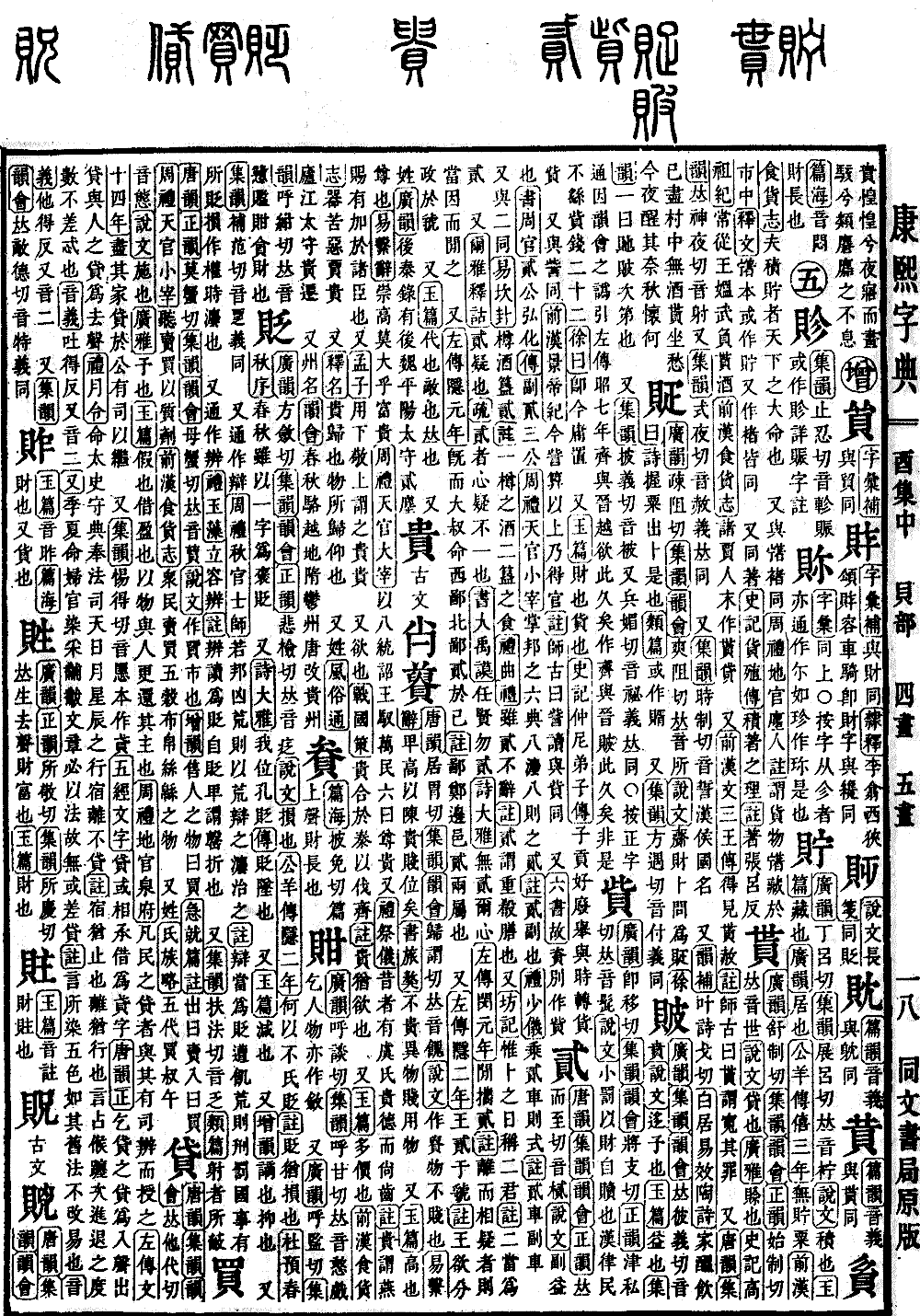
You Collection, Middle Volume
Radical: Shell (bèi)
貰
Kangxi strokes: 12
Page 1206, Entry 10
Guangyun: Pronounced shi (falling tone). Jiyun, Yunhui, and Zhengyun: Pronounced shi (falling tone).
Shuowen: To lend or borrow.
Guangya: To purchase on credit.
Records of the Grand Historian (Shiji), Annals of Gaozu: Often borrowed wine on credit from the Dame Wang and the woman Wu Fu.
Book of Han (Hanshu), Treatise on Food and Money: All the merchants engaged in petty trades borrowed on credit.
Also, Book of Han (Hanshu), Biographies of the Three Sons of Emperor Wen: Received the grace of being pardoned. Note: Shigu says that shi refers to leniency regarding their crimes.
Also, Tangyun and Jiyun: Pronounced she (falling tone).
Also, Jiyun: Pronounced she (falling tone). The meaning is the same.
Also, Jiyun: Pronounced shi (falling tone). Name of a marquisate state during the Han dynasty.
Also, Yunbu: Rhymes with shi (flat tone). Bai Juyi, Imitating Tao Yuanming's Poetry: The homemade wine is all finished, there is none left in the village to buy on credit. Sitting, I worry about being sober tonight, what shall I do with these autumn sorrows.
Addendum: Zihuibu: Same as shi. See the Peixi. The character shi is written with the component shi on top.