Shen Collection, Upper Volume
Radical: Grass (cǎo)
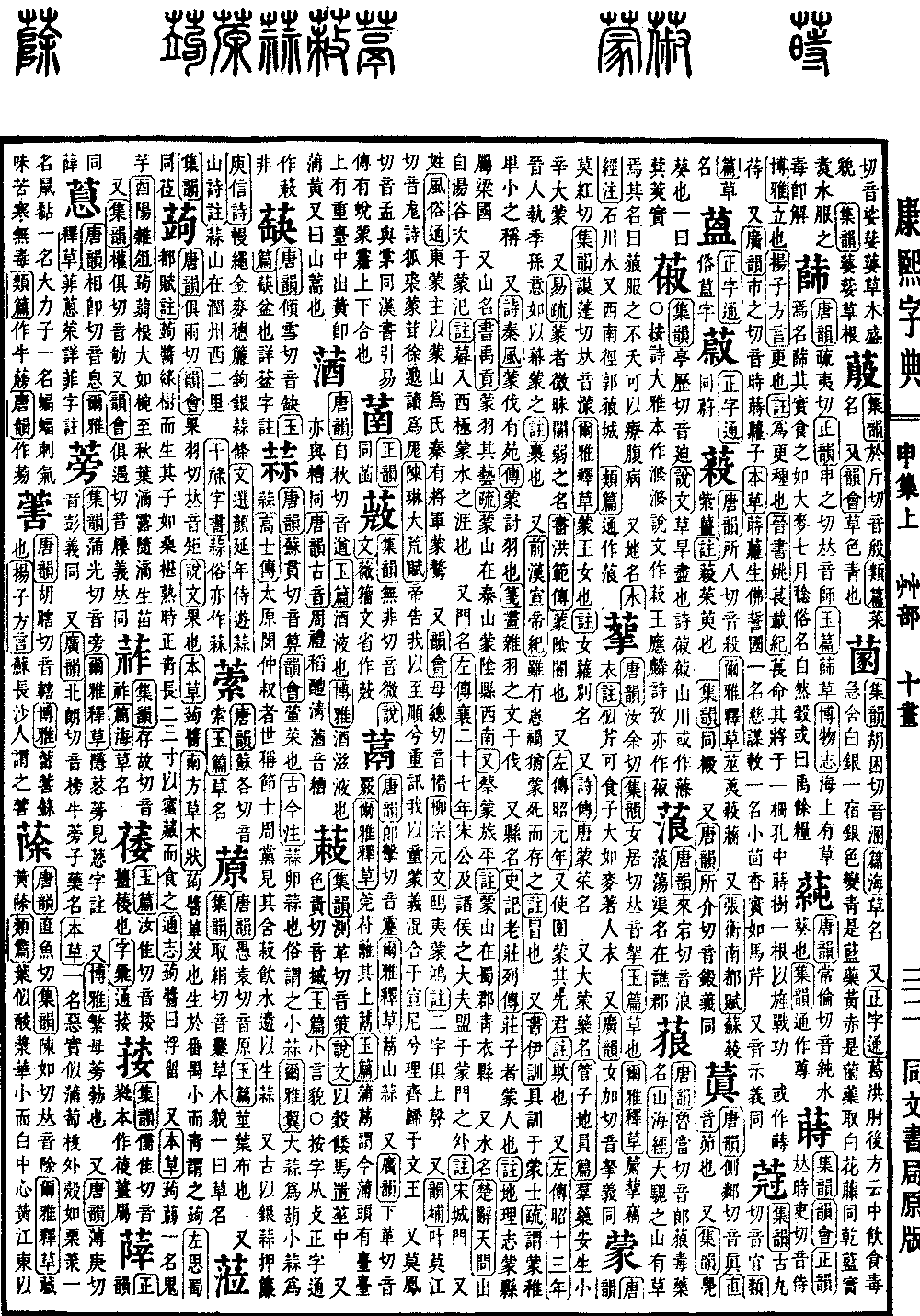
Shi; Kangxi stroke count: 16; Page 1048
Collected Rhymes (Jiyun), Rhyme Meetings (Yunhui), and Orthodox Rhymes (Zhengyun) state the pronunciation is shi (falling-rising tone), pronounced shi (falling tone).
Broad Elegant (Boya) states it means to establish.
Yang Xiong's Dialects (Fangyan) states it means to replace.
Commentary: This refers to replanting.
History of Jin (Jinshu), Biography of Yao Chang: Chang ordered his general to plant one tree in a fence hole to commemorate his military achievements. It is sometimes written in a variant form.
Also, according to Broad Rhymes (Guangyun), the pronunciation is shi (falling tone), pronounced shi (rising tone).
Dill (shiluozi).
Materia Medica (Bencao) states: Dill grows in the country of Foshi, also known as cimu-chi, or small fennel; its fruit is like cumin.
Also pronounced shi (falling tone). The meaning is the same.