Yin Collection, Upper Volume
Radical: Roof (bù)
Page 291, Entry 14
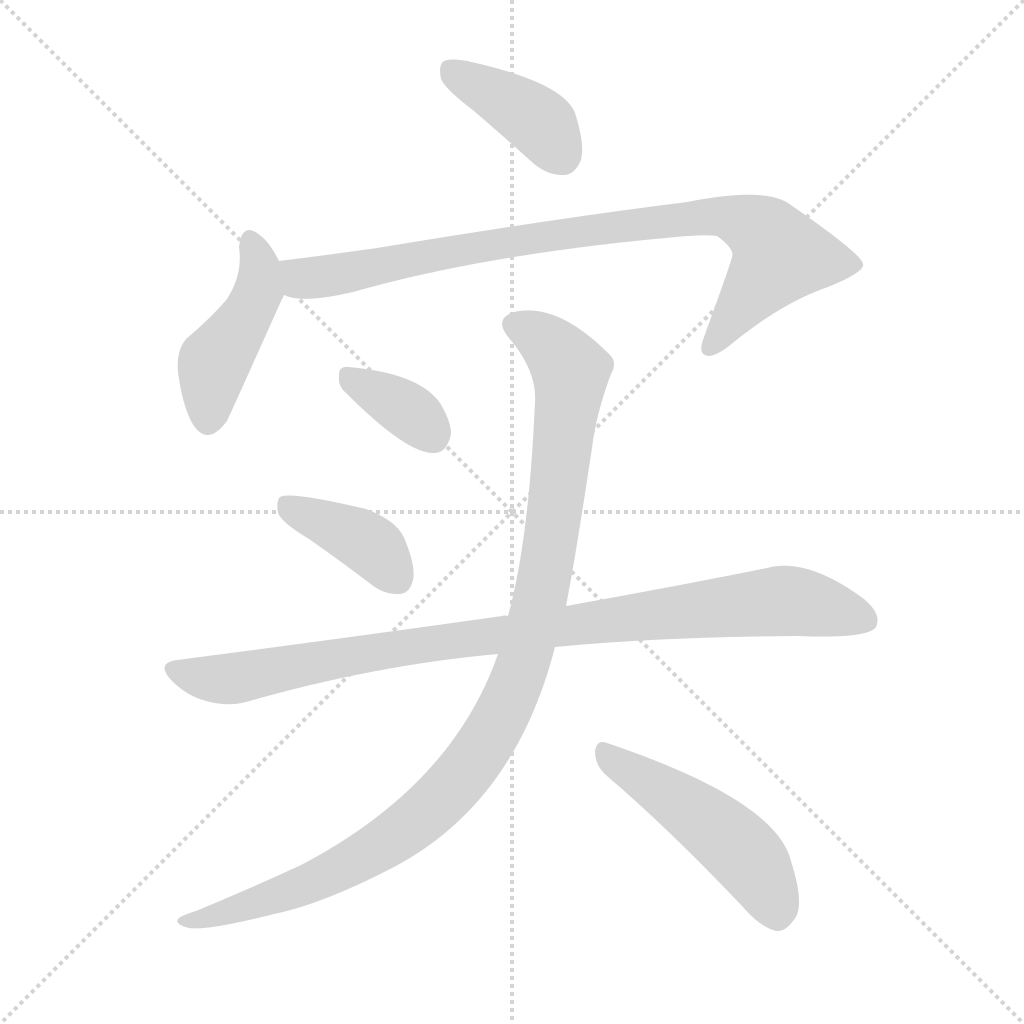
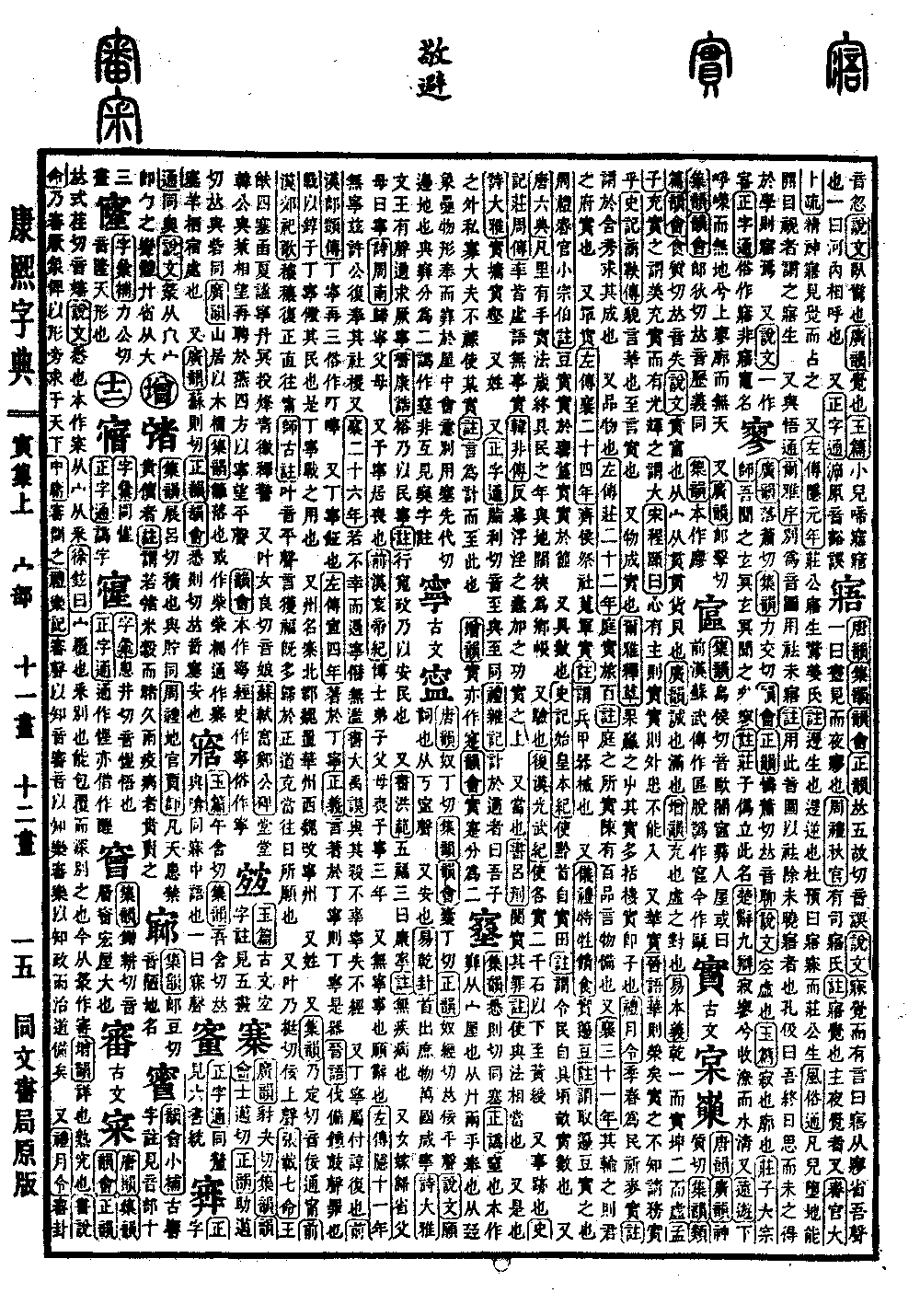
Ancient form is written as bao. According to Tang Rhymes (Tangyun) and Guangyun (Guangyun), pronounced shi (entering tone). According to Jiyun (Jiyun), Leipian (Leipian), and Yunhui (Yunhui), pronounced shi (entering tone). In the Explaining Graphs and Analyzing Characters (Shuowen), it says: shi means rich. Composed of roof and guant (to string). Guant refers to shell money. According to Guangyun, it means sincere or full. According to Zengyun (Zengyun), it means to fill, the opposite of empty. In the Book of Changes (Yijing), original meaning: Qian is one and full, Kun is two and empty. In the Mencius (Mengzi), it says: to be full is called beauty; to be full and have radiance is called greatness. Song dynasty scholar Cheng Yi said: if the heart has a focus, it is full; if it is full, external troubles cannot enter. Also refers to blossoms and fruit. In the Discourses of Jin (Jinyu), it says: if one has blossoms, there is glory; one does not know the fruit, please strive for substance. In the Records of the Grand Historian (Shiji), Biography of Shang Yang, it says: words of appearance are blossoms; words of attainment are substance. Also refers to the maturation of things. In the Erya (Erya), Explanation of Grasses, it discusses the fruit of the trichosanthes plant. Shi refers to the seed. In the Book of Rites (Liji), Monthly Ordinances (Yueling), it says: in the last month of spring, pray for the grain of wheat. The commentary says: this means seeking its maturation while it contains the essence. Also refers to objects. In the Zuo Tradition (Zuozhuan), 22nd year of Duke Zhuang, it says: the courtyard was filled with a hundred items. The commentary explains that having a hundred kinds of items in the courtyard means the items were complete. In the 31st year of Duke Xiang, it says: if it is transported, then it becomes the wealth of the ruler’s treasury. Also refers to military stores. In the Zuo Tradition, 24th year of Duke Xiang, it says: Qi sacrificed at the altar of the soil and inspected military stores. Du commentary says: sacrificing at the altar of the soil and inspecting military equipment. In the Book of Etiquette and Ceremonial (Yili), Special Sacrifice (Tesheng Kuishi), it says: fill the bamboo baskets and wooden stands. The commentary says: this means taking the baskets and stands and filling them. In the Rites of Zhou (Zhouli), Spring Officials, commentary by the Minor Prefect of Ceremonies, it says: fill the bean containers with contents from the jars, and fill the gui baskets with contents from the small baskets. Also means to report the exact amount. In the Records of the Grand Historian, Basic Annals of the First Emperor, it says: make the common people report their own land figures. The commentary says: this means ordering the people to report the exact area of their fields. In the Tang Six Statutes (Tang Liudian), it says: within every village there is a hand-reporting law; at the end of the year, one prepares a village register including the age of the people and the width of their land. Also means to verify. In the Later Han History (Houhanji), Annals of Guangwu, it says: make each report the two-thousand-shi official, down to the yellow-ribbon rank. Also means actual events. In the Records of the Grand Historian, Biography of Zhuang Zhou, it says: all are empty words, without factual basis. In the Biography of Han Fei, it says: instead, one raises floating, licentious insects and adds them on top of real merits. Also means to correspond. In the Book of Documents (Shu), Announcement of Lu, it says: examine and make their crimes correspond to the law. The commentary says: make them correspond to the law. Also means truly. In the Book of Odes (Shijing), Greater Odes, it says: truly walls, truly moats. Also a surname. According to Zhengzitong (Zhengzitong), pronounced zhi (entering tone). Same as zhi. In the Book of Rites, Miscellaneous Records (Zaji), it says: when reporting to the elder, one says: my child’s external private humble official has passed away, and sent me to report the truth. The commentary says: meaning that because of the mourning, he has come here. According to Zengyun, shi is also written as shi. According to Yunhui, shi and shi are divided into two.