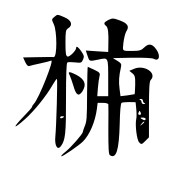
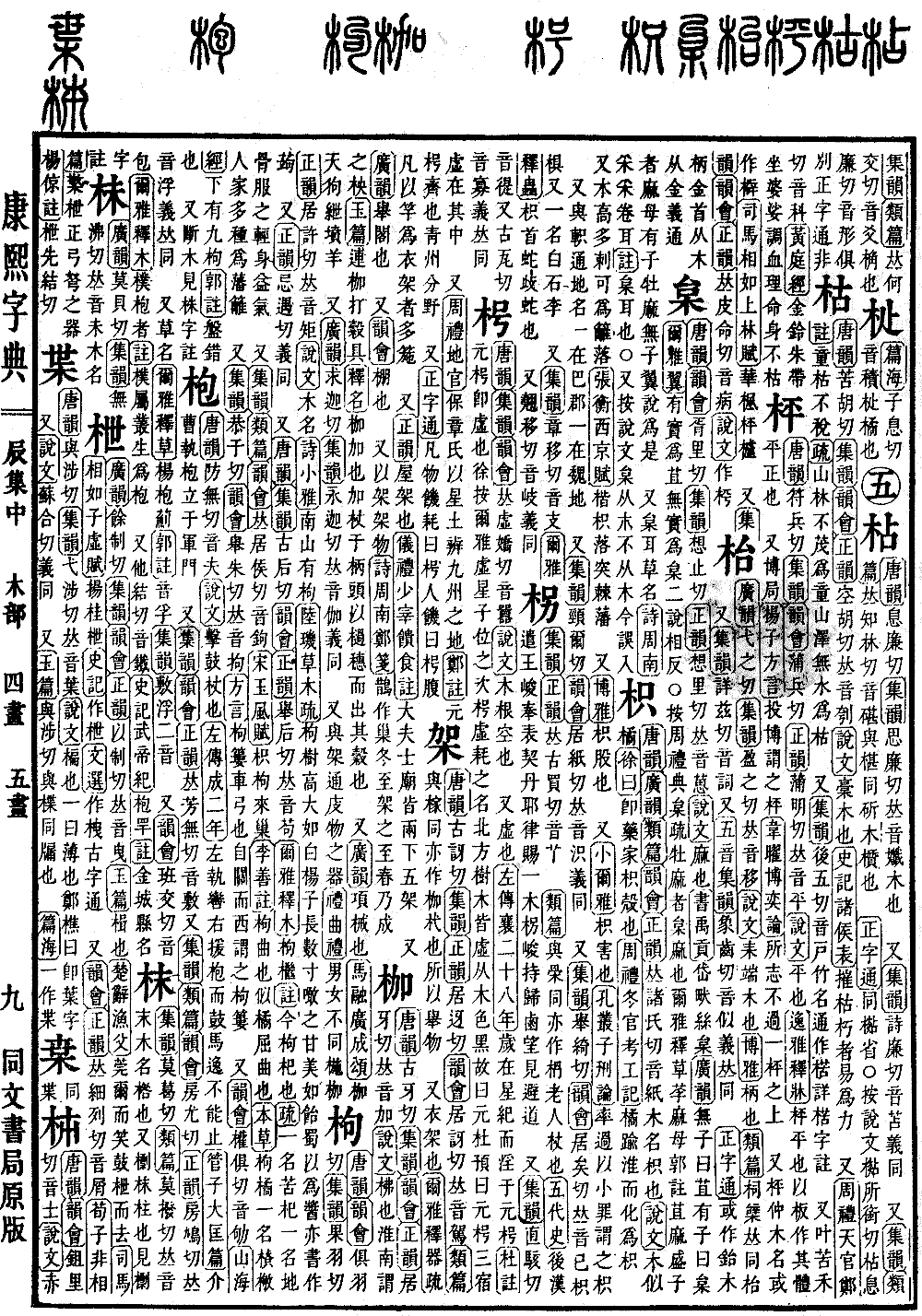
Chen Collection, Middle Volume. Radical: Tree (mù). Character: shi. Kangxi stroke count: 9. Page 517, Entry 19.
Pronounced shi.
Shuowen Jiezi (Explanation of Graphs and Analysis of Characters) states it is a red-fruited tree. Book of Rites (Liji), Inner Morality section, mentions jujubes, chestnuts, hazelnuts, and persimmons. Zheng Xuan's commentary states these are various delicacies added to the meals of a ruler.
The Erya Yi (Expanded Interpretations of the Erya) notes the persimmon has seven virtues: one, longevity; two, abundant shade; three, no bird nests; four, no insect damage; five, frost-touched leaves that are pleasant to view; six, fine fruit that can be eaten; seven, fallen leaves that are large and broad, suitable for writing upon.
Also, pronounced shi. The meaning is the same. Zuo Si's Rhapsody on the Capital of Wu mentions the pingzhong and junqian. The commentary states the junqian is a small variety of persimmon. Sima Guang's Garden of Names mentions the junqian fruit resembles mare's milk, which is the present-day milk persimmon.
Also, pronounced shi (falling tone). The meaning is the same. The Correct Rhymes (Zheng Yun) notes the form written with the radical for towel is a vulgar variant and is incorrect.