Shen Collection, Upper Volume
Radical: Grass (cǎo)
芹
Kangxi strokes: 10
Page 1021, Entry 08
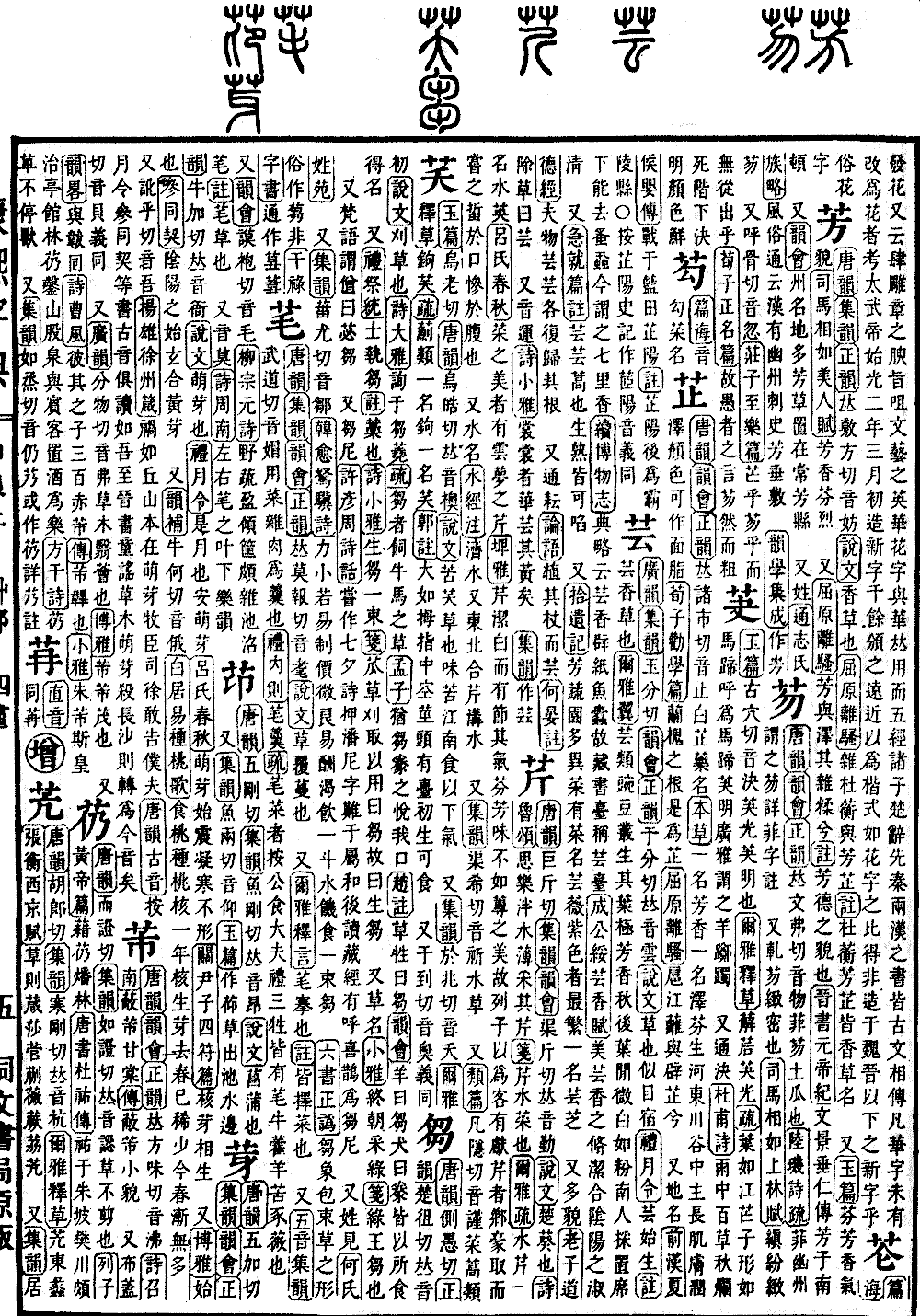
Pronounced qin. According to the Shuowen Jiezi, it is the Chu mallow. The Book of Odes (Shijing), in the Odes of Lu, writes: To think of the Pan water is delightful, go and gather the water celery there. The annotation notes that water celery is a type of aquatic vegetable. The Erya Shu explains that water celery is also called water hero. The Annals of Master Lu (Lushi Chunqiu) records: Among delicious vegetables, there is the water celery of the Yunmeng Marsh. The Piya describes water celery as pure white with joints and a fragrant scent, but its taste is not as delicious as water shield; therefore, the Liezi records that when a man offered water celery, the local gentry tasted it, their mouths felt stung, and their stomachs felt uncomfortable.
It is also the name of a river. The Commentary on the Water Classic (Shuijing Zhu) records: The Ji River flows northeast and converges with the Qin Gou River.
Also, pronounced qi. It refers to aquatic plants.
Also, pronounced jin. It belongs to the category of mugwort vegetables.
Textual research: The Lei Pian originally cited the pronunciation as fan yin, which sounds like jin. Based on the original text, the pronunciation has been corrected to ji yin.