Wu Collection, Lower Volume
Radical: Spirit (shì)
Kangxi Strokes: 9
Page 840, Entry 08
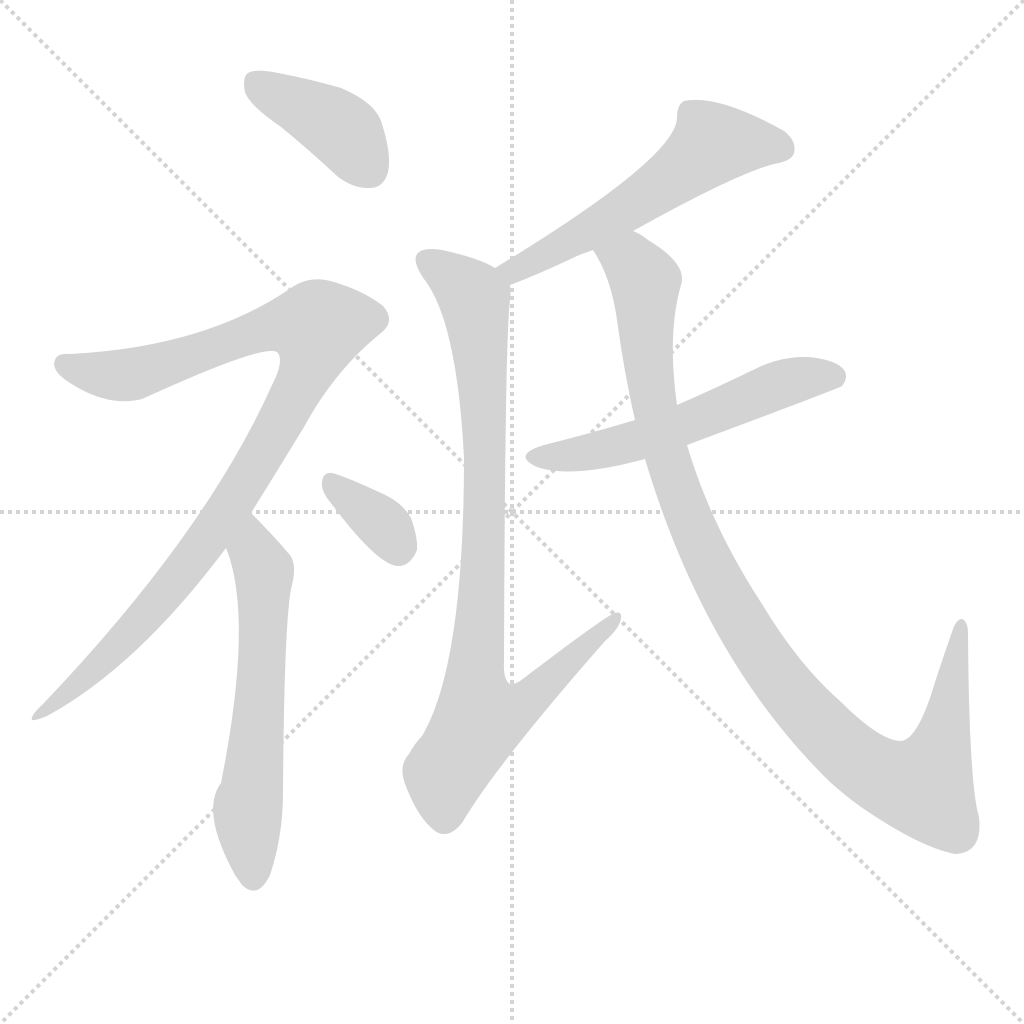
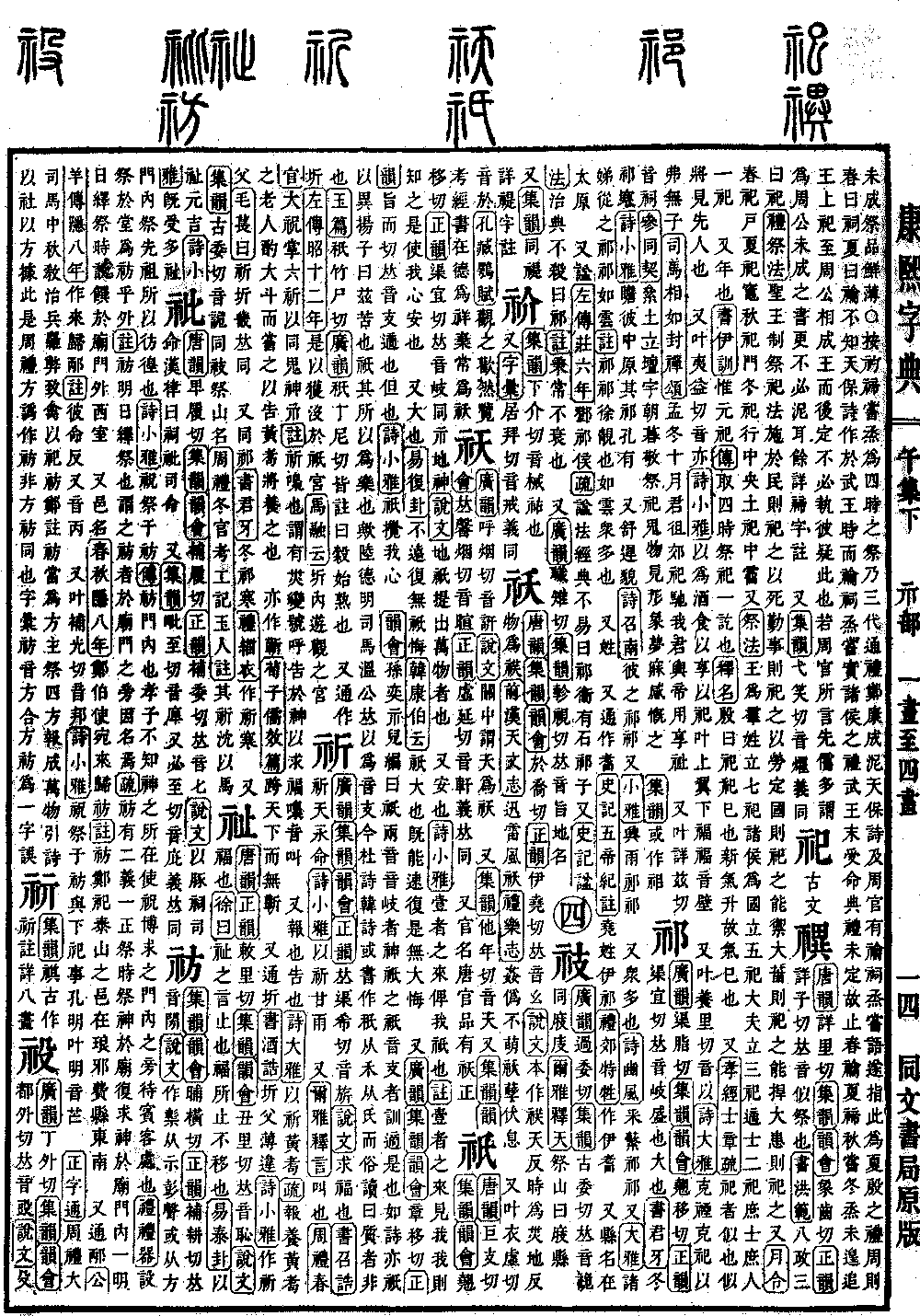
Pronounced qi. Identical to the character for spirit, referring to the deity of the earth. In the Explaining Graphs and Analyzing Characters (Shuowen Jiezi), it is the deity that generates and nurtures all things. It also denotes peace and tranquility. In the Book of Odes (Shijing), it is written: That person comes to see me once, which brings peace to my heart. The commentary explains: When that person comes to see me, I become aware of them, and this settles my mind. It also denotes great. In the Book of Changes (Yijing), regarding the Return hexagram: Returning without going far, there is no great regret. Han Kangbo states: The character means great. Since one can return quickly, there is no great regret.
Pronounced zhi. Denotes exactly or merely. In the Book of Odes (Shijing), it is written: It merely disturbs my heart. The Rhyme Compendium (Yunhui) cites Sun Yi’s Treatise for My Children (Shi Er Bian), which states: This character has two pronunciations. When read as qi, it refers to the deity of the earth. When read as zhi, it means exactly or merely, such as in the lines of poetry where it means because they are different. Yang Zi states: This type of bitterness is precisely the reason it becomes happiness. Lu Deming and Sima Wengong both believe it should be pronounced zhi. Nowadays, in the poems of Du Fu and Han Yu, it is sometimes written with the grain radical, and those who read it as zhi are incorrect.
In the Jade Chapter (Yupian), the variant is pronounced as zhi (shi). In the Broad Rhymes (Guangyun), the variant is pronounced as ding. Both define it as grain that has just ripened. It is also used interchangeably with the character for border (qi). In the Zuo Tradition (Zuo Zhuan), it is written: Therefore one was able to have a good end in the Qi Palace. Ma Rong states: This refers to a palace for leisure and sightseeing within the capital city.