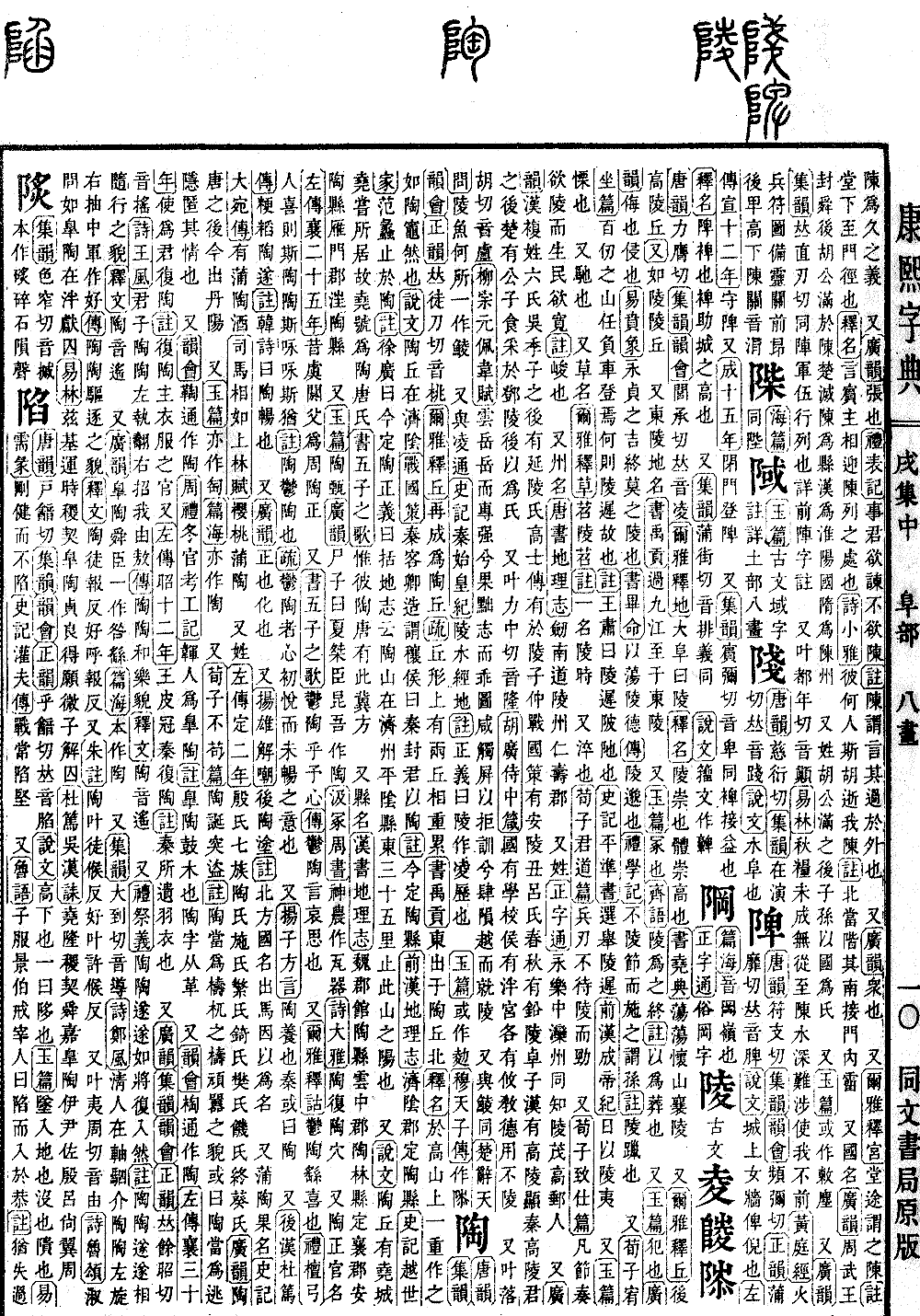
Xu Collection, Middle Volume; Radical: Mound (fù); Character: 陴 (pí); Kangxi strokes: 16; Page: 1354, Entry 04
According to Tang Rhyme (Tangyun), pronounced fúzhīqiè. According to Jiyun and Yunhui, pronounced pínmíqiè. According to Zhengyun, pronounced púmíqiè, homophonous with pí.
In Explaining and Analyzing Characters (Shuowen Jiezi), it is explained as the crenellated parapet (bìní), referring to the indentation and protrusion on a city wall's low parapet. Zuo Zhuan (Zuozhuan), Duke Xuan, Year 12, records "guard the parapet." Duke Cheng, Year 15, records "close the gates and ascend the parapet."
Jiyun also records the pronunciation bīnmíqiè, homophonous with bēi, which is cognate with the character bì, meaning to augment or assist. Explaining Names (Shimíng) explains that pí is bì, referring to the auxiliary structure that raises the city wall.
Jiyun also records the pronunciation pújiēqiè, homophonous with pái, with the same meaning.
In Explaining and Analyzing Characters (Shuowen Jiezi), its Seal Script (dàzhuàn) form is recorded.