Mao Collection, Middle Volume
Radical: Hand (shǒu)
Kangxi Strokes: 12
Page 435, Entry 08
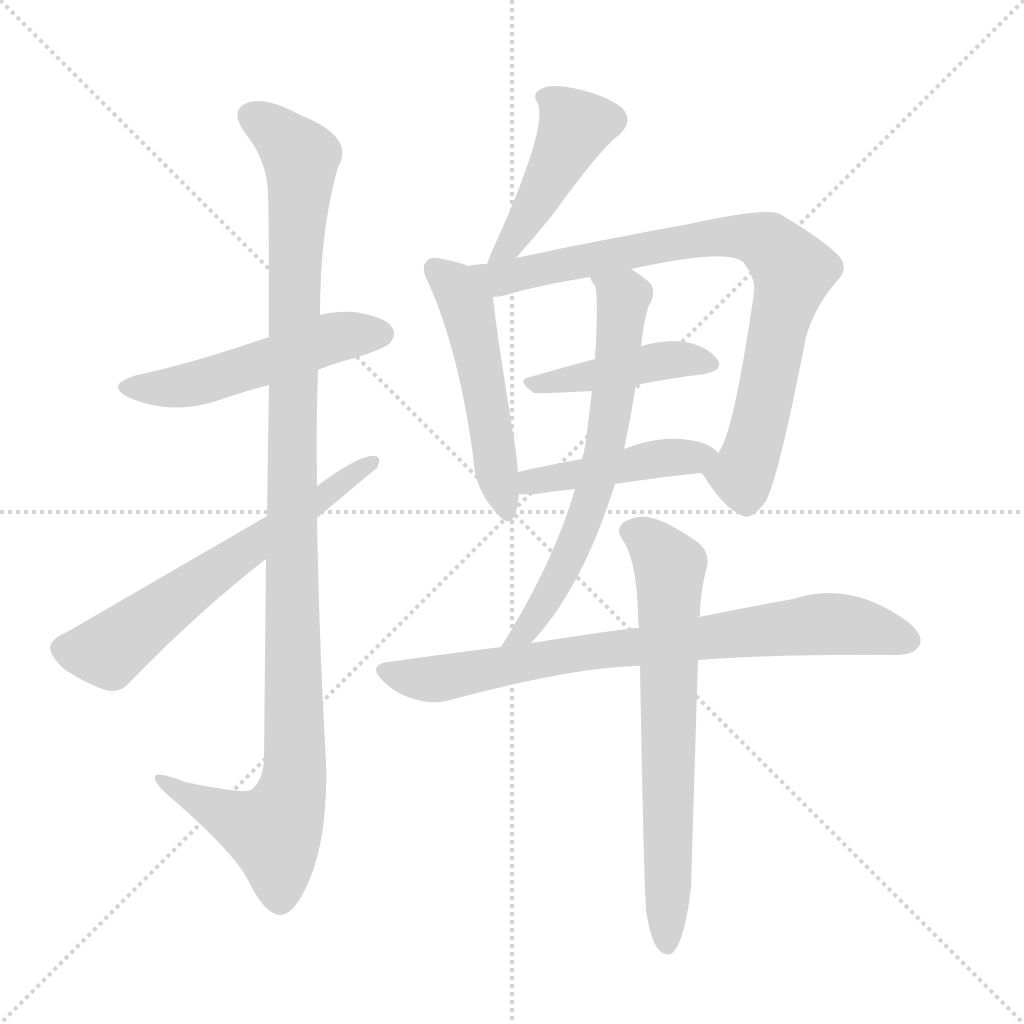
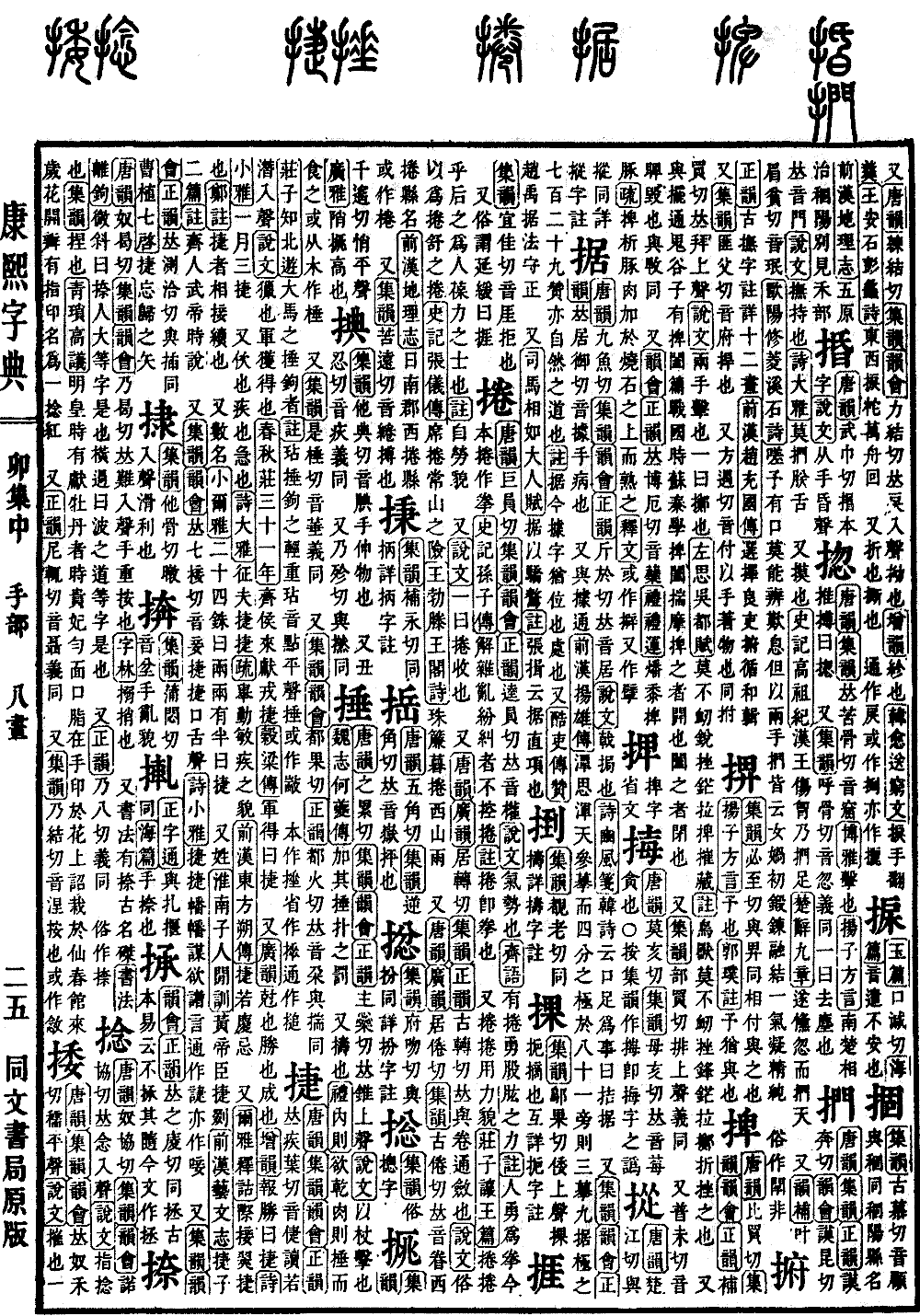
Pronounced bai (rising tone). According to the Explaining Graphs and Analyzing Characters (Shuowen Jiezi), it refers to clapping with both hands. Another interpretation is to throw or cast. In the Rhapsody on the Capital of Wu (Wudu Fu) by Zuo Si, it is written: They all have their sharp points blunted and edges filed, being pulled, thrown, crushed, and hidden away. The commentary explains: There are no birds or beasts that are not blunted in their sharpness, pulled, thrown, crushed, and forced into hiding. It is also used interchangeably with the character for swing or sway. The Master of Ghost Valley (Guiguzi) contains a chapter on opening and closing; during the Warring States period, Su Qin studied the arts of opening, closing, calculating, and pondering, where opening refers to unlocking or initiating, and closing refers to shutting or finalizing.
Pronounced pai (rising tone). The meaning is the same.
Pronounced pi (falling tone). The meaning is to destroy or ruin. It is the same as the variant character pi.
Pronounced nie. According to the Book of Rites (Liji), in the chapter on the Evolution of Rites (Liyun): Roast millet and split-roasted suckling pig. The sub-commentary explains: This refers to splitting open the pork and placing it on heated stones to roast until done. According to the Explication of Texts (Shiwen), it is sometimes written as pi (to split) or as bo (to tear apart).