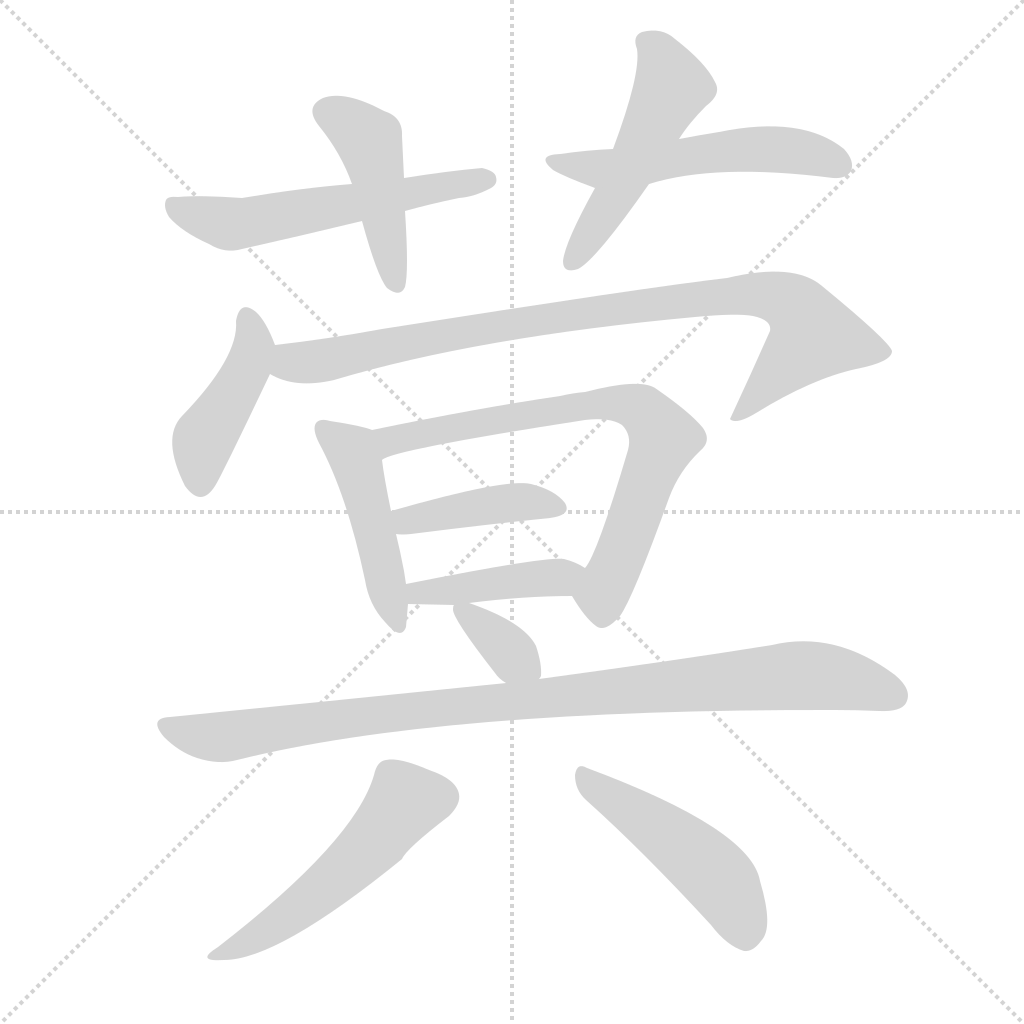
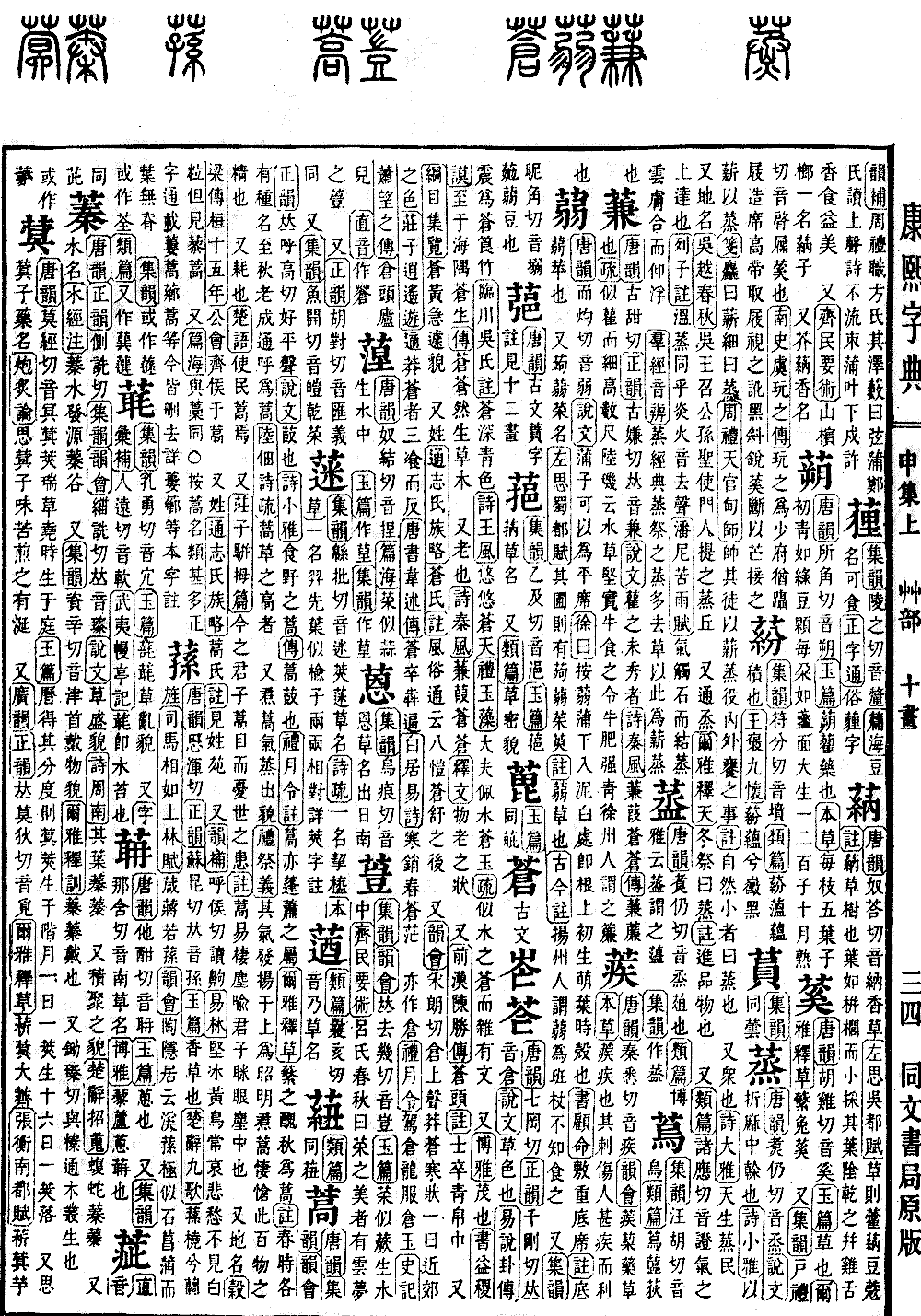
Shen Collection, Upper Volume
Radical: Grass (cǎo)
Ming; Kangxi stroke count: 16; Page 1050, Entry 31
According to the Tang Rhyme (Tangyun), pronounced ming. Mingjia is a type of auspicious grass. During the era of Emperor Yao, it grew in the palace courtyards. According to the Jade Chapters (Yupian), when the calendar aligns with the divisions of the heavens, the mingjia plant grows on the steps; on the first day of the month, one pod grows, and on the sixteenth day, one pod falls off. There is also the simingzi, which is the name of a medicinal herb. According to the Canon of Decoction and Roasting (Paozhilun), simingzi has a bitter taste and produces a mucilaginous substance when boiled.
Also, according to the Broad Rhyme (Guangyun) and Correct Rhyme (Zhengyun), pronounced mi. According to the Erh-ya: Explanation of Grasses (Er ya shi cao), ximing is the same as the large shepherd's purse. In Zhang Heng's Rhapsody on the Southern Capital (Nan du fu), it is mentioned as ximing, yu, and melon.