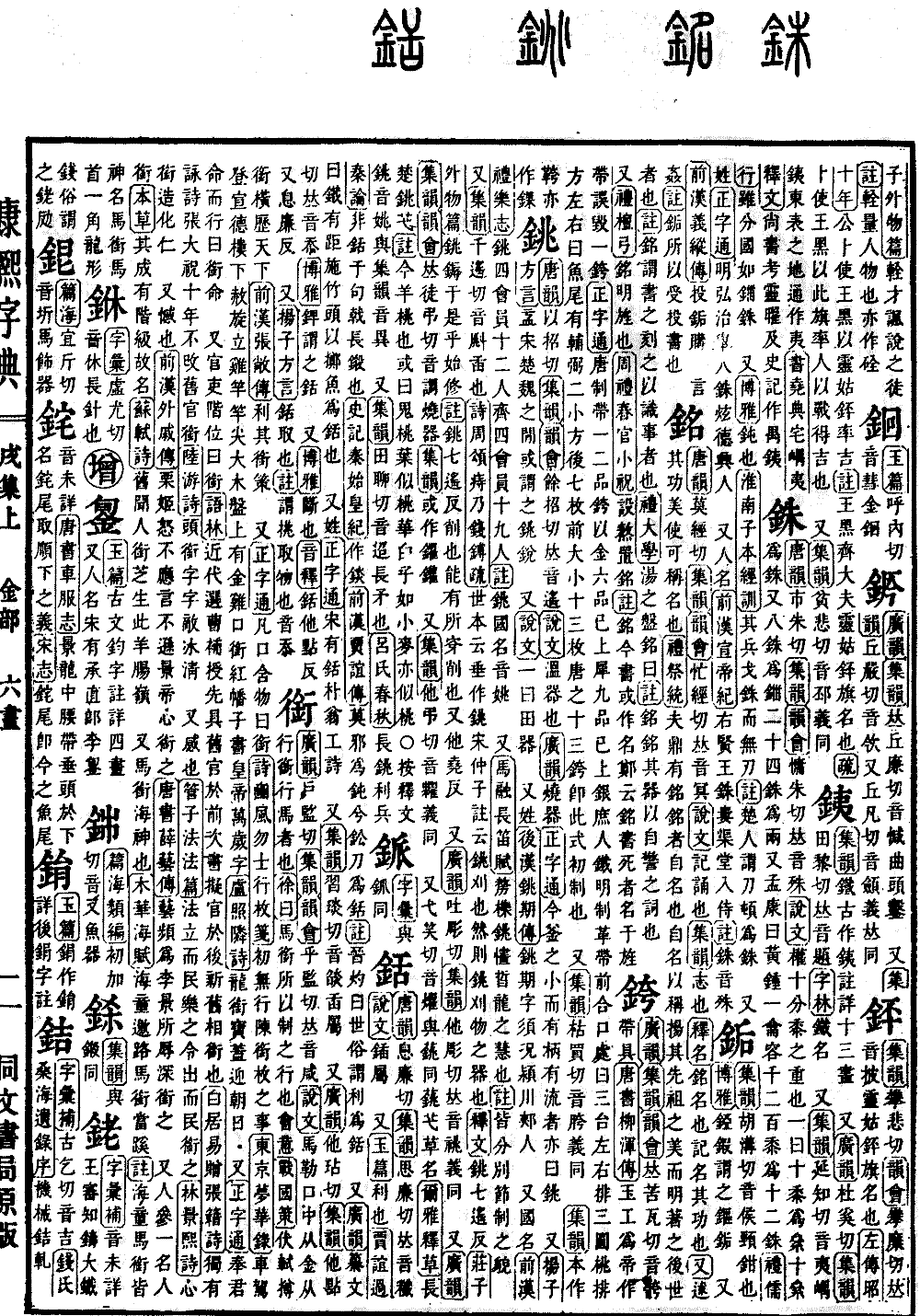
Xu Collection, Upper Volume
Radical: Metal (jīn)
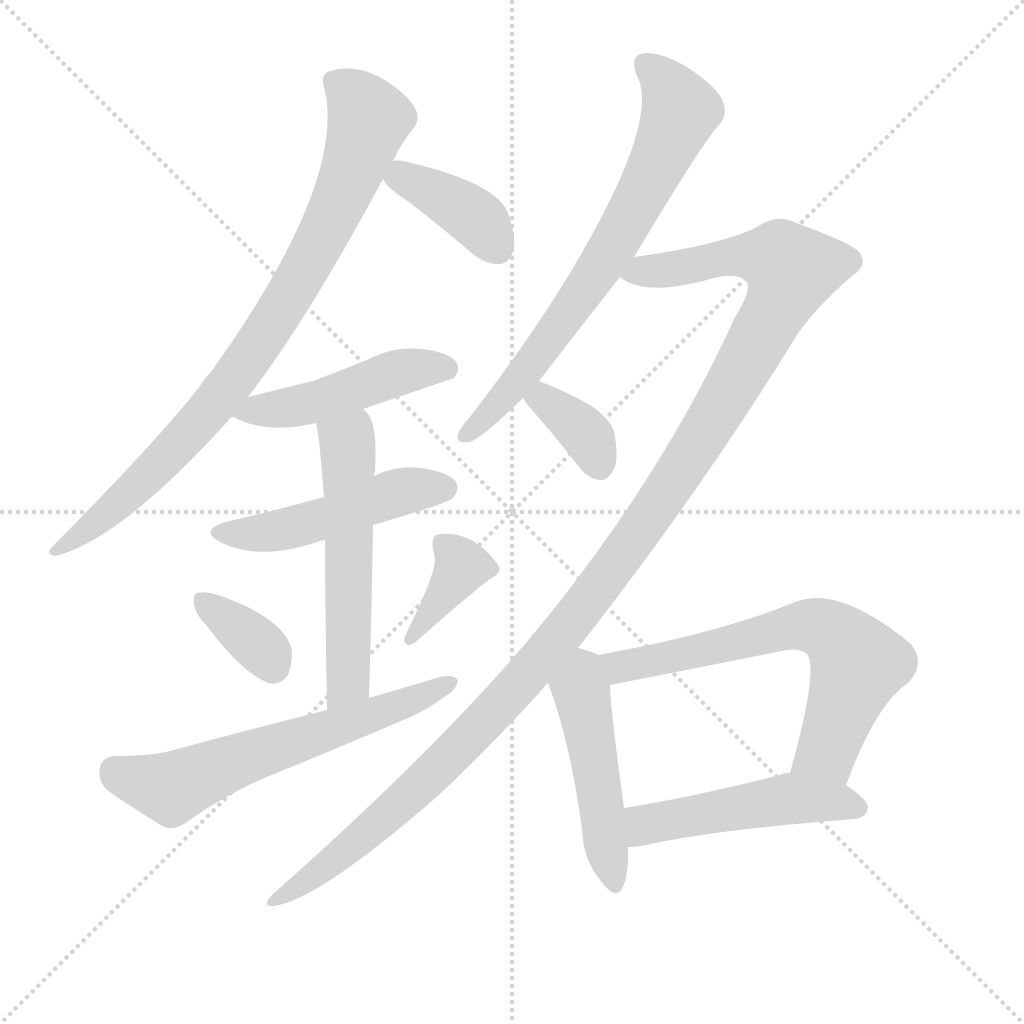
Ming
Kangxi stroke count: 14
Page 1305, Entry 07
Pronounced ming
According to the Shuowen Jiezi (Shuowen), it means to record or recite.
According to the Jiyun (Jiyun), it means to pledge or fix in one's mind.
According to the Shi Ming (Shiming), a ming is a name; it records a name to commemorate one's achievements.
Furthermore, it describes one's merits and virtues so that they may be spoken of and named.
Book of Rites (Liji), section on the Principles of Sacrifice: Tripods have inscriptions. An inscription is a way of naming oneself, using that name to praise the virtues of one's ancestors and to clearly transmit them to future generations.
Commentary: An inscription refers to something written or carved to mark an event.
Book of Rites (Liji), section on the Great Learning: The inscription on the basin of King Tang states.
Commentary: An inscription is a phrase engraved on a vessel to serve as a self-admonition.
Also, in the Book of Rites (Liji), section on the Tan Gong: An inscription is an illuminating banner.
Rites of Zhou (Zhouli), section on the Spring Offices, Lesser Invocation: Place the banner and set the inscription.
Commentary: In some versions, the character for inscription is written as the character for name. Zheng Xuan says: The inscription is the writing of the deceased's name upon a banner.