Yin Collection, Upper Volume
Radical: Roof (mi)
Page 283, Entry 06
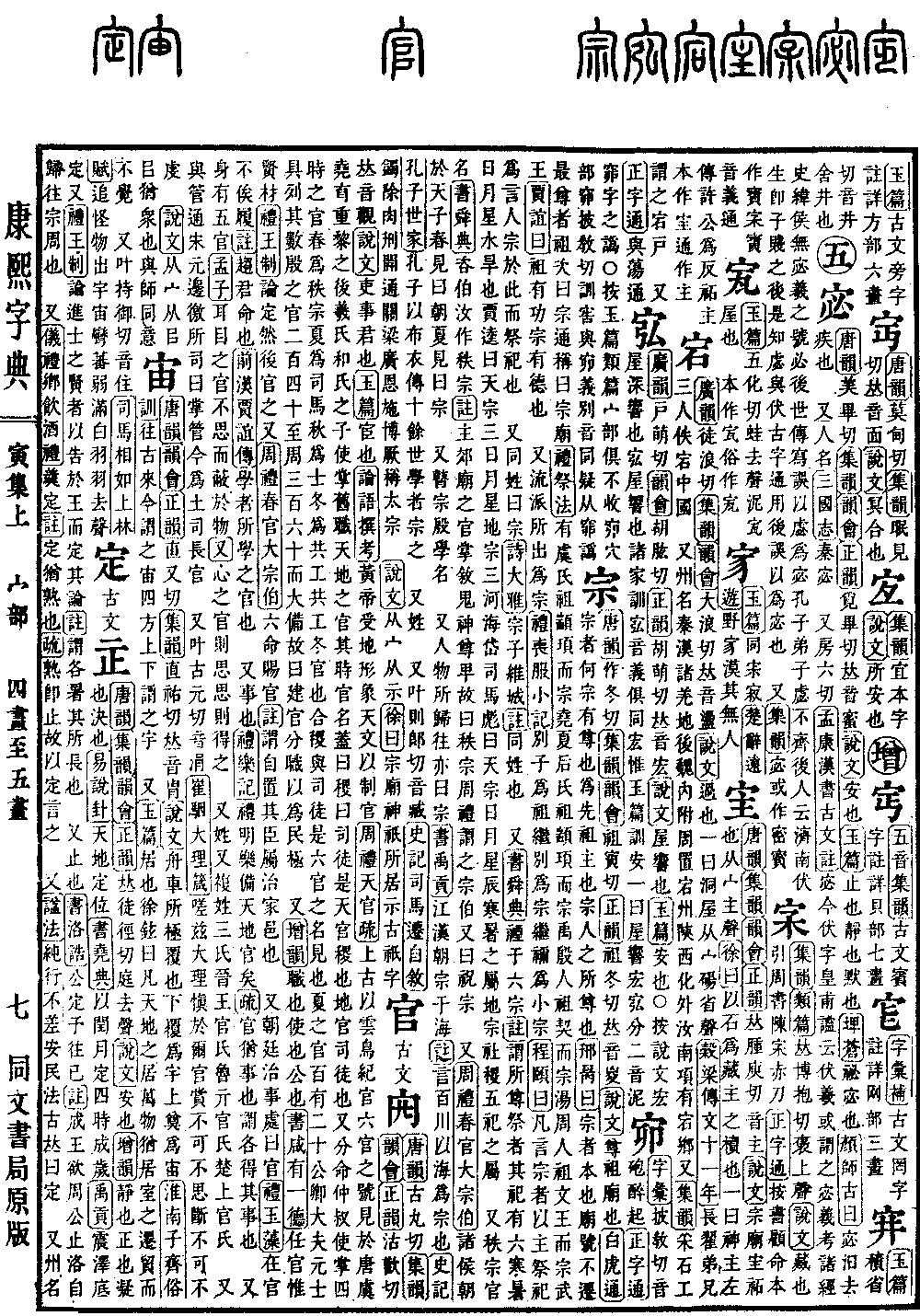
Pronounced mi. Pronounced mi. Pronounced mi. Pronounced mi. The pronunciation is the same as the word for honey. According to the Explaining Graphs and Analyzing Characters (Shuowen Jiezi), it means stability. According to the Jade Chapters (Yupian), it means to cease, to be peaceful, or to be silent. According to the Picang, it means hidden or secret. Yan Shigu states that the term mi-mi refers to the removal of illness. It is also used as a name, as seen in the Records of the Three Kingdoms (Sanguozhi) regarding Qin Mi. It is also pronounced fu. According to Meng Kang's annotations on the ancient text of the History of the Han Dynasty (Hanshu), mi is the same as the current character fu. Huangfu Mi states that Fuxi is sometimes referred to as Muxi. Investigating various classics, histories, and apocryphal texts, there is no such title as Muxi; this is certainly an error in later transcriptions where the character fu was mistakenly written as mi. The disciple of Confucius, Fu Buqi, was the ancestor of the later Fu Sheng of Jinan, from which we know that fu and fu were used interchangeably in ancient times, and were later incorrectly written as mi. According to the Collected Rhymes (Jiyun), mi is sometimes written as the character for dense or secret.