Hai Collection, Middle Volume
Radical: Bird (niǎo)
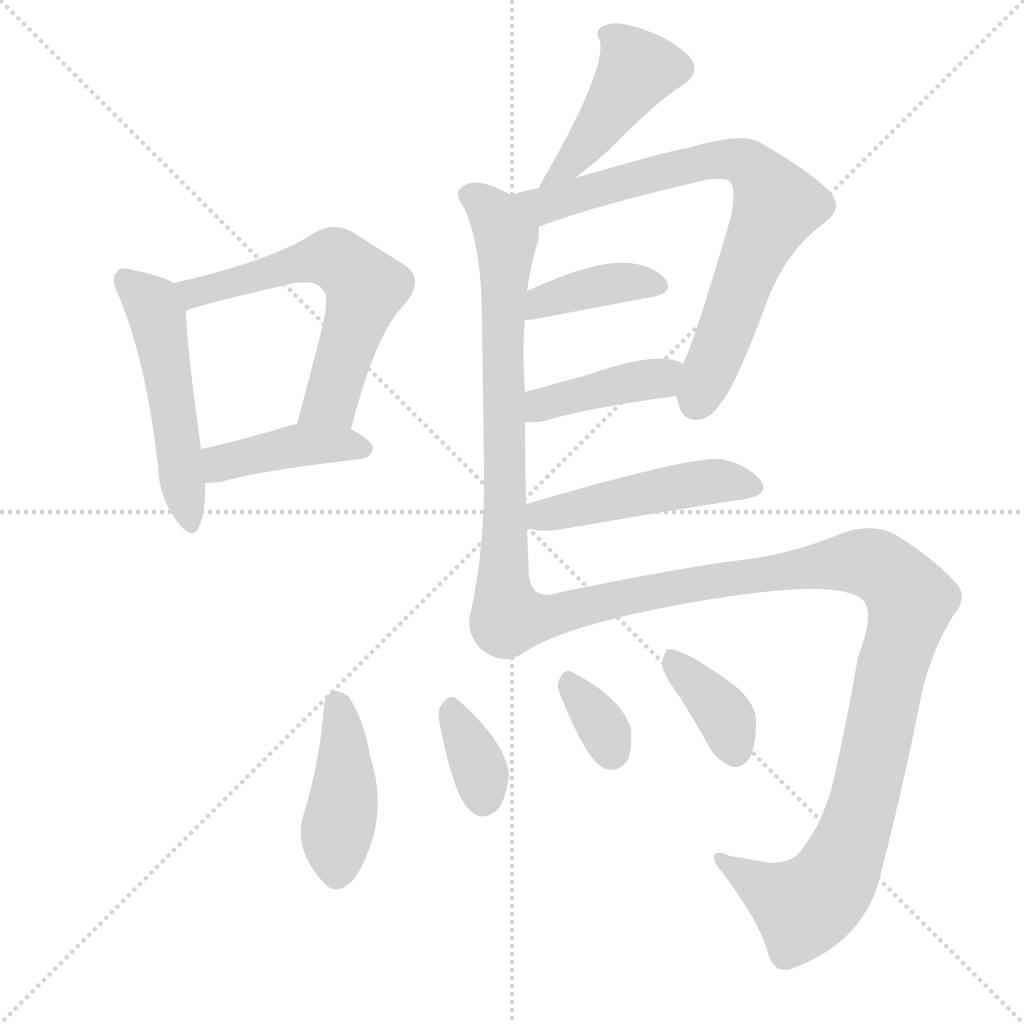
Ming; Kangxi stroke count: 14; Page 1482, Entry 18
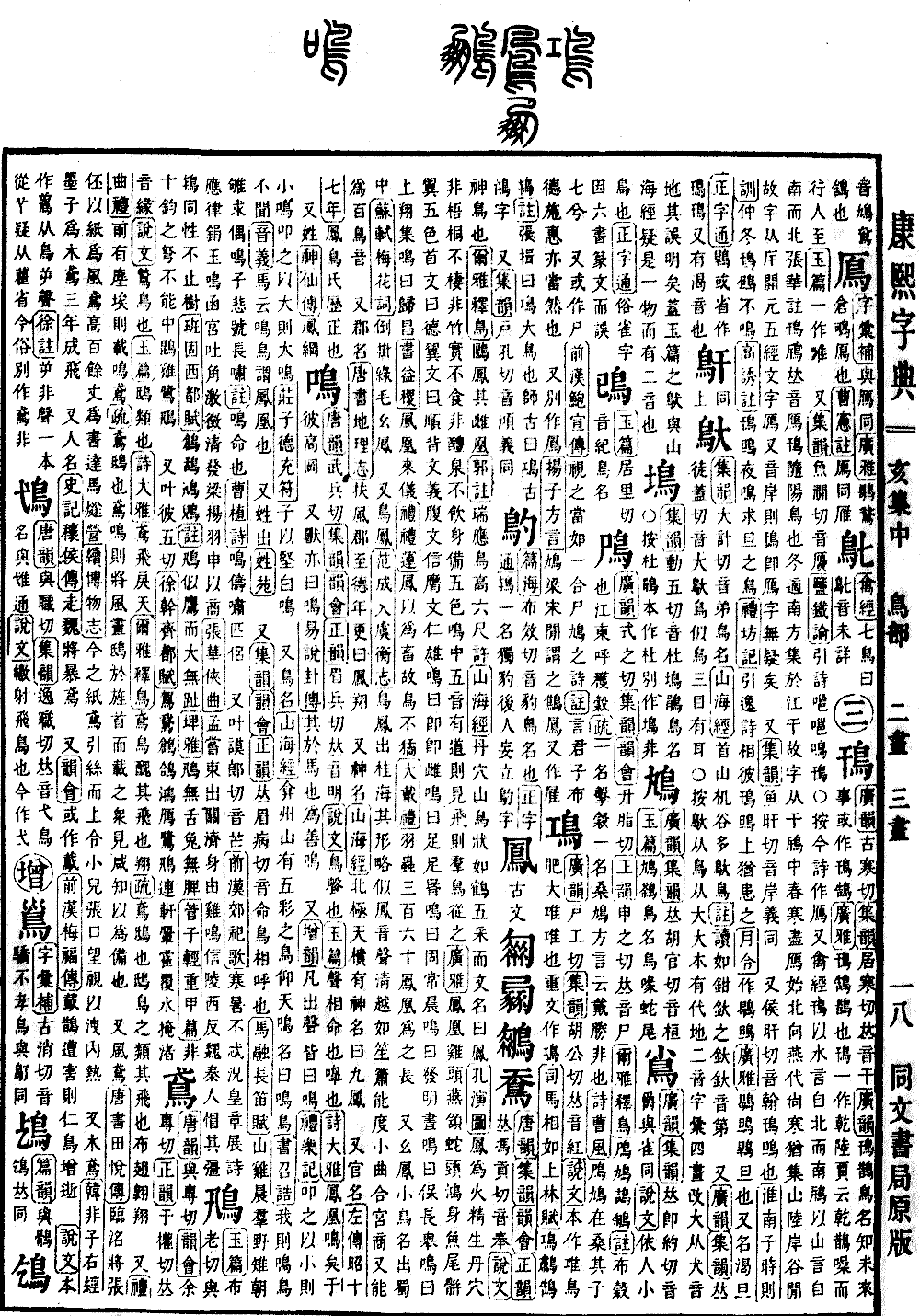
Pronounced ming. According to the Shuo Wen Jie Zi (Explaining Graphs and Analyzing Characters), the sound of a bird calling. According to the Yu Pian (Jade Chapters), the sound of mutual calling or roaring. In the Book of Odes (Shijing), it is written: The phoenix calls out from the high mountain ridge. It also refers to the cries of wild beasts. According to the I Ching (Book of Changes), in the context of horses, it refers to a horse that is good at whinnying. According to the Zeng Yun (Revised Rhymes), any emission of sound is referred to as ming. According to the Book of Rites (Liji), if struck with a light force, it produces a small sound; if struck with a heavy force, it produces a loud sound. According to the Zhuangzi, you contend with arguments regarding hardness and whiteness. It is also the name of a bird. According to the Classic of Mountains and Seas (Shan Hai Jing), on Yanzhou Mountain there is a bird of five colors that tilts its head and calls to the heavens; its name is the Ming bird. According to the Book of Documents (Shangshu), I cannot even hear the sound of the Ming bird. According to the Yin Yi (Pronunciation and Meaning), Ma Rong says the Ming bird refers to the phoenix. It is also a surname, as recorded in the Xing Yuan (Garden of Surnames).
Pronounced ming. The calling of birds to one another. According to the Chang Di Fu (Rhapsody on the Long Flute) by Ma Rong, mountain pheasants gather in the early morning, and wild pheasants cry out at dawn, seeking mates or calling to their young with mournful wails. The commentary notes that ming means to call. In the poetry of Cao Zhi, it means to call to companions or summon friends.
Also pronounced mang (rhyming with lang). According to the History of the Former Han Dynasty (Qian Hanshu) Sacrificial Odes, the alternation of cold and heat does not deviate, nor do the clear statutes; hymns are offered to harmonize with the ringing of jade chimes. The gong note encompasses the jue note and stimulates the zhi note, clear and soaring, with the voice rising high and shifting into the shang note. According to the Xia Qu (Ballad of the Hero) by Zhang Hua, Lord Mengchang traveled east out of the Hangu Pass, relying on a rooster's crow to escape. Lord Xinling returned west to the state of Wei, and the Qin people became powerful because of this.
Correction: The original text cited the Book of Rites (Liji) section on music; based on the original text, this has been corrected to the section on learning.