Si Collection, Lower Volume
Radical: Ox (niú)
Kangxi strokes: 15
Page 595, Entry 01
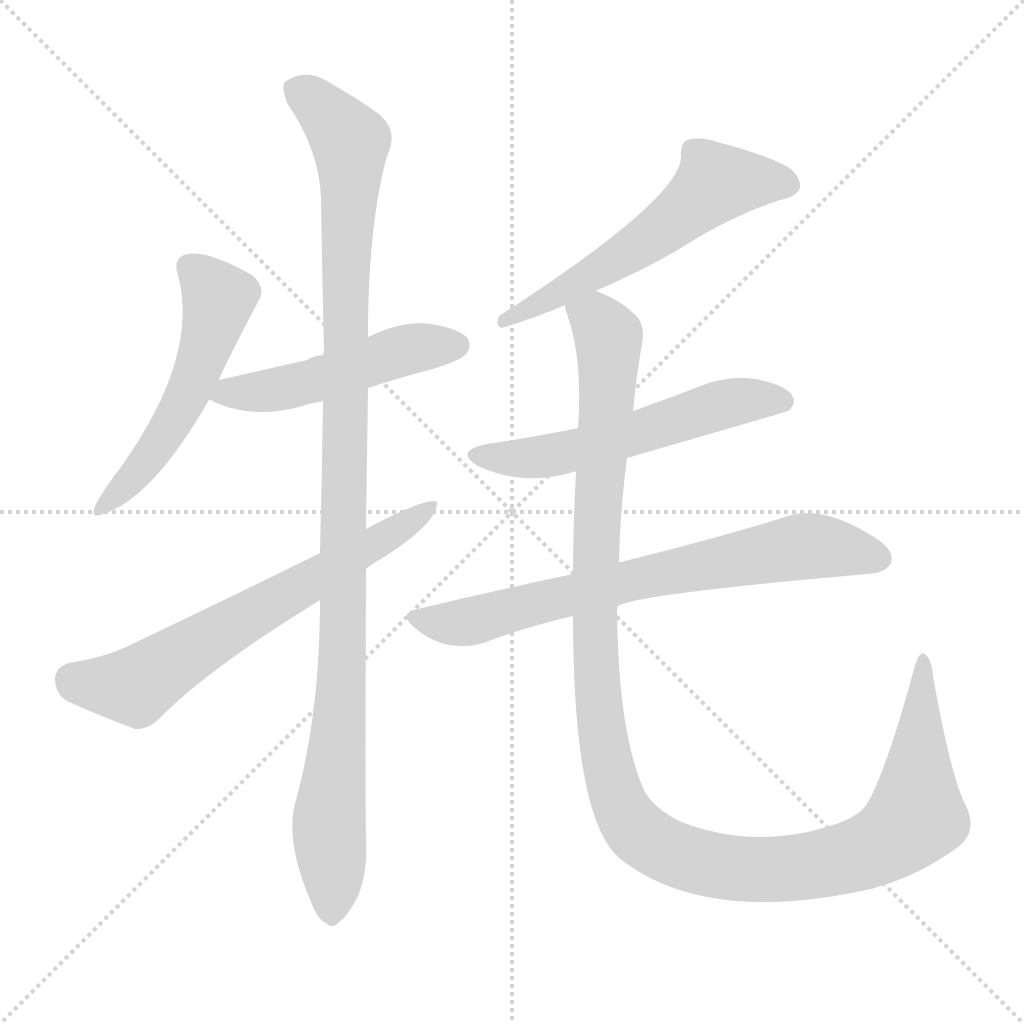
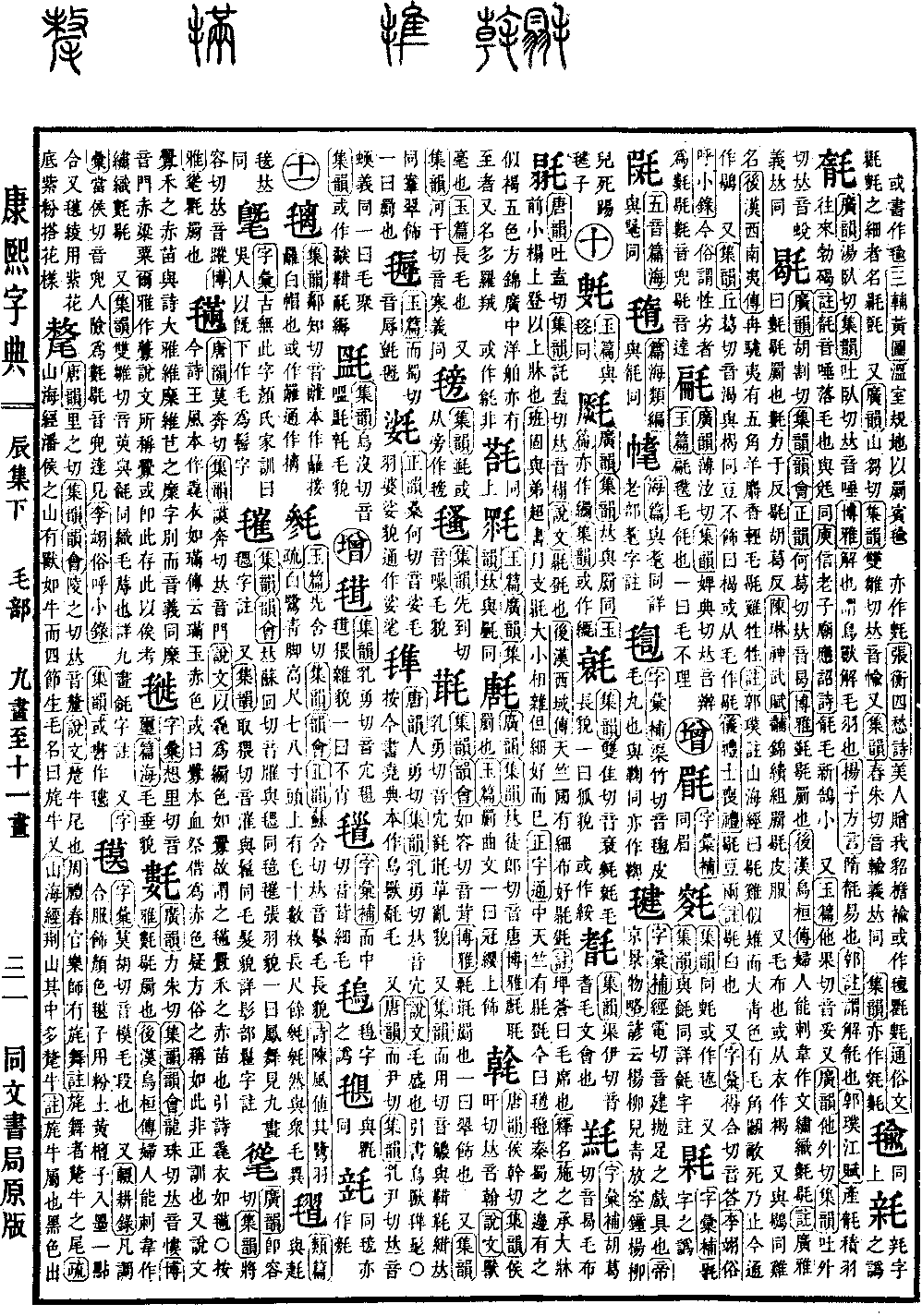
According to the Sound Compendium (Jiyun), pronounced mao. A type of ox. It is what is known today as the hybrid ox. Shigu's commentary discusses this. According to the Correct Meaning Compilation (Zhengzitong), the yak originates from Lintao in Gansu and regions beyond the southwest frontier; it is a wild ox. People often raise them. In appearance, they resemble the water buffalo, with long black hair measuring about a foot in length growing from the knees, tail, spine, and below the chin. The tail is long and large, resembling a peck measure, which the animal protects carefully. In ancient times, its hair was used to decorate banners; people today use it for tassels on hats. Those with hair mixed with white are dyed red with madder for use. The Classic of Mountains and Seas (Shanhaijing) records that on Panhou Mountain there is an ox with hair growing on the joints of its four legs, which is this animal. Sometimes written in a variant form (mao), also written as a variant, and also written as a variant (mao). Sometimes simplified as mao. Shigu's assertion that it is a hybrid ox is incorrect.