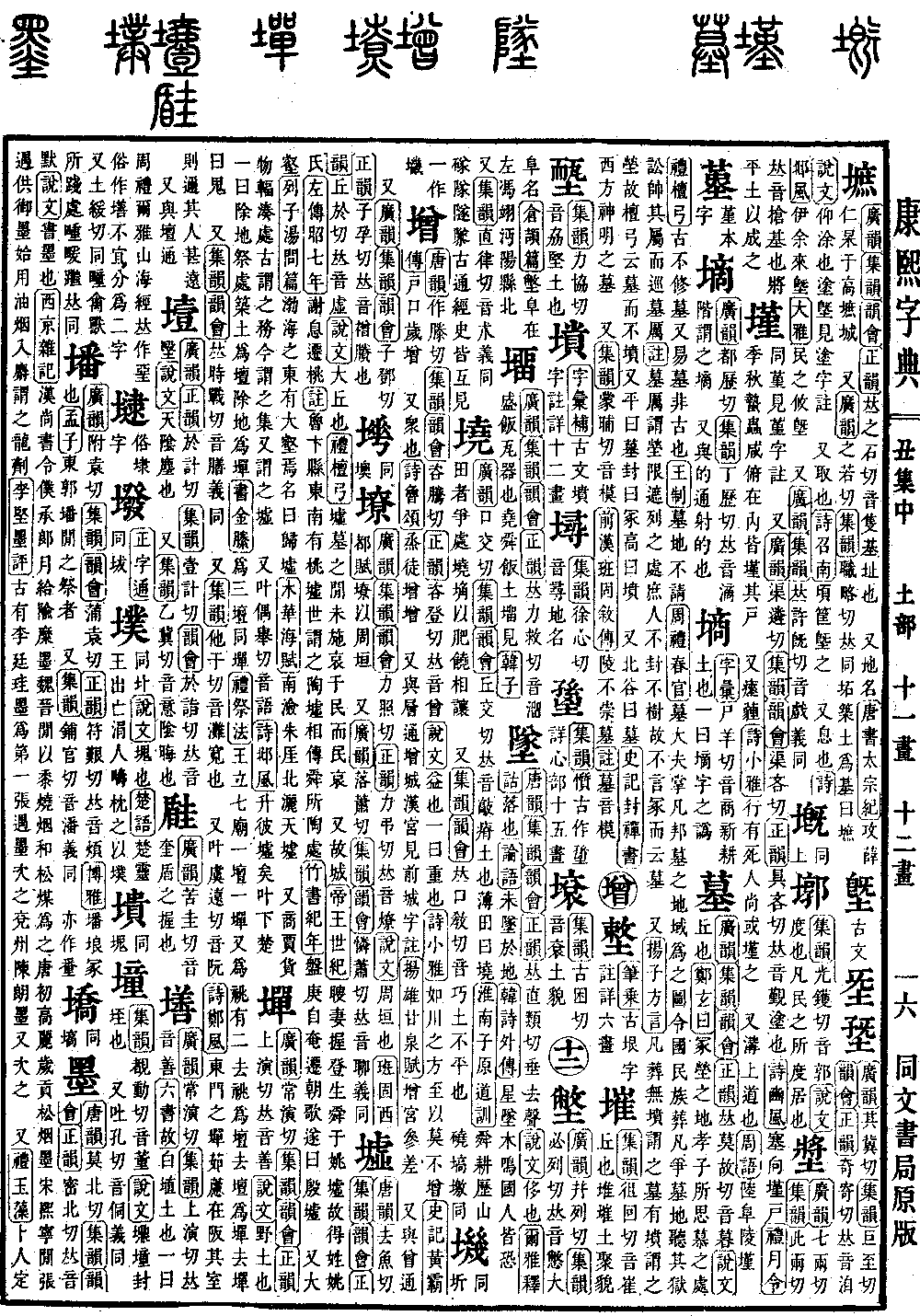
Chou Collection, Middle Volume. Radical: Earth (tǔ). Kangxi stroke count: 14. Page 238, Entry 12.
Broad Rhymes (Guangyun), Collected Rhymes (Jiyun), Rhyme Collection (Yunhui), and Correct Rhymes (Zhengyun) state it is pronounced mu (falling tone), with the same sound as twilight.
Explanation of Writing and Analysis of Characters (Shuowen) defines it as a mound of earth.
Zheng Xuan states it refers to the site of a grave, a place where a filial child expresses longing and remembers the deceased.
Book of Rites (Liji), section Tan Gong: In ancient times, people did not build grave mounds. Furthermore, moving the location of a grave was not an ancient custom.
The Royal Regulations (Wangzhi) state that cemetery land could not be requested or occupied privately.
Rites of Zhou (Zhouli), section Spring Offices: The Grave Grand Master manages all state cemetery areas, draws maps, and commands the citizens to be buried according to their clans. In cases of disputes over burial grounds, he adjudicates the relevant matters and leads subordinates to patrol the boundaries of the cemeteries.
Commentary: Grave boundaries refer to the area where cemetery markers are arranged. Common people did not pile earth or plant trees, so it is called a grave (mu) rather than a mound (zhong).
Yang Xiong's Dialects (Fangyan): Regarding burials, those without an earth mound are called graves (mu), while those with an earth mound are called cemeteries (ying). Therefore, Tan Gong states: There is a grave without a raised mound. Furthermore, a flat site is called a grave (mu), a site with sealed earth is called a mound (zhong), and a high site is called a tomb (fen).
Also, a valley to the north is called a grave (mu). Records of the Grand Historian (Shiji), section Treatise on the Sacrifices to Heaven and Earth: There are burial grounds of deities in the west.
Collected Rhymes (Jiyun) states it is pronounced mo, with the same sound as the word for pattern.
History of the Former Han (Qianhan), Biographical Preface by Ban Gu: The mountain tomb is not as high as a grave mound. Commentary: The character for grave is pronounced mo.