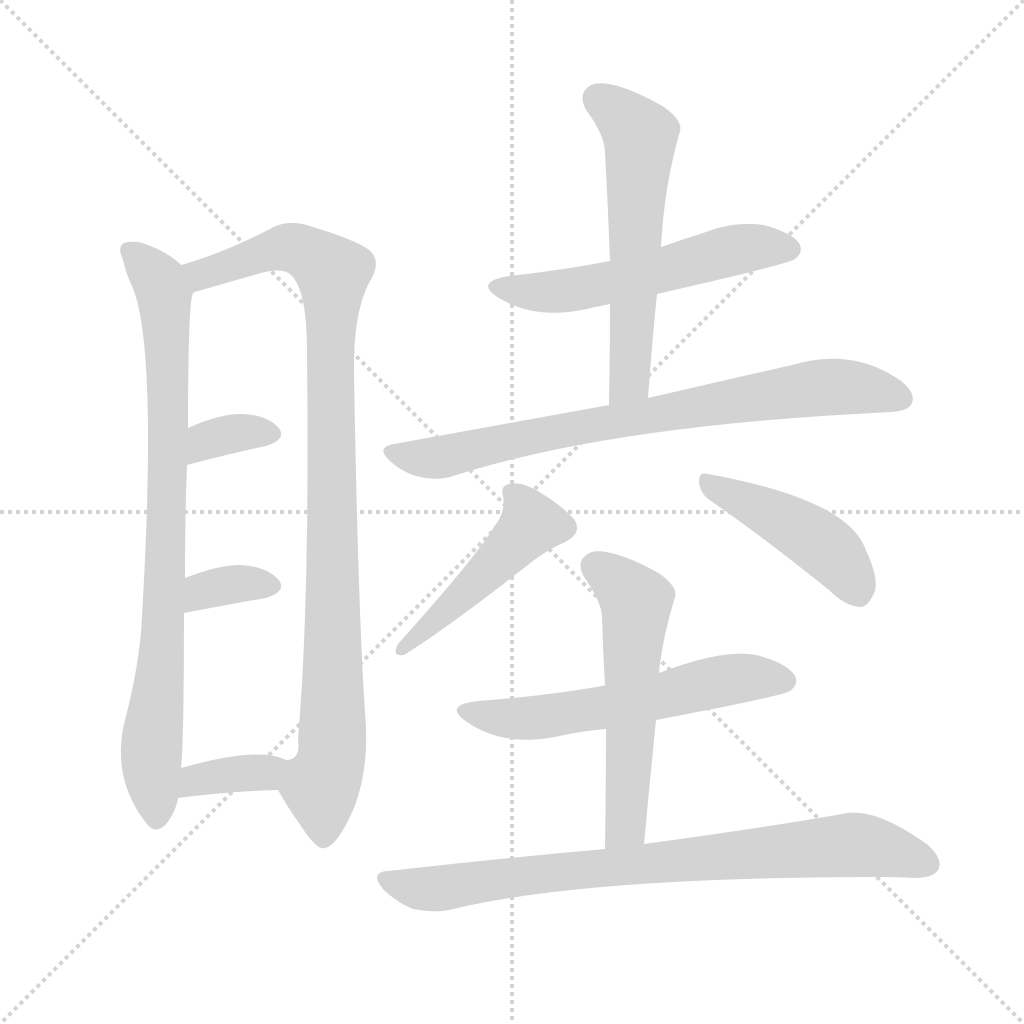
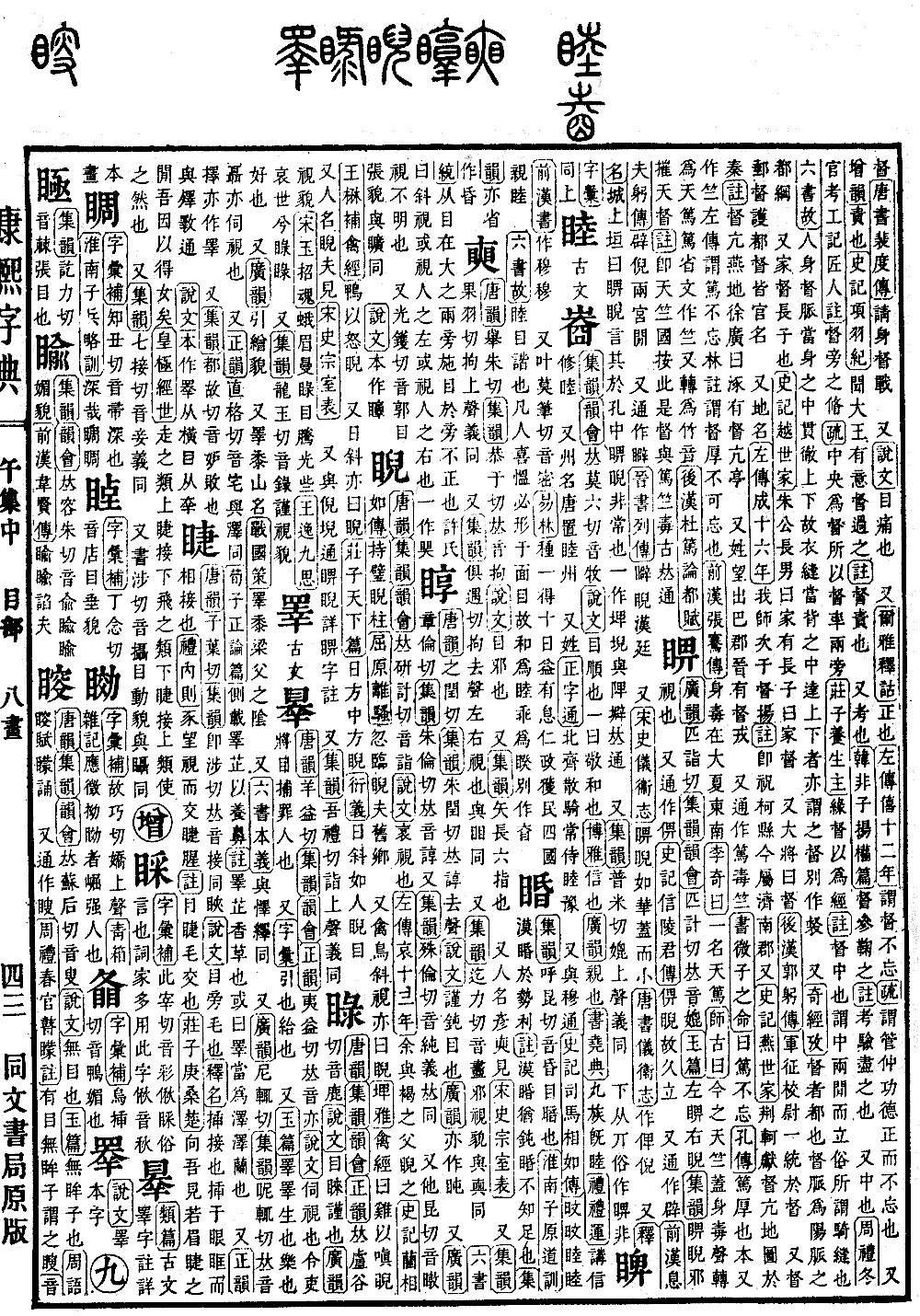
Wu Collection, Middle Volume. Radical: Eye (mù). Kangxi stroke count: 13. Page 811, Entry 03.
Ancient form. Collected Rimes (Jiyun) and Treasury of Rimes (Yunhui) state it is pronounced mu. Expository Dictionary of Chinese Characters (Shuowen) states it means the eyes are in harmony. Another source states it means to respect and live in harmony. Broadened Definitions (Boya) states it means trust. Broad Rimes (Guangyun) states it means to be close. Book of Documents (Shujing), Canon of Yao: The nine branches of the family were in harmony. Book of Rites (Liji), Evolution of Rites (Liyun): Discussing trust and cultivating harmony.
Also, the name of a prefecture. Established during the Tang Dynasty as Mu Prefecture. Also a surname. Correct Meaning Thoroughfare (Zhengzitong): During the Northern Qi Dynasty, there was a Cavalier Attendant-in-Ordinary named Mu Yu. Also used interchangeably with the character pronounced mu. Records of the Grand Historian (Shiji), Biography of Sima Xiangru: Serene and harmonious. Former Book of Han (Qianshu) records this as mu. Also, rhymes with the sound mi. Forest of Changes (Yilin): Plant one and obtain ten, call it gain and interest. Benevolent governance wins the people, and the four states are in close harmony. Six Scripts Commentary (Liushugu): Harmony is eye-concord. Whenever people are happy or angry, it must appear on their face and in their eyes, therefore harmony is called harmony, while discord is called separation. A variant form is written as a separate character.