Hai Collection, Upper Volume
Radical: Horse (mǎ)
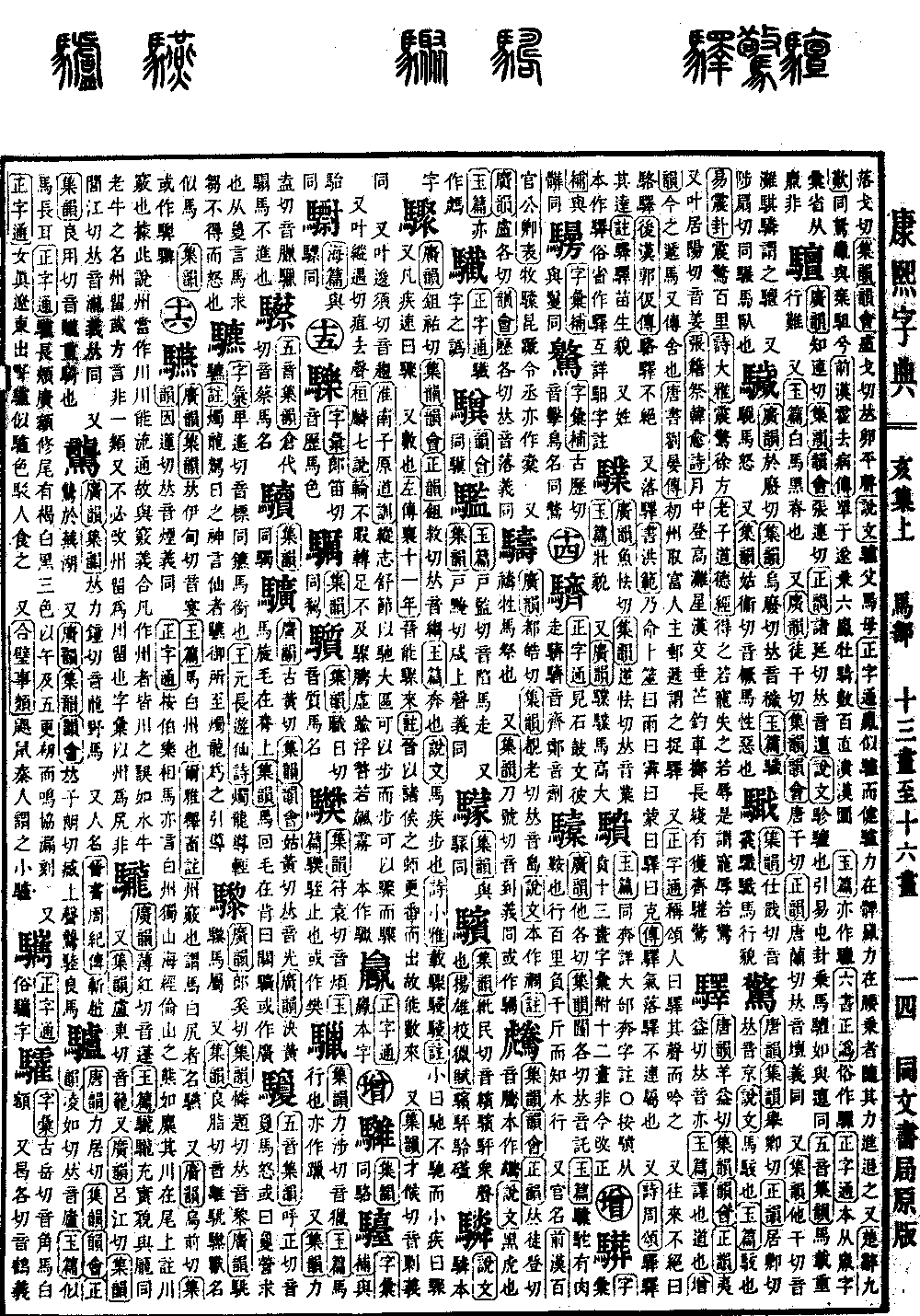
Entry: Donkey
Kangxi stroke count: 26
Page 1446, Entry 01
Tang Rhymes (Tangyun): Pronounced lu
Collected Rhymes (Jiyun), Rhyme Meetings (Yunhui), Correct Rhymes (Zhengyun): Pronounced lu
Jade Chapters (Yupian): Resembles a horse but with long ears.
General Explanation of Characters (Zhengzitong): The donkey has long cheeks, a broad forehead, and a long tail. It comes in brown, white, and black colors. It brays at midday and at the beginning of the fifth watch, coordinating with the water clock.
General Explanation of Characters (Zhengzitong): In the Jurchen and Liaodong regions, there are wild donkeys; they resemble donkeys but are multi-colored. People eat them.
Collection of Classified Affairs (Hebi shilei): The mole-rat is called a small donkey by the people of Qin. The original character for mole-rat was composed of the radical for rat and the element for complete.