Mao Collection, Middle Volume
Radical: Door (hù)
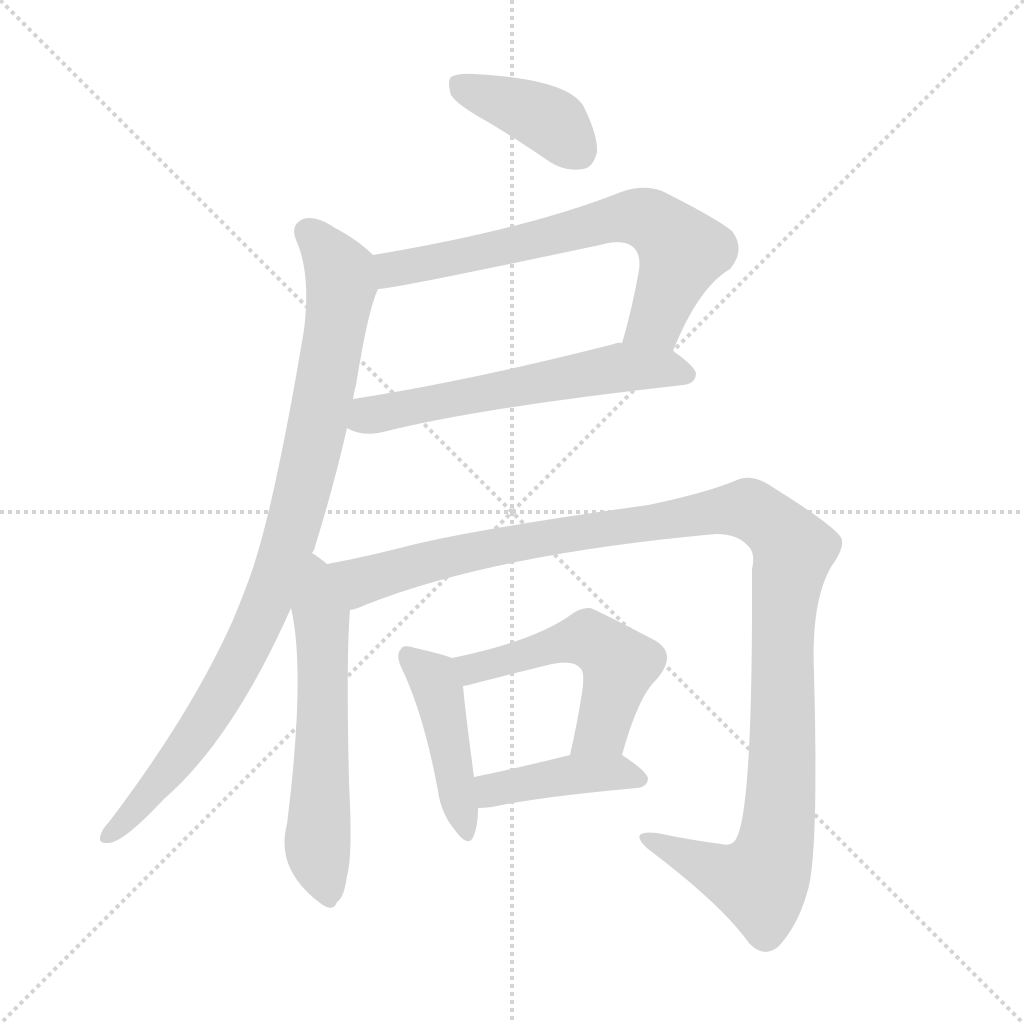
Jiong
Kangxi Strokes: 9
Page 416, Entry 04
Classical Citations:
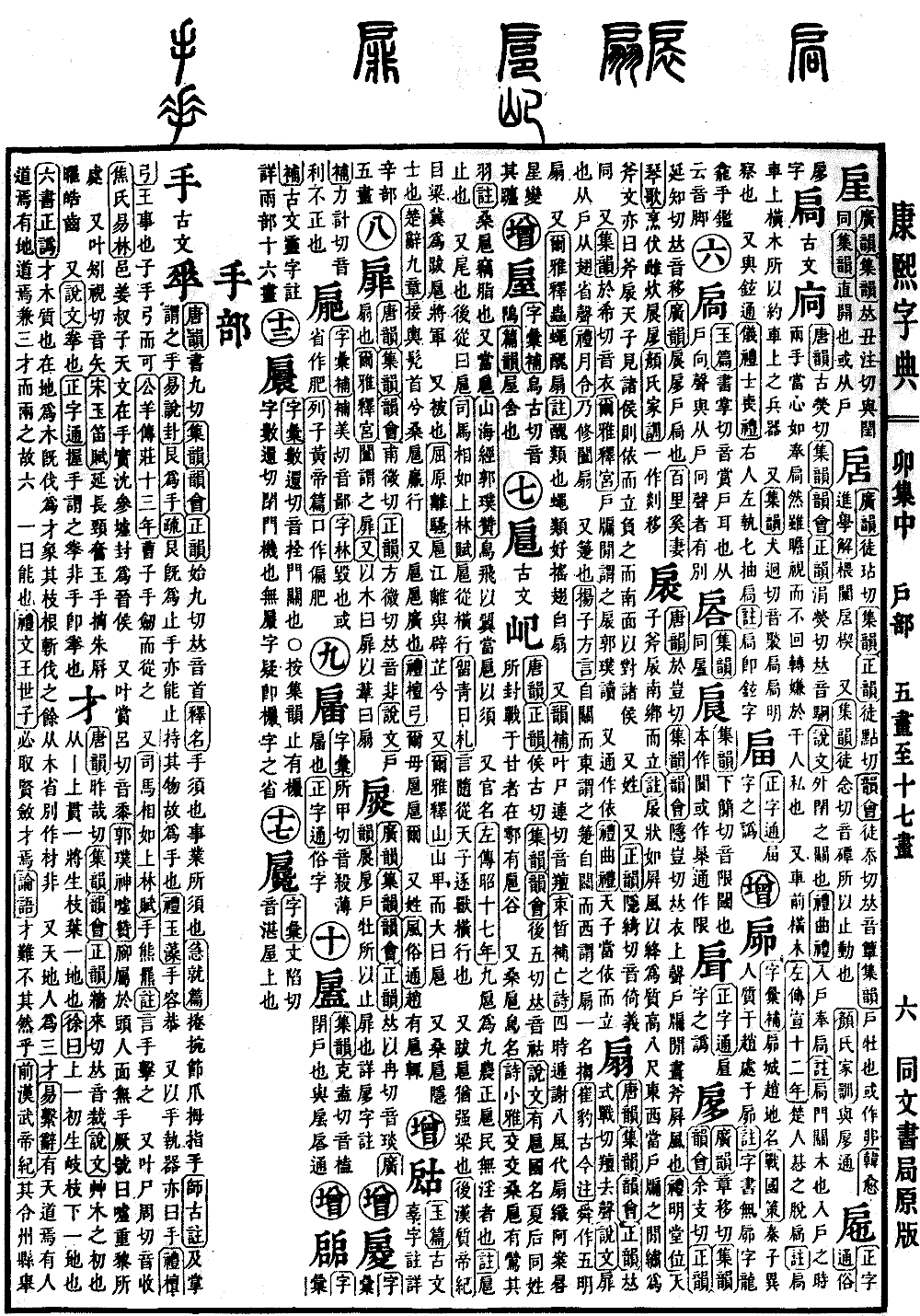
According to the Tang Rhyme (Tangyun), pronounced gu ying (rising tone). According to the Collected Rhymes (Jiyun), Rhyme Meeting (Yunhui), and Correct Rhymes (Zhengyun), pronounced juan ying (rising tone), with a sound identical to the character jiong.
The Explanation of Simple and Compound Characters (Shuowen Jiezi) defines this as a door bolt used to secure a door from the outside.
Book of Rites (Liji), Chapter on Curricula (Quli): When entering a doorway, one should hold one's hands as if grasping a door bolt. Annotation: A jiong is a wooden door bolt. When entering a doorway, one should hold both hands at the chest as if grasping a door bolt, and even if looking around, one should not turn one's head, to avoid the suspicion of prying into the privacy of others.
Also refers to the horizontal crossbar at the front of a carriage.
Zuo Commentary (Zuozhuan), Twelfth Year of Duke Xuan: The people of the State of Chu taught them to remove the crossbar from the front of the carriage. Annotation: A jiong is the crossbar on a carriage, used to restrain the weapons held within.
Also, according to the Collected Rhymes (Jiyun), pronounced quan jiong (rising tone), with a sound identical to the character jiong. The expression jiong jiong signifies clear and astute observation, down to the finest detail.
Also interchangeable with the character xuan.
Book of Etiquette and Ceremonial (Yili), Chapter on Mortuary Rites for a Scholar (Shisangli): The person on the right holds it with his left hand, and uses his right hand to extract seven jiong. Annotation: The jiong mentioned here is the same as the character xuan.