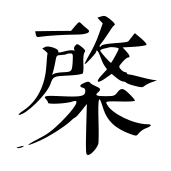
Chen Collection, Middle Volume
Radical: Tree (mù)
Kangxi Strokes: 12
Page 534, Entry 02
Pronounced qi
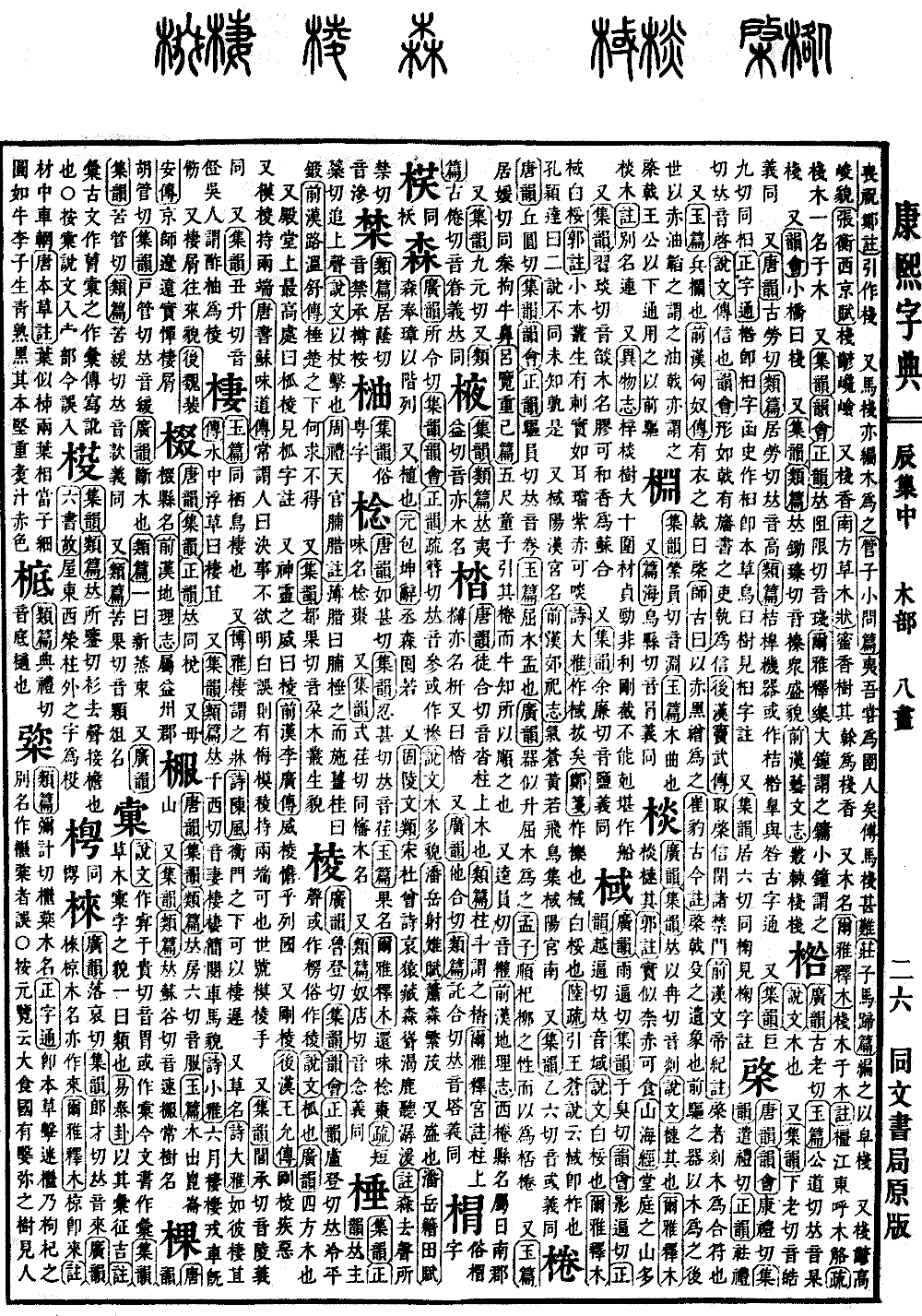
According to the Etymological Dictionary of Chinese Characters (Shuowen), it refers to a tally used as evidence.
According to the Collection of Rhymes (Yunhui), it is shaped like a halberd, adorned with banners, and inscribed with text; officials carry it as a credential.
Book of the Later Han (Hou Hanshu), Biography of Dou Wu: He obtained the tally (qi) and locked the palace gates.
Commentary on the Annals of Emperor Wen in the Book of the Former Han (Qian Hanshu): The qi is a wooden object with characters carved upon it, used to verify credentials.
Also, according to the Jade Compendium (Yupian), it refers to a rack for weapons.
Book of the Former Han (Qian Hanshu), Account of the Xiongnu: A halberd covered with an outer cloth is called a qi.
Master Gu (Shigu) said: It is made of red and black silk fabric.
Cui Bao, Notes on Past and Present (Gujin Zhu): The qi halberd is a remnant form of the shu weapon. It serves as ceremonial equipment used by an escort when traveling, constructed from wood. In later ages, it was covered in red oilcloth and referred to as an oil halberd, also known as a qi halberd; officials from the rank of prince and below all used it as a ceremonial escort.