Mao Collection, Middle Volume
Radical: Dagger-axe (gē)
Kangxi stroke count: 15
Page 414, Entry 04
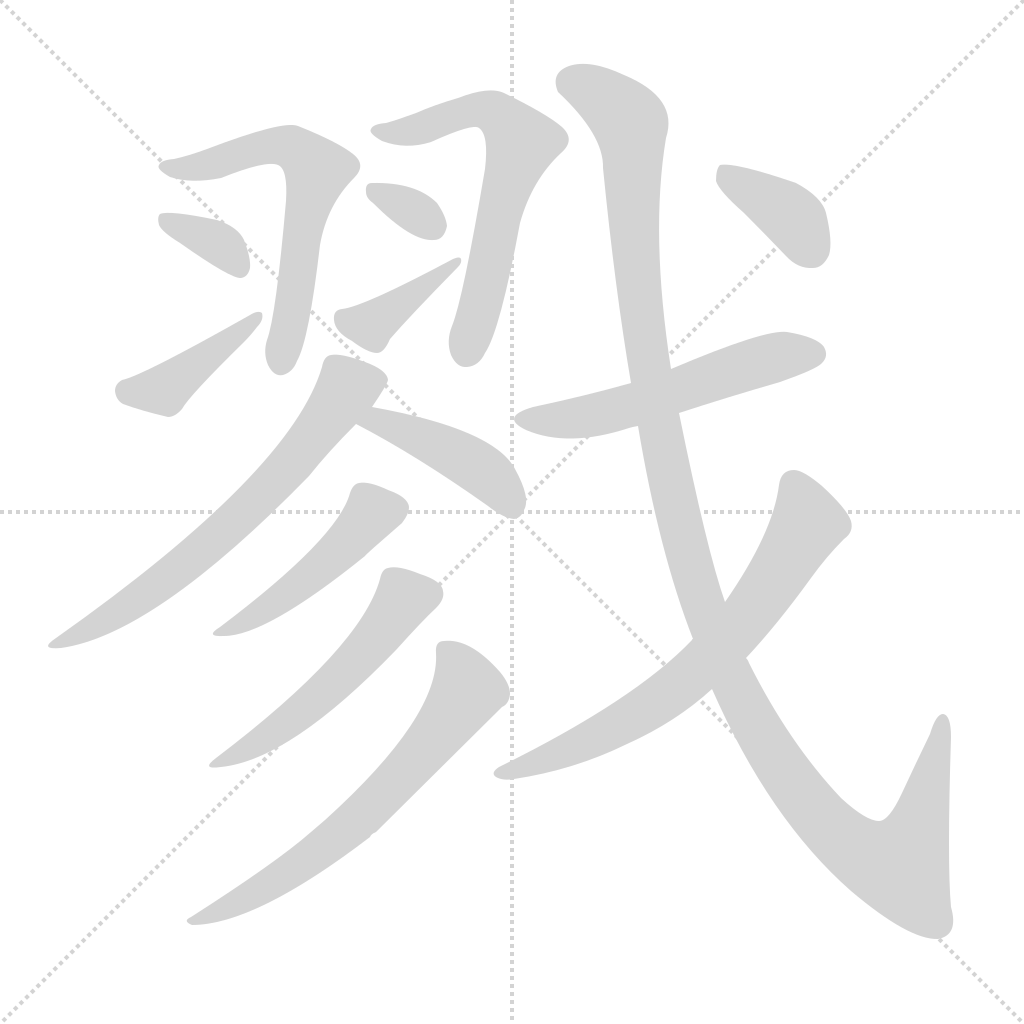
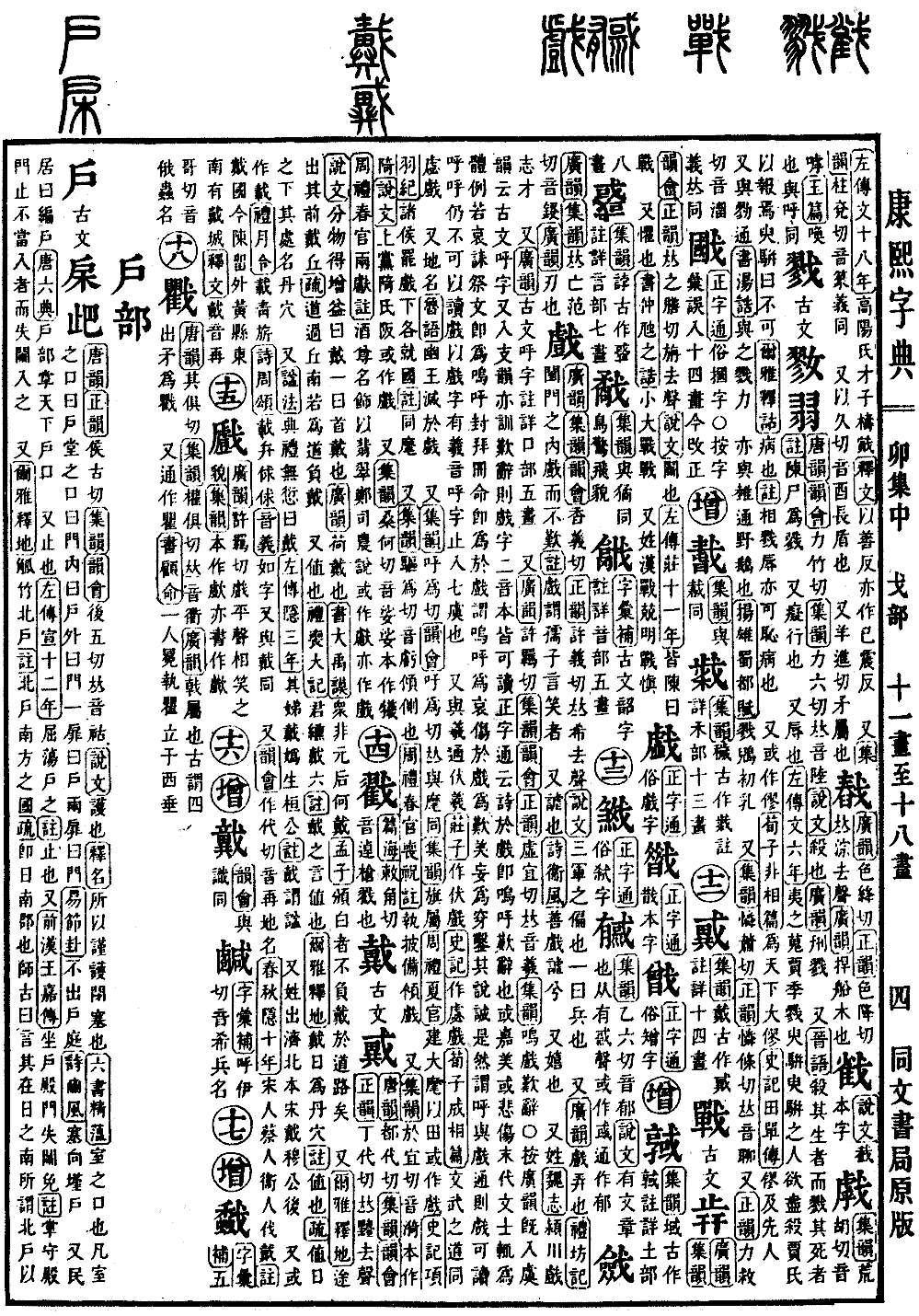
According to the Tang Rhyme (Tangyun) and the Rhyme Compilation (Yunhui), pronounced lu (rising tone). According to the Collected Rhymes (Jiyun), pronounced lu (falling tone). The pronunciation is the same as lu. The Explaining Graphs and Analyzing Characters (Shuowen Jiezi) defines it as to kill. The Broad Rhyme (Guangyun) also defines it as to kill. Furthermore, the Discourses of the States (Jinyu) records: to kill a living person and insult the deceased. The Commentary (Zhu) explains: when a corpse is insulted, it is called lu. It also refers to foolish behavior. It also refers to humiliation. The Zuo Tradition (Zuozhuan), sixth year of Duke Wen, records: during a military inspection in the Yi territory, Jia Ji humiliated Yu Pian, and Yu Pian’s subordinates wanted to slaughter the Jia clan to seek revenge. Yu Pian said: This will not do. The Erh Ya (Erya), Explaining Ancient Terms (Shigu), defines it as shame. The Commentary explains: to humiliate one another is also a shameful ailment. Sometimes also written in a variant form (lu). The Xunzi, Non-Physiognomy chapter (Feixiang), records: to become the great shame of the world. The Records of the Grand Historian (Shiji), Biography of Tian Dan, records: shame that implicates one’s ancestors. It is also used interchangeably with lu (to exert force together). It is also used interchangeably with lu (wild goose). The Rhapsody on the Capital of Shu (Shudu Fu) by Yang Xiong records: the wild goose begins to nourish its young. According to the Collected Rhymes (Jiyun), pronounced liao (level tone). According to the Correct Rhyme (Zhengyun), pronounced liao (level tone). The pronunciation is the same as liao. According to the Correct Rhyme (Zhengyun), pronounced liu (falling tone). The meaning is the same.