Zi Collection, Page Position: Lower
Radical: Strength (lì)
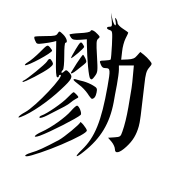
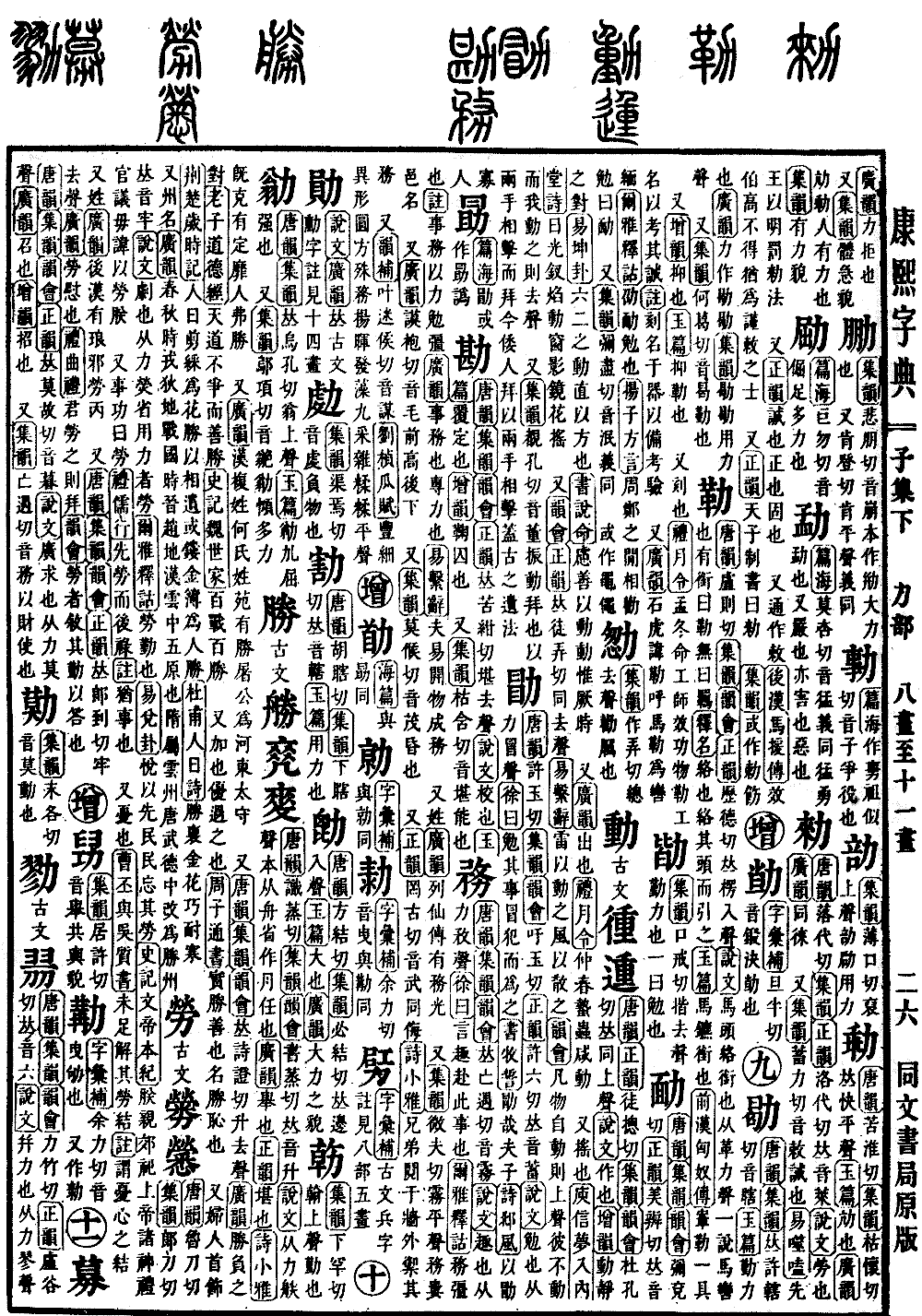
Entry for 勠
Kangxi strokes: 13
Page number: 148, entry 42 (ancient script form)
According to Tang Rhymes (Tangyun), Collected Rhymes (Jiyun), and Rhyme Compendium (Yunhui), pronounced lì zhú qiè; according to Correct Rhymes (Zhengyun), pronounced lú gǔ qiè, sounding like liù.
According to Explaining Graphs (Shuowen Jiezi), it means to combine strength. From the radical Strength (lì), with liáo as the phonetic component.
According to Jade Chapters (Yupian), the Book of Documents (Shujing) states: "They diligently sought the great sage and combined their strength with him, exerting their strength for the people."
Also commonly written as 戮 (lù). In the Annals of Emperor Gaozu (Gāodì) of Former Han (Qián Hàn Shū), it states: "They combined their strength to attack Qin."
Also, according to Tang Rhymes (Tangyun) and Collected Rhymes (Jiyun), pronounced lì qiú qiè, sounding like liú. The meaning is the same.
From Lu Ji's Rhapsody on Literature (Wénfù): "Sometimes emotions are exhausted with many regrets, or one follows one's will with few faults. Though these things reside within me, they are not what my remaining strength can achieve."
Also, according to Collected Rhymes (Jiyun) and Rhyme Compendium (Yunhui), pronounced lián xiāo qiè, sounding like liáo. The meaning is the same.
Also, according to Collected Rhymes (Jiyun) and Rhyme Compendium (Yunhui), pronounced lì jiù qiè, with the falling tone of liú. The meaning is the same.