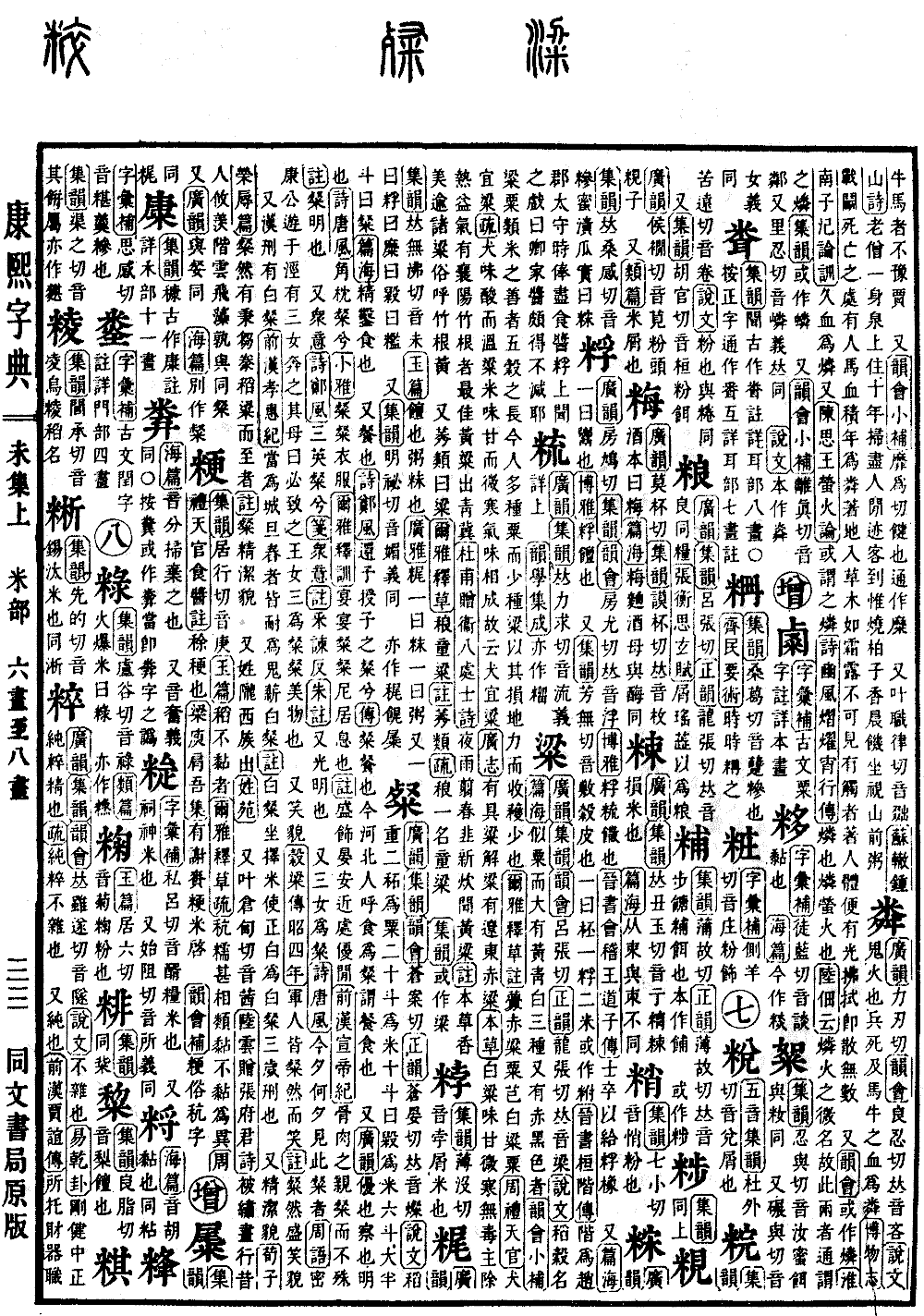
Wei Collection, Upper Volume
Radical: Rice (mǐ)
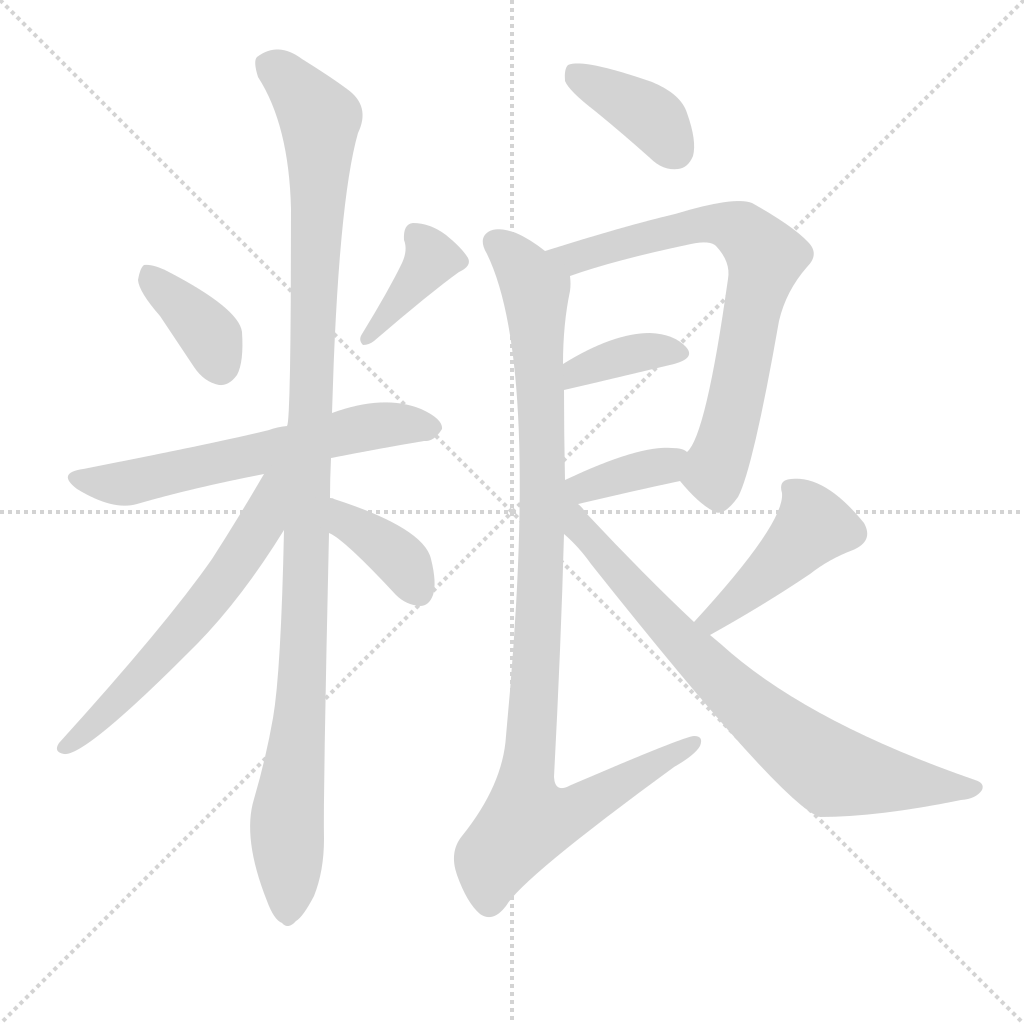
Grain; Kangxi stroke count: 18; Page 909, Entry 10
Broad Rimes (Guangyun), Collected Rimes (Jiyun): Pronounced liang. Correct Rimes (Zhengyun): Pronounced liang. Same as grain. Zhang Heng, Rhapsody on Thinking (Si Fu): Minced jade stamens used as grain.
Grain
Broad Rimes (Guangyun), Collected Rimes (Jiyun), Collected Rimes (Yunhui): Pronounced liang. Correct Rimes (Zhengyun): Pronounced liang.
Explaining Graphs and Analyzing Characters (Shuowen): Grain food.
Rites of Zhou (Zhouli), Office of the Earth, Granary Official: Whenever the state has affairs involving assemblies, meetings, or military campaigns, then manage their grain and their food. Commentary: Food for a journey is called grain, referring to dried rations. Food for staying in one place is called food, referring to rice and cereals.
Zuo Tradition (Zuozhuan), Fourth Year of Duke Xi: Shen Hou said: Provide their resources, grain, and sandals. Commentary: Grain refers to rice and millet; it is the food eaten on the road.
Book of Odes (Shijing), Greater Odes (Daya): Then wrap up the dried grain.
Master Zhuang (Zhuangzi), Free and Easy Wandering (Xiaoyao You): One traveling one hundred li will pound grain overnight. One traveling one thousand li will gather grain for three months.
Also the name of a medicine.
Classic of Remarkable Spirits (Shen Yijing): Yu Remaining Grain; tradition says Yu, while controlling the floods, discarded his remaining grain into the river, where it grew into a medicinal herb. Also written in a variant form (liang).