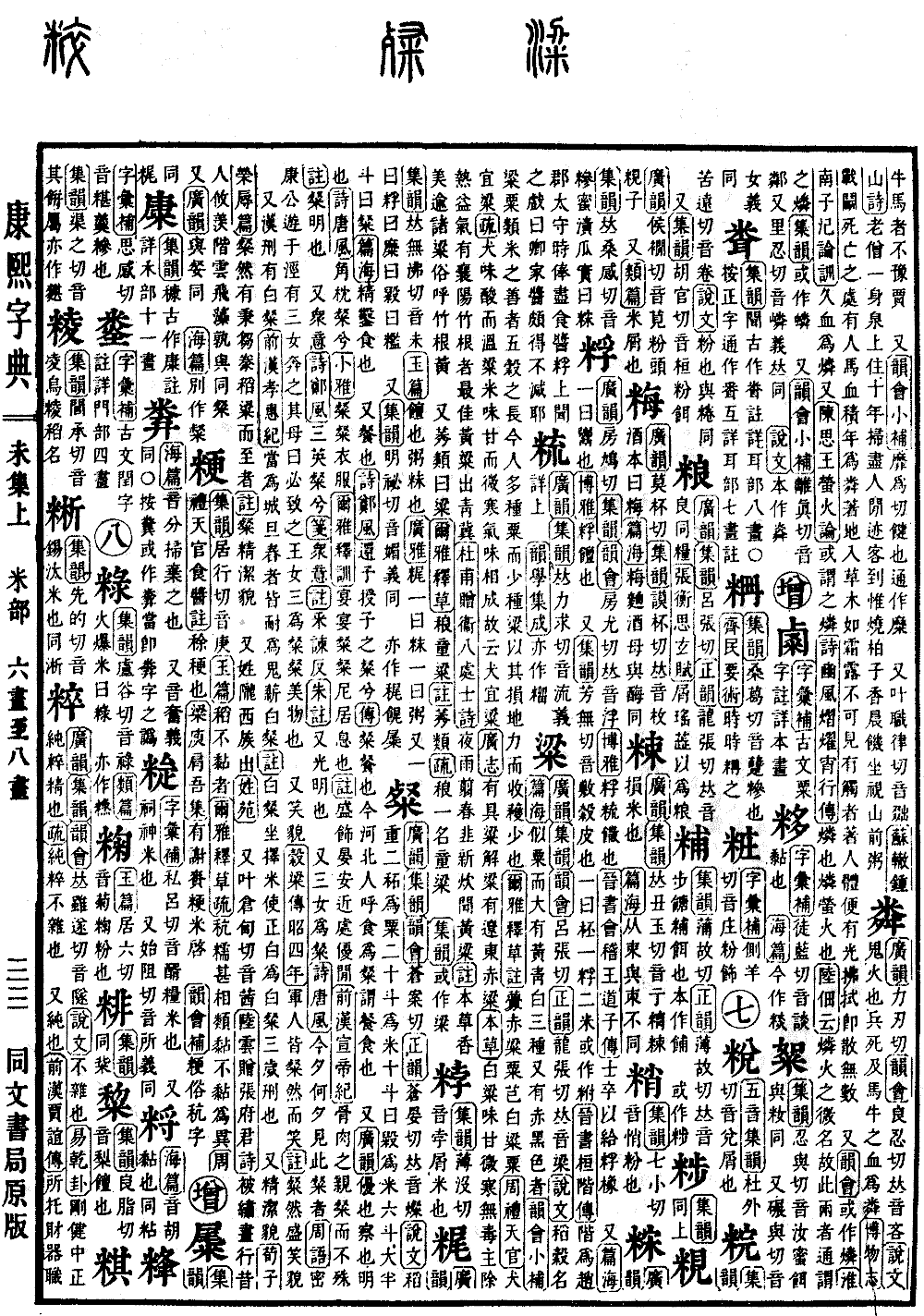
Wei Collection, Upper Volume
Radical: Rice (mǐ)
Grain; Kangxi stroke count: 18; Page 909
According to the Broad Rhymes (Guangyun), the Collected Rhymes (Jiyun), and the Dictionary of Rhymes (Yunhui), pronounced liang. According to the Corrected Rhymes (Zhengyun), pronounced liang.
As defined in the Explaining Graphs and Analyzing Characters (Shuowen): grain food.
Book of Rites (Zhouli), Office of Earth, Keeper of the Granaries: In all instances of state assemblies or military service, manage the grain and food supplies. Commentary: Food for travel is called liang, referring to dried rations. Food for stationary residence is called shi, referring to rice.
Zuo Tradition (Zuozhuan), Year 4 of Duke Xi: Shen Hou said: Supply the resources, rations, and footwear. Sub-commentary: Liang refers to rice and millet, the food eaten while traveling.
Book of Odes (Shijing), Greater Odes (Daya): Then packed dried rations.
Zhuangzi, Free and Easy Wandering: Those traveling one hundred li grind their grain overnight; those traveling one thousand li gather provisions for three months.
Also a name of a medicinal herb. Classic of Divine Marvels (Shenyijing): Yu's surplus grain; it is said that when Great Yu was managing the floods, he discarded his leftover rations into the river, where they grew into medicinal herbs.
Also written in a variant form (liang).