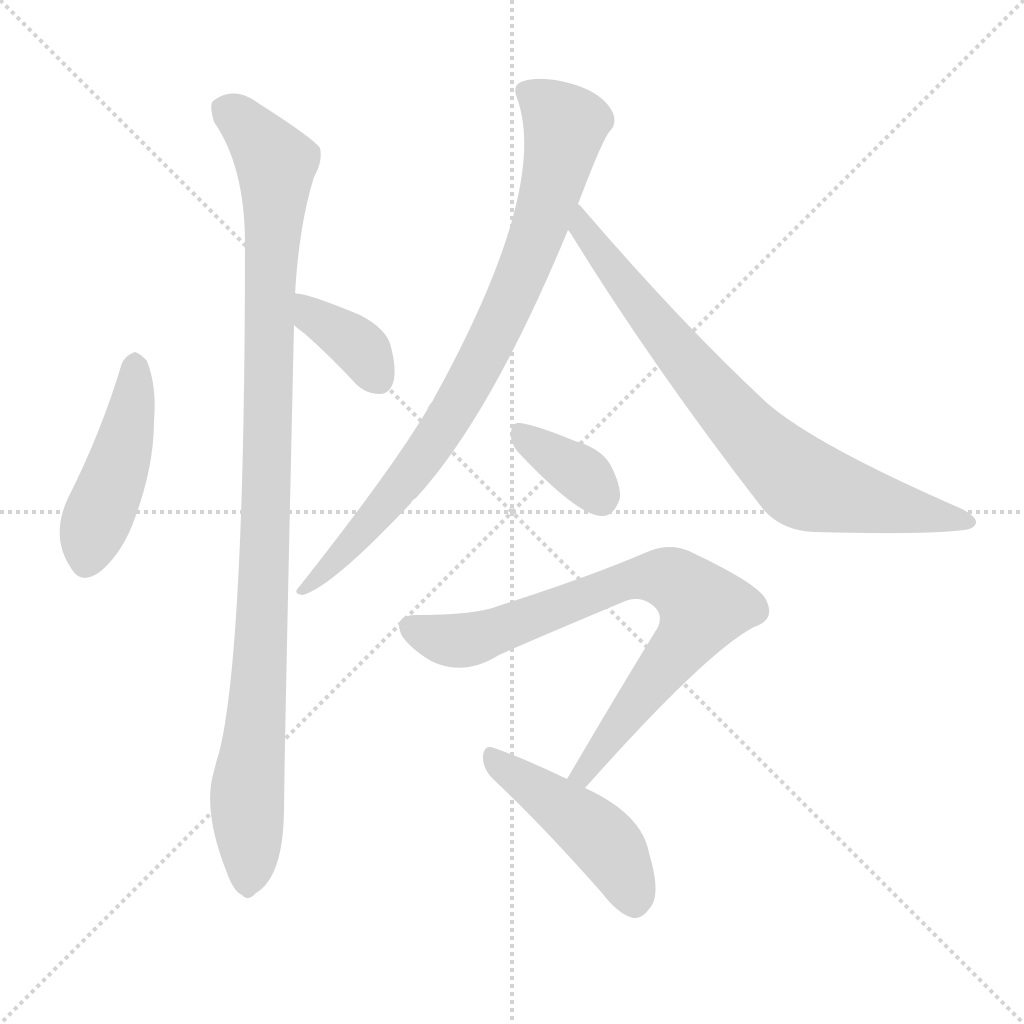
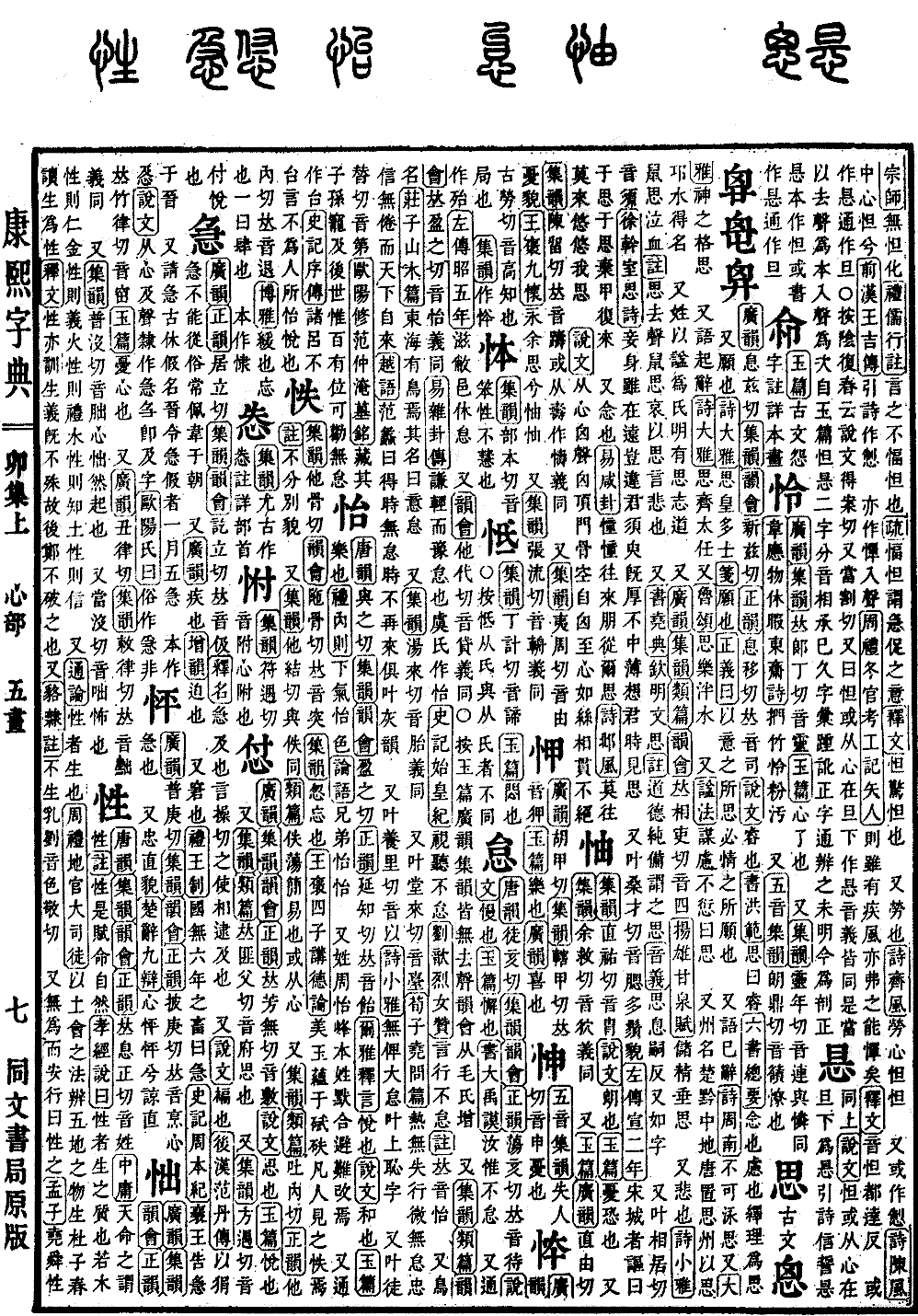
Mao Collection, Upper Volume
Radical: Heart (xīn)
16 Kangxi strokes
Page 381, Entry 03
According to Tang Rhymes (Tangyun) and Collected Rhymes (Jiyun), it is formed by the initial of lang and the final of ding, pronounced ling.
According to Jade Chapters (Yupian), it means the heart is enlightened.
Also, according to Collected Rhymes (Jiyun), it is formed by the initial of ling and the final of nian, pronounced lian. It is the same as the character for pity. As seen in the poem Leisure at the Eastern Study by Wei Yingwu: Touching the bamboo, I pity the dust on it.
Also, according to Five Sounds Collected Rhymes (Wuyin Jiyun), it is formed by the initial of lang and the final of ding, pronounced liao. It means clear or bright.
The character is an ancient form of pity. According to Tang Rhymes (Tangyun), it is formed by the initial of luo and the final of xian; according to Collected Rhymes (Jiyun), Rhyme Compilation (Yunhui), and Correct Rhymes (Zhengyun), it is formed by the initial of ling and the final of nian, pronounced lian.
According to Explaining Graphs and Analyzing Characters (Shuowen), it means to grieve or pity. As seen in the River Song in Spring and Autumn of Wu and Yue (Wuyue Chunqiu): Those suffering from the same illness pity one another.
Also, according to Broad Rhymes (Guangyun), it means to love. As seen in the ancient proverb cited in Lu Lianzi: If the heart is truly loving, white hair will become dark.
Also, according to Collected Rhymes (Jiyun), it is formed by the initial of li and the final of zhen, pronounced lin. The meaning is the same.
As seen in Nine Arguments (Jiubian) from Songs of Chu (Chuci): Traveling far from home with no friends to turn to, I am melancholy and pity myself. It rhymes with the word for life.
Commonly written as the character for pity.