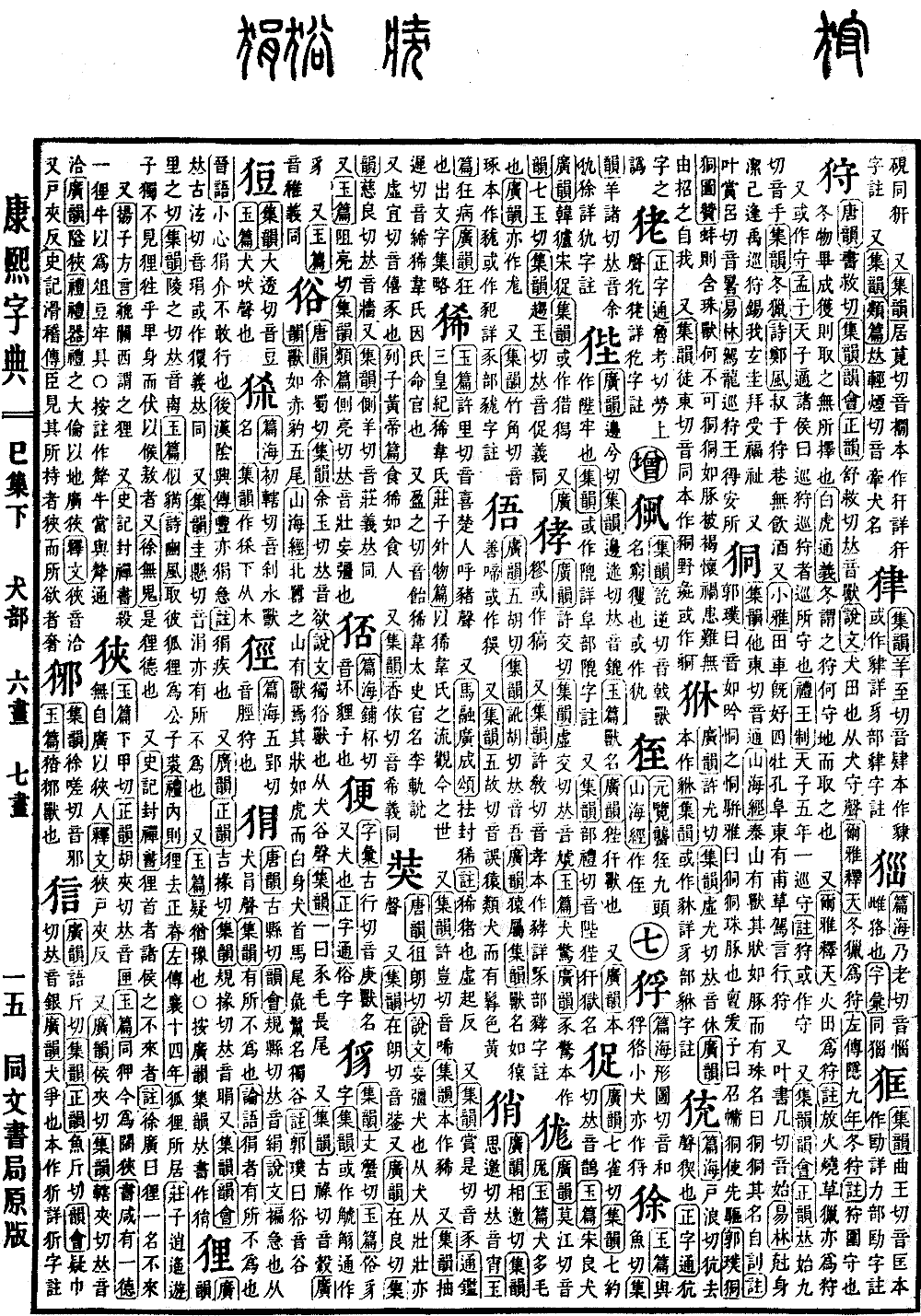
Si Collection, Lower Volume
Radical: Dog (quǎn)
狸
Kangxi stroke count: 11
Page 711, Entry 29
Guangyun (Guangyun): Pronounced li. Jiyun (Jiyun): Pronounced li.
Yupian (Yupian): Resembles a cat.
Book of Odes (Shijing), Odes of Bin: Catch those foxes and wildcats to provide the young lord with a fur coat.
Book of Rites (Liji), Inner Chapters: Remove the central spine of the wildcat.
Zuo Tradition (Zuozhuan), Fourteenth Year of Duke Xiang: Places where foxes and wildcats dwell.
Zhuangzi (Zhuangzi), Free and Easy Wandering: Have you not seen the wildcat and the weasel? They crouch low, waiting for unsuspecting prey to pass by.
Also, in Xu Wugui: This is the nature of the wildcat.
Also, Records of the Grand Historian (Shiji), Treatise on the Feng and Shan Sacrifices: Lishou, referring to those feudal lords who did not arrive. Commentary: Xu Guang states: Li is also called the one who does not come.
Also, Yangzi's Regional Speech (Fangyan): Pi, known as li in the region west of the pass.
Also, Records of the Grand Historian (Shiji), Treatise on the Feng and Shan Sacrifices: Sacrifice a wildcat-ox as a sacrificial offering. Note: The commentary writes this as yak (mao), which should be interchangeable with the character for yak (li).
Verification: Yupian (Yupian) says it resembles a cat. In accordance with the original text, the reference to cat-like animal (zhirui) has been corrected to cat (mao).