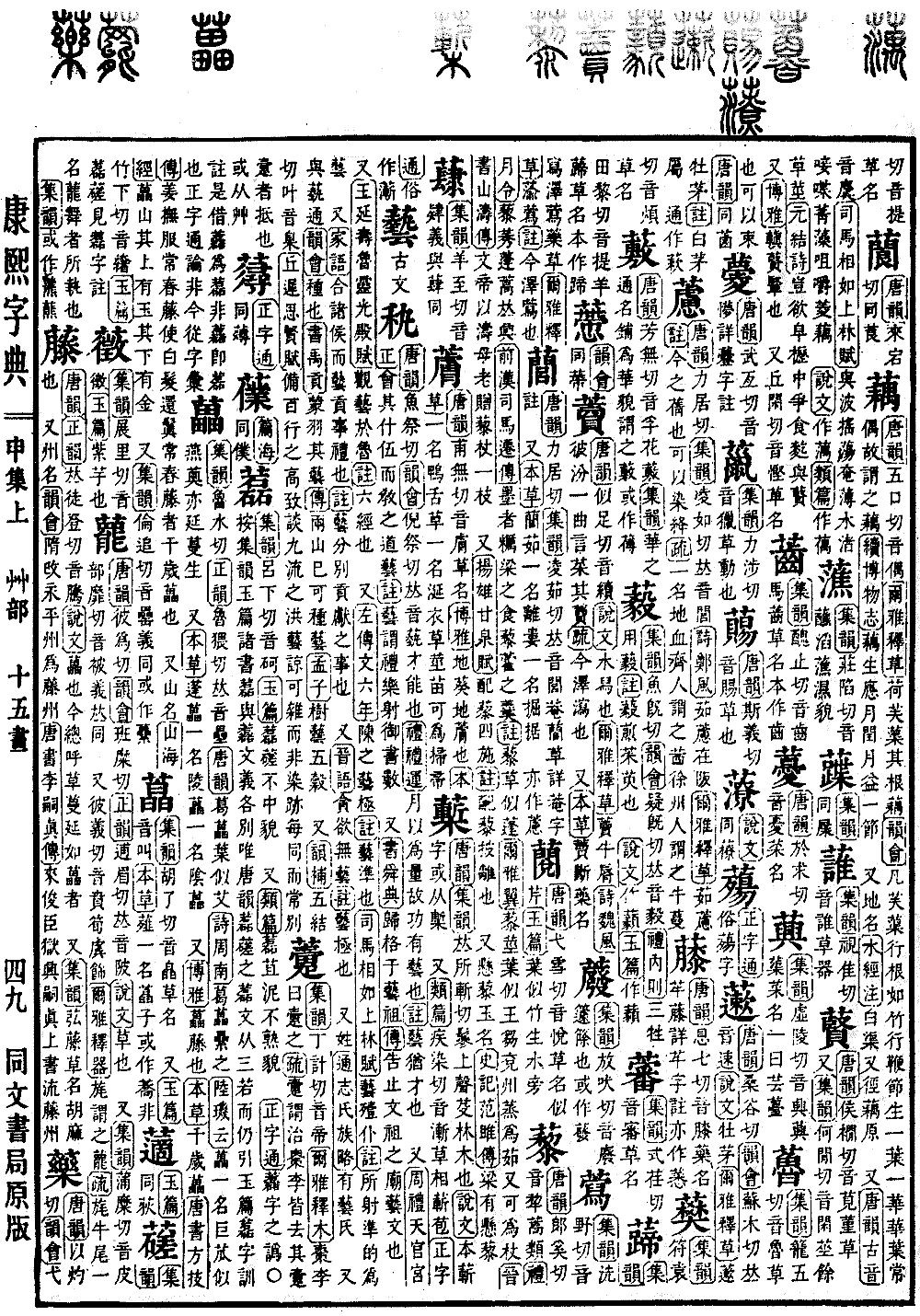
Shen Collection, Upper Volume
Radical: Grass (cǎo)
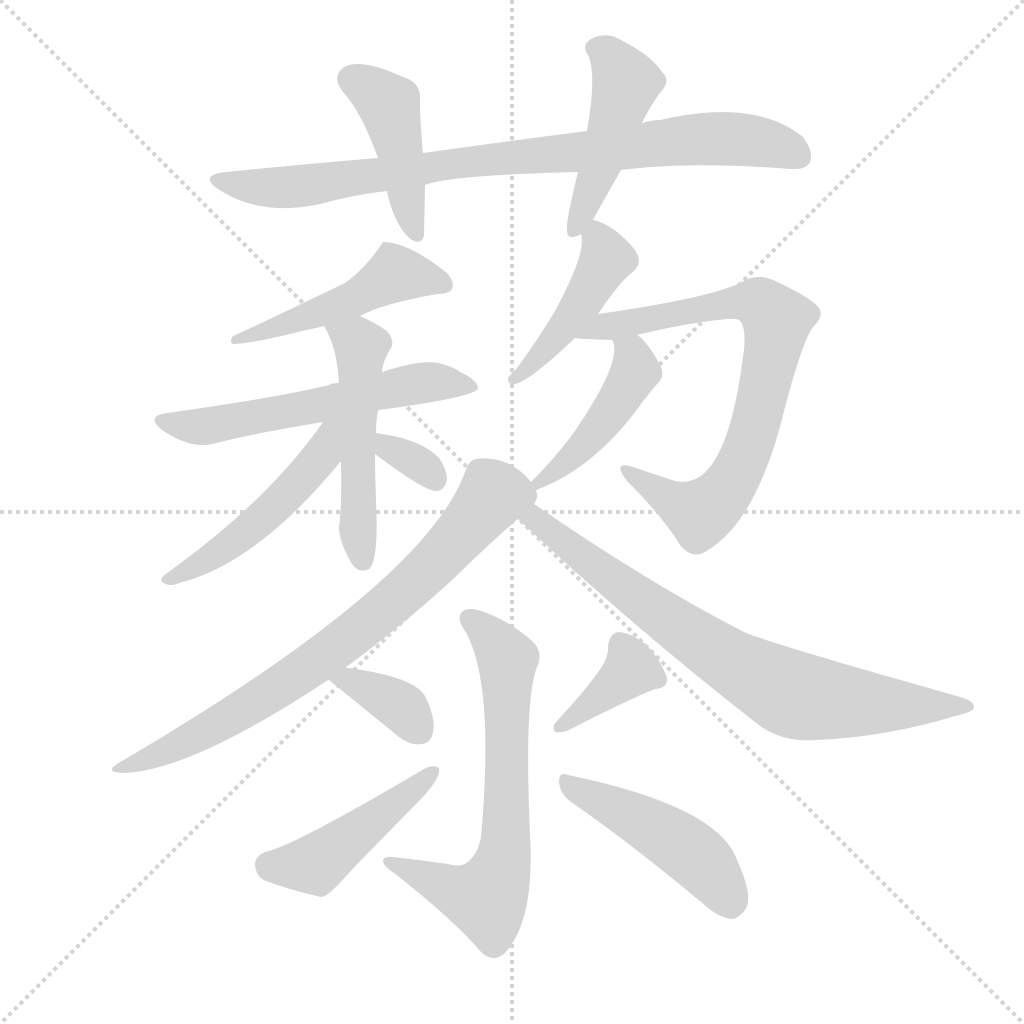
藜
Kangxi strokes: 21
Page 1065, Entry 30
Pronounced li (rising tone). It belongs to the wormwood family of plants.
Book of Rites (Liji), Monthly Ordinances: Weeds such as goosefoot, bristle grass, horseweed, and wormwood grow lushly.
History of the Former Han (Qianhan Shu), Biography of Sima Qian: The Mohists ate coarse grain and drank soup made from goosefoot and bean leaves. Note: The goosefoot plant resembles the horseweed plant.
Wings of the Erya (Erya Yi): The stems and leaves of the goosefoot resemble those of the false goat grass. In the Yan region, people steam them to eat as a vegetable, and they can also be crafted into walking sticks.
Book of Jin (Jin Shu), Biography of Shan Tao: Because Shan Tao's mother was elderly, Emperor Wen of Wei bestowed upon her a walking stick made of goosefoot.
Yang Xiong, Rhapsody on the Sweet Spring (Ganquan Fu): Spreading out in all directions. Note: This describes the appearance of being scattered and spread out.
Also, Xuanli is the name of a type of jade.
Records of the Grand Historian (Shiji), Biography of Fan Ju: In the land of Liang, there is a jade called Xuanli.