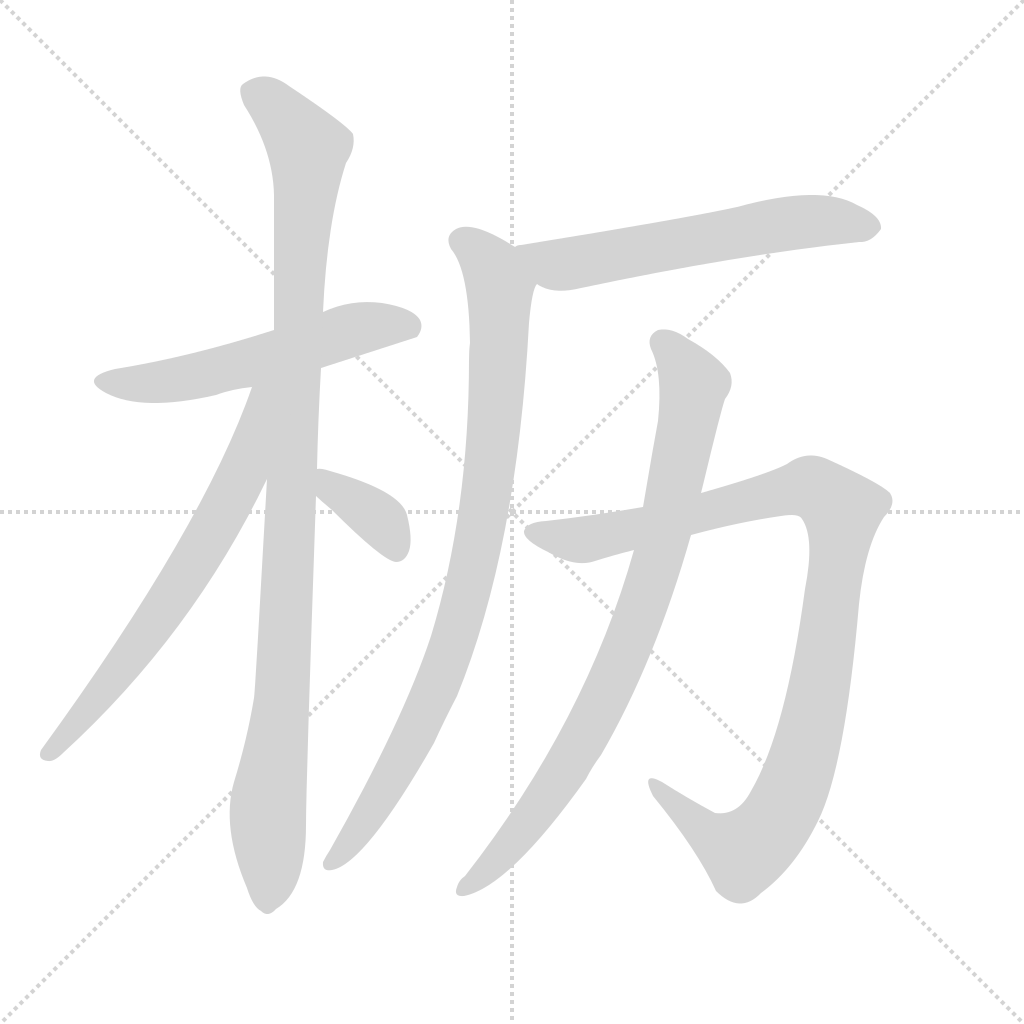
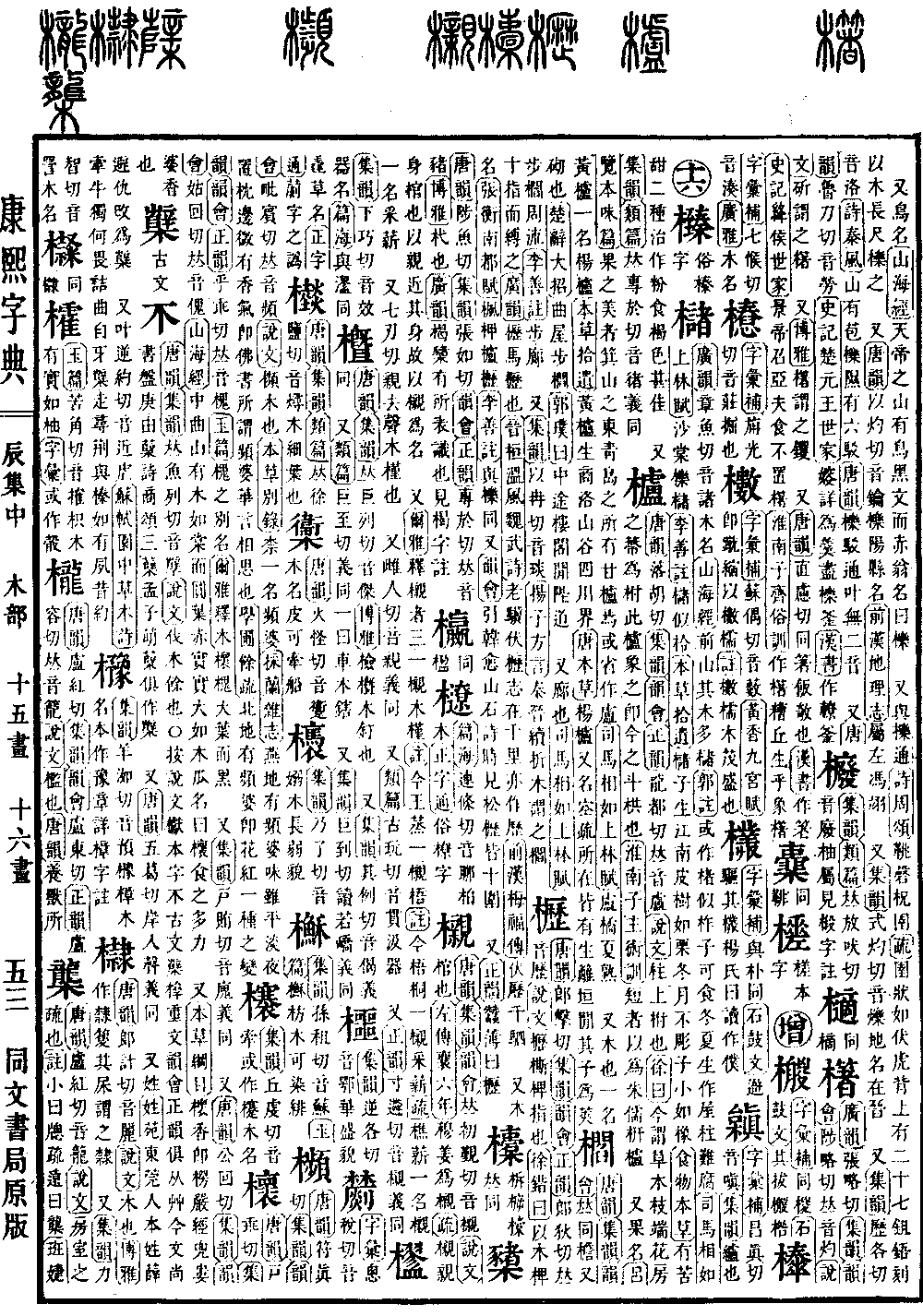
Chen Collection, Middle Volume
Radical: Tree (mù)
Entry: 20 strokes
Page 561, Entry 06
Pronounced li.
As defined in the Analytical Dictionary of Characters (Shuowen Jiezi), it refers to a device for straightening fingers. Xu Kai states that it is a wooden apparatus used to clamp and bind the ten fingers.
In the Broad Rhymes (Guangyun), it is defined as a horse stall. As mentioned in the poem by Huan Wen from the Jin dynasty concerning Wei Wu, an old thoroughbred lying in the stall still aspires to travel a thousand leagues. It is also written in a variant form (li). In the Biography of Mei Fu from the History of the Former Han (Qianhan Shu), it is written as lying in the stall among a thousand horses.
It also refers to a type of tree. In Zhang Heng’s Rhapsody on the Southern Capital (Nandu Fu), it appears in a list including maple and oak-like trees. Li Shan’s commentary notes it is the same as the oak (li).
The Collection of Rhymes (Yunhui) cites a poem by Han Yu on mountain rocks, mentioning the frequent sight of pine and oak trees measuring ten spans in circumference.
According to the Correct Rhymes (Zhengyun), a tray used for silkworms is also called a stall (li).