Si Collection, Upper Volume
Radical: Water (shuǐ)
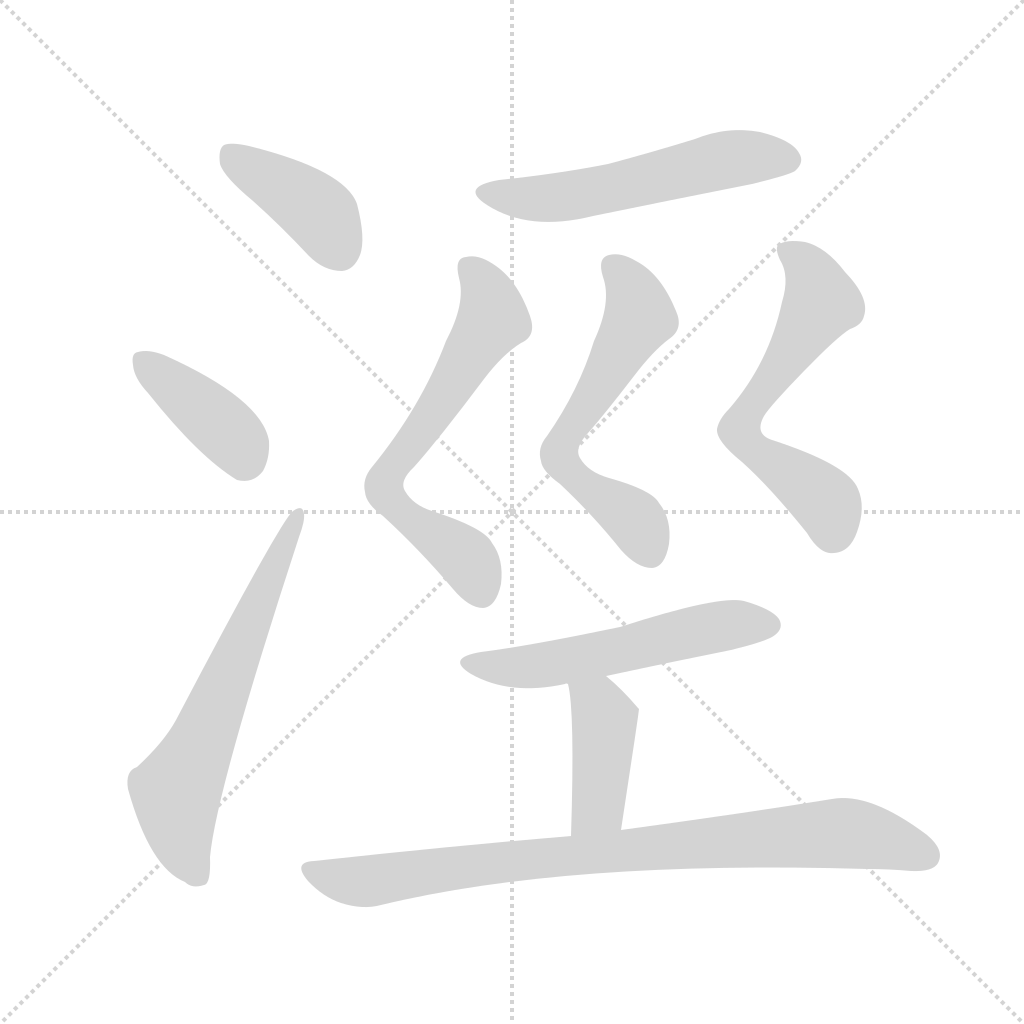
Jing
Kangxi Strokes: 11
Page 626, Entry 08
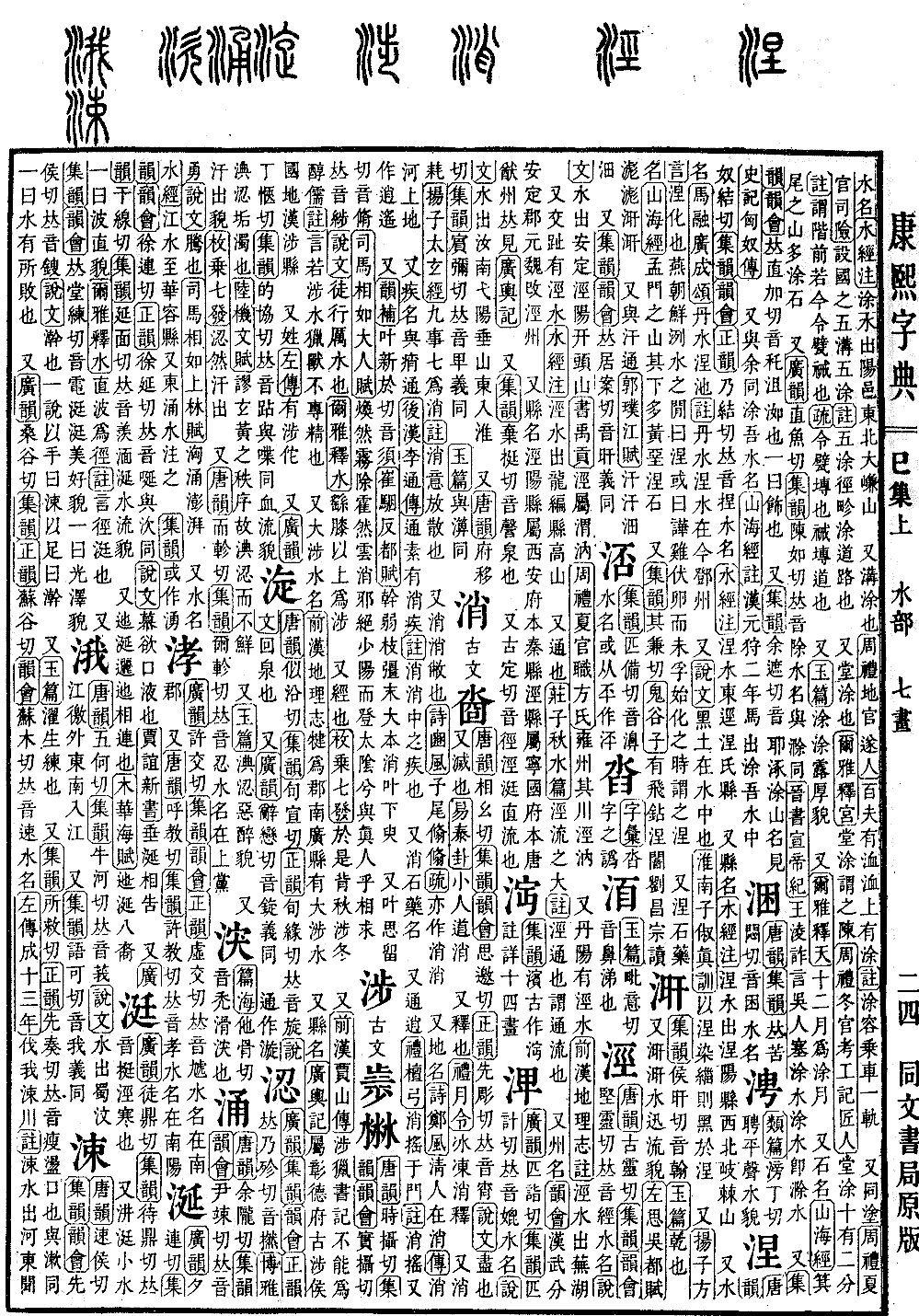
Pronounced jing. Name of a river. According to the Shuowen Jiezi, the river originates in the Kaitou Mountains of Jingyang, Anding. In the Book of Documents (Shujing), specifically the Tribute of Yu (Yu Gong) chapter, it is recorded that the Jing flows into the Wei. In the Rites of Zhou (Zhouli), specifically the Xia Official, Office of the Regional Commissioner (Zhifangshi), it is noted that in Yongzhou, the rivers are the Jing and the Rui. Also, there is a Jing River in Danyang. According to the commentary on the Geography Treatise of the Book of Han (Hanshu), the Jing River originates in Wuhu. Additionally, there is a Jing River in Jiaozhi. According to the Commentary on the Classic of Waterways (Shuijing Zhu), the Jing River originates in the high mountains of Longbian County.
It also means to flow through. In the Zhuangzi, specifically the Autumn Floods (Qiushui) chapter, it mentions the great flow of the Jing. The commentary states that Jing means to communicate, referring to a clear, flowing passage.
Also a name of a prefecture. According to the Collection of Rhymes (Yunhui), Emperor Wu of Han divided Anding Commandery, and during the Northern Wei dynasty, it was changed to Jing Prefecture.
Also a name of counties. Jingyang County belongs to Xi'an Prefecture and was originally a Qin dynasty county. Jing County belongs to Ningguo Prefecture and was originally You Prefecture of the Tang dynasty. Reference is made to the Expanded Geography Record (Guangyu Ji).
Also pronounced qing. Refers to a spring.
Also pronounced jing. Jingting refers to a straight, direct flow.