Shen Collection, Upper Volume
Radical: Grass (cǎo)
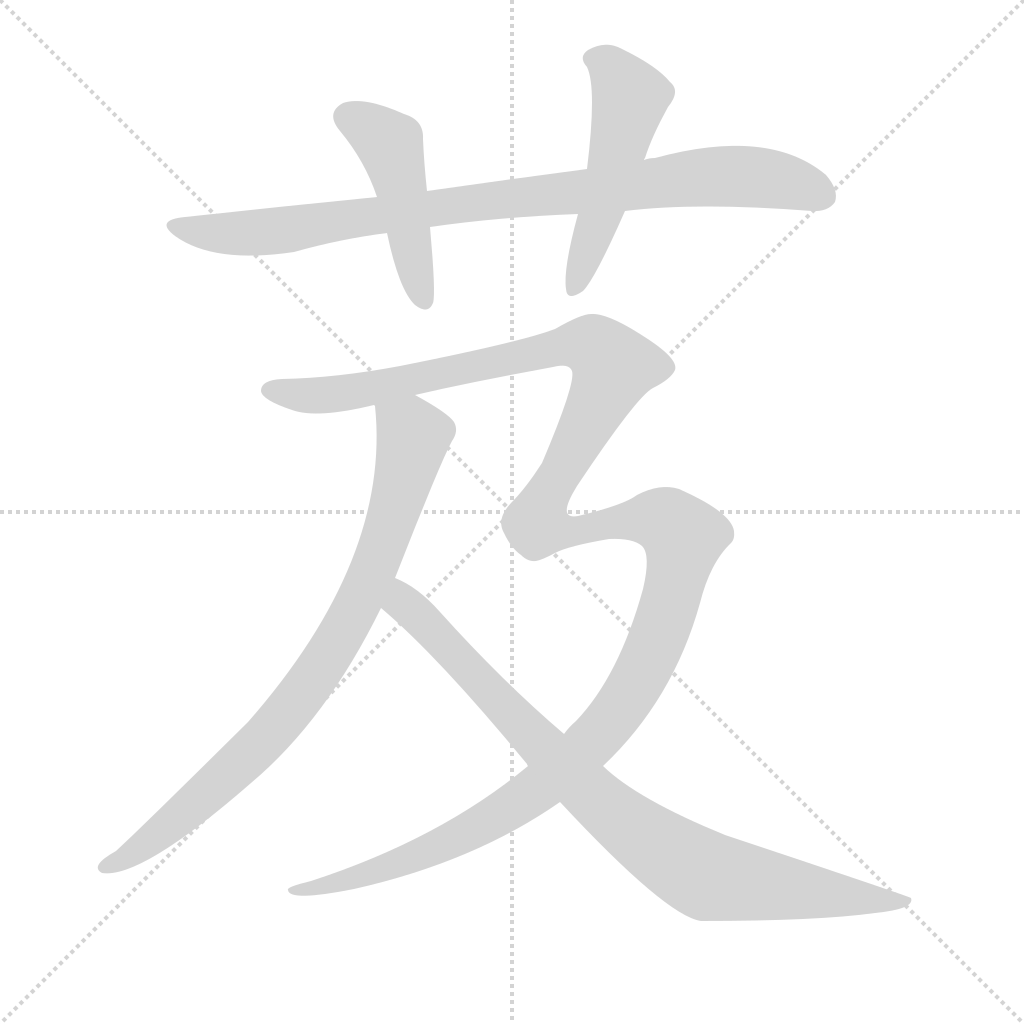
Jí
Kangxi strokes: 10
Page 1020, Entry 04
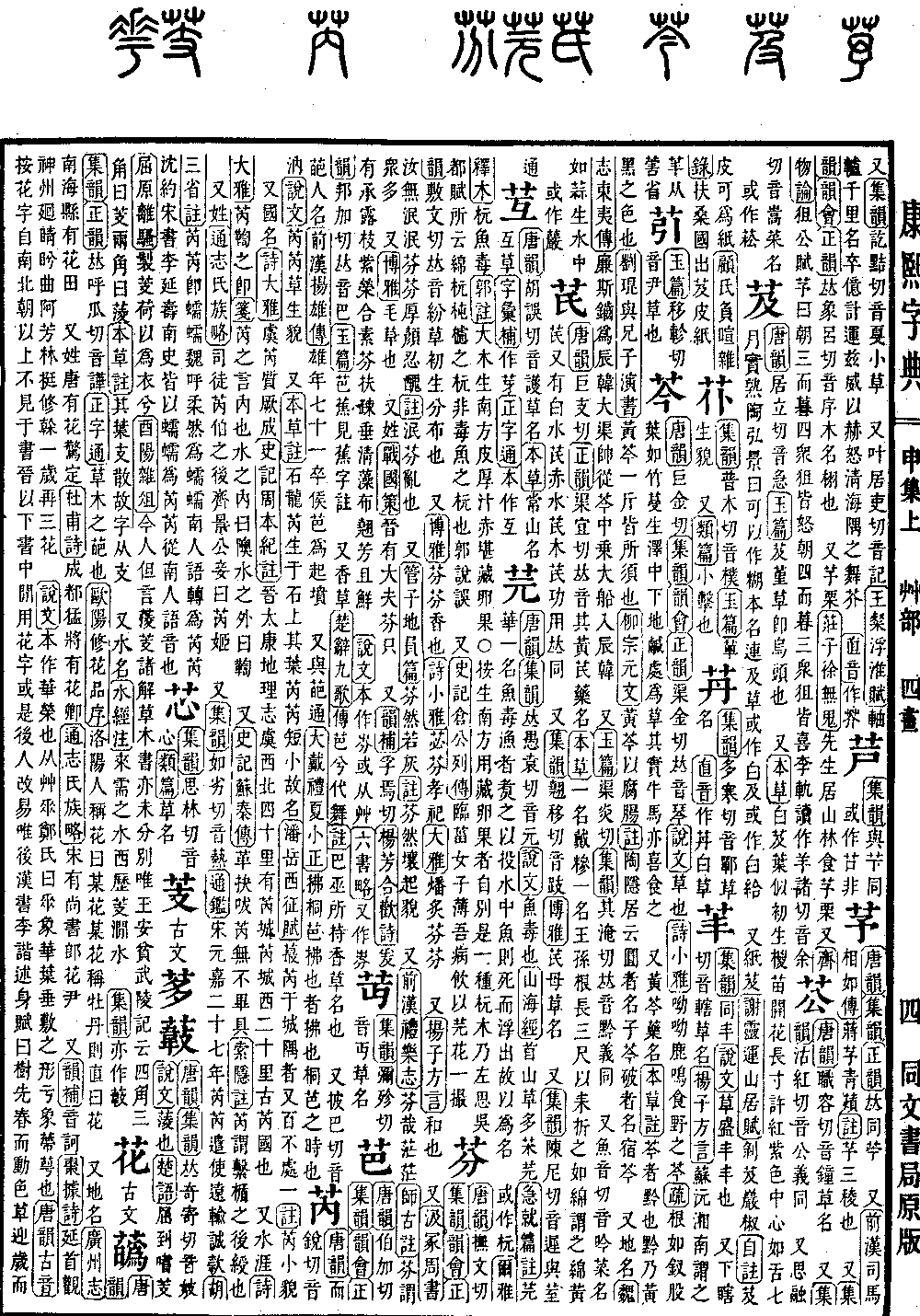
According to the Tang Rhymes (Tangyun), pronounced jí. According to the Jade Chapters (Yupian), jí refers to violet-colored grass, which is the monkshood. Furthermore, according to the Materia Medica (Bencao), baiji (white lilyturf) has leaves resembling the seedlings of a palm tree, and blooms with flowers that are over an inch long, reddish-purple, and possess a flower center shaped like a tongue; the fruit matures in the seventh month. Tao Hongjing stated: It can be used to make paste. Its original name is lianji grass; it is sometimes written as baiji or as baigei. Additionally, there is paper made from the plant. In the Xie Lingyun (Xie Lingyun) work Rhapsody on Living in the Mountains (Shanju Fu), it is written: Stripping the bark of the ji plant from the rocky pepper tree. Author note: The bark of the ji plant can be used to make paper. According to the Gu Family Miscellany (Gu shi fuxuan zalu), the country of Fusang produces paper made from ji bark.