Shen Collection, Upper Volume
Radical: Grass (cǎo)
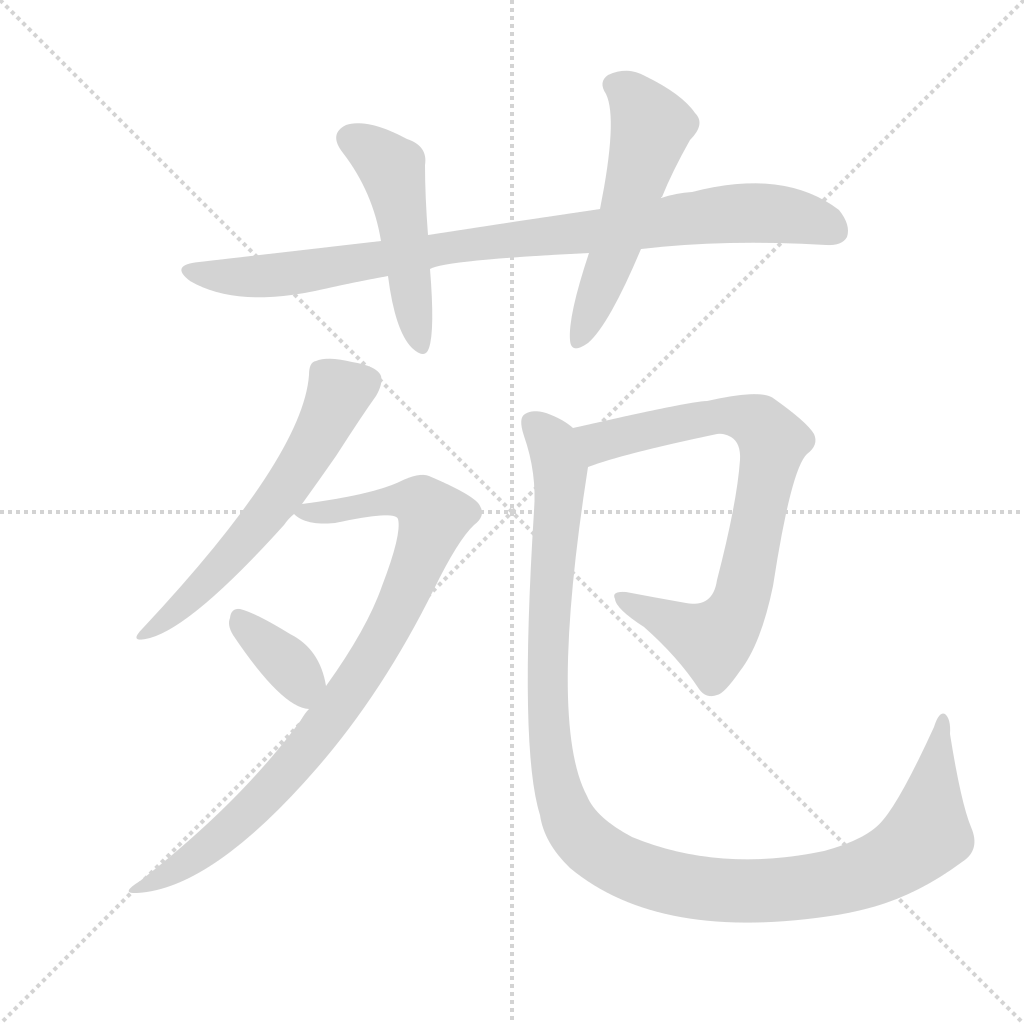
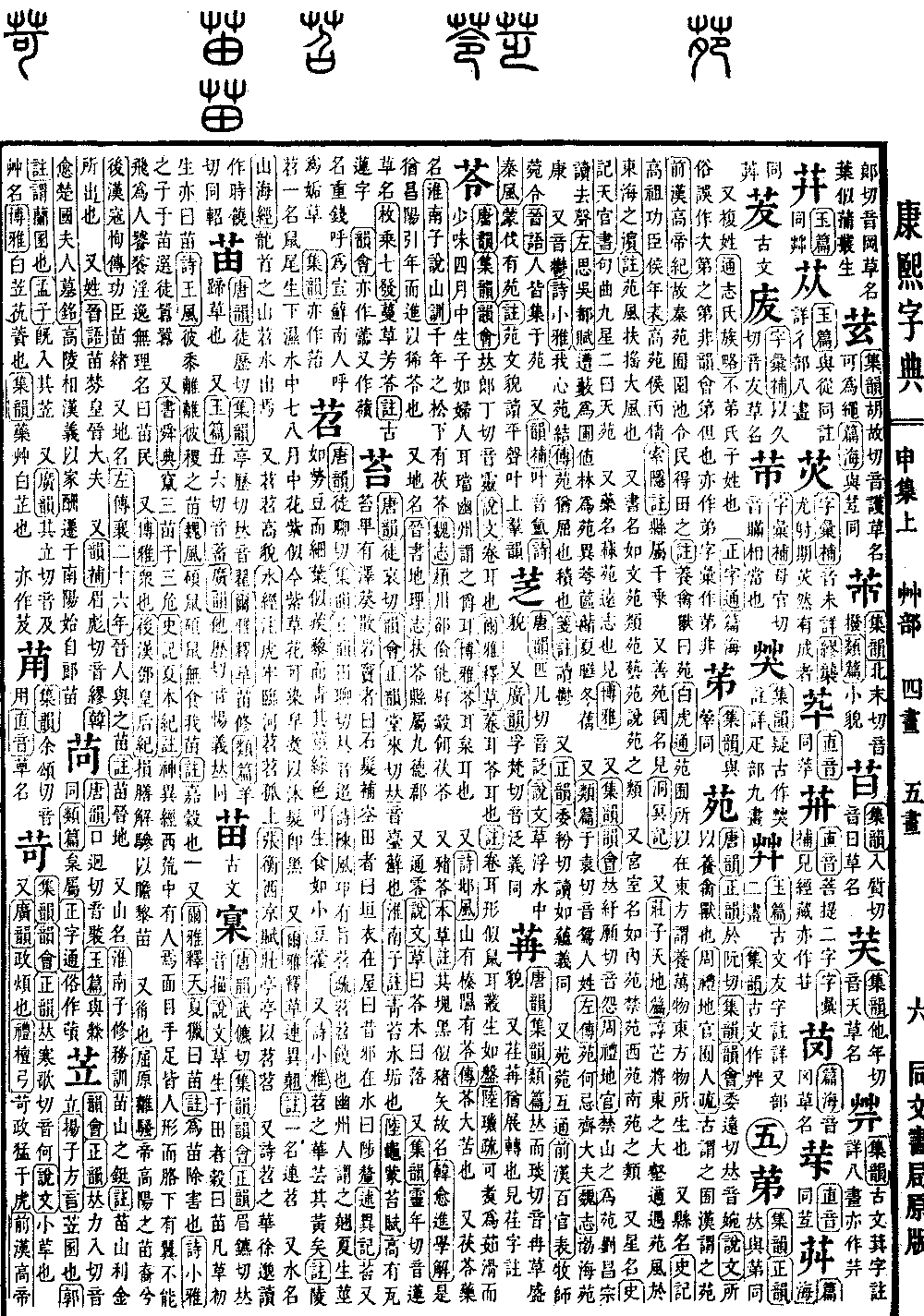
苑
Kangxi strokes: 11
Page 1022, Entry 21
Pronounced wan (rising tone).
According to the Shuo Wen Jiezi (Shuo Wen), it is a place for raising birds and beasts.
Book of Rites (Zhouli), Earth Official, You Ren Commentary: In ancient times it was called you, in the Han dynasty it was called yuan.
History of the Former Han (Qianhan), Annals of Emperor Gao: Therefore, the parks, gardens, and ponds of the Qin were opened for the common people to farm. Commentary: Raising birds and beasts is called yuan.
Comprehensive Discourses of the White Tiger Hall (Baihu Tong): Parks and enclosures are placed in the east because they nurture the ten thousand things. The east is where things are born.
Also a county name.
Records of the Grand Historian (Shiji), Tables of the Meritorious Officials of Emperor Gao: Marquis of Gaoyuan, Bing Qian. Commentary: The county belonged to Qiansheng.
Also Shanyuan, a country name. See Records of Extraordinary Wonders (Dongming Ji).
Also Zhuangzi, Heaven and Earth chapter: Chunmang was about to go east to the great chasm and encountered a Yuan wind on the shore of the Eastern Sea. Commentary: Yuan wind is a violent gale.
Also a book title, such as Literary Garden (Wenyuan), Garden of Categories (Leiyuan), Garden of Arts (Yiyuan), and Garden of Sayings (Shuoyuan).
Also a palace name, such as Inner Garden, Forbidden Garden, West Garden, or South Garden.
Also a star name. Records of the Grand Historian, Treatise on the Celestial Offices: Of the nine stars in the Gouqu constellation, the second is called Heavenly Garden.
Also a medicinal name. The Jiyuan (a type of Polygala tenuifolia) is Yuanzhi. See Erya (Boya).
Pronounced yuan (falling tone).
Book of Rites (Zhouli), Earth Official: Prohibiting the use of mountains as enclosures. Liu Changzong reads this in the departing tone.
Zuo Si, Rhapsody on the Capital of Wu (Wudu Fu): Turning marshes into gardens, turning forests into enclosures. Rare flowers and lush creepers, bright in summer and luxuriant in winter.
Pronounced yuan.
A surname.
Zuo Commentary (Zuozhuan): Yuan Heji was an official of Qi.
Records of Wei (Weizhi): Yuan Kang of Bohai.
Pronounced yu.
Book of Odes (Shijing), Lesser Odes: My heart is knotted (yuan jie). Commentary: Yuan is like being bent or accumulated. Explanation of Texts: Pronounced yu.
Pronounced yun.
Meaning is the same.
Also, yuan and wan are used interchangeably.
History of the Former Han (Qianhan), Table of Officials: Prefect of the Pasture Office (mushi wan ling).
Discourses of Jin (Jinyu): The people all gathered in the garden (yuan).
Also rhymes as yun in the Rhyme Supplement (Yunbu).
Book of Odes (Shijing), Qin Odes: The feathered shields are ornate (yuan). Commentary: Yuan describes the patterns; read in the level tone, rhyming with the group of characters ending in yun.