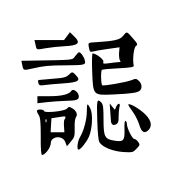
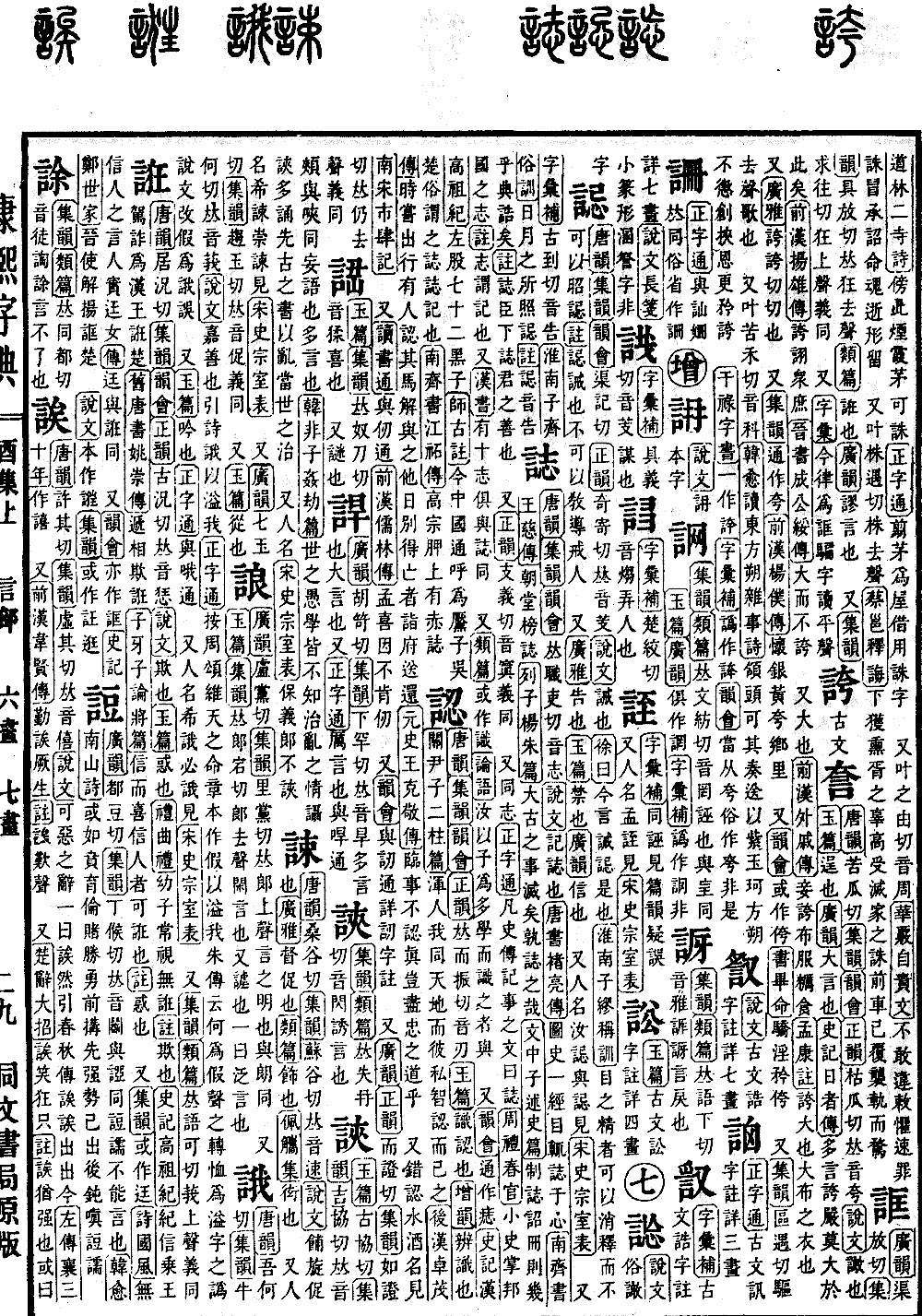
You Collection, Upper Volume
Radical: Speech (yán)
14 strokes
Page 1161, Entry 16
Tang Dynasty Rhymes (Tangyun), Collected Rhymes (Jiyun), and Rhyme Compendium (Yunhui): Pronounced ji (falling tone). Correct Rhymes (Zhengyun): Pronounced ji (falling tone). Pronounced the same as the character for water chestnut (ji).
Explanation of Graphs and Analysis of Characters (Shuowen): The meaning is to warn or admonish. Xu says: What is currently called admonition (jieji) is exactly this meaning.
Huainanzi (Huainanzi): The point where the eye is most sensitive can distinguish the finest details, yet it cannot be used to clearly admonish others. Commentary: Ji means to warn or admonish. It cannot be used to instruct or regulate others.
Additionally, Extended Glossary (Guangya) says it means to inform. The Jade Chapters (Yupian) says it means to forbid. The Broad Rhymes (Guangyun) says it means sincerity.
Also used in personal names. Ru Ji and Ji appear in the Song Dynasty History (Songshi), Table of Imperial Lineage.
Additionally, Supplement to the Dictionary (Zihui bu): Pronounced gao (falling tone). Pronounced the same as the character for report (gao). Huainanzi (Huainanzi): The places illuminated by the sun and moon are informed. Commentary: Ji is pronounced the same as the character for report (gao).
Critical Review: In the Huainanzi (Huainanzi), regarding the text referring to the most sensitive point of the eye, the original text used to explain the meaning has been corrected according to the original source.