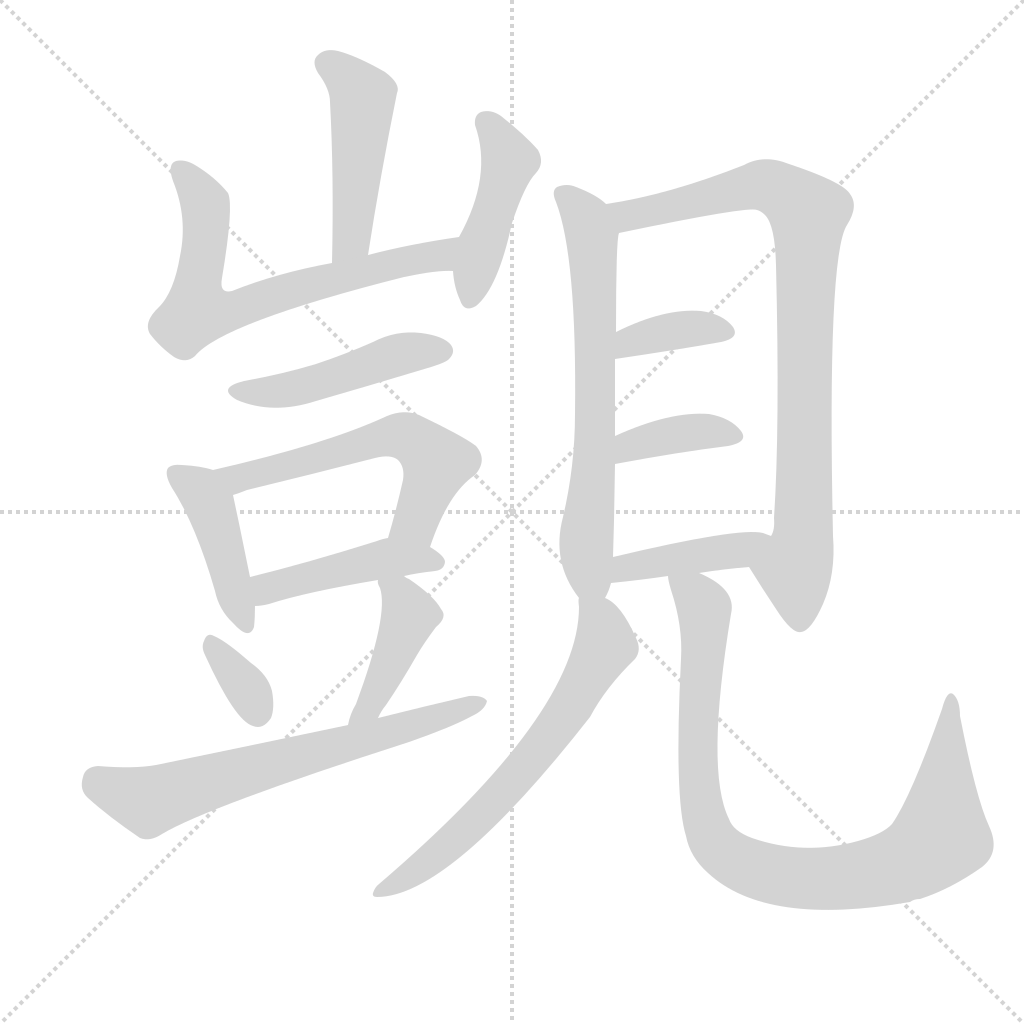
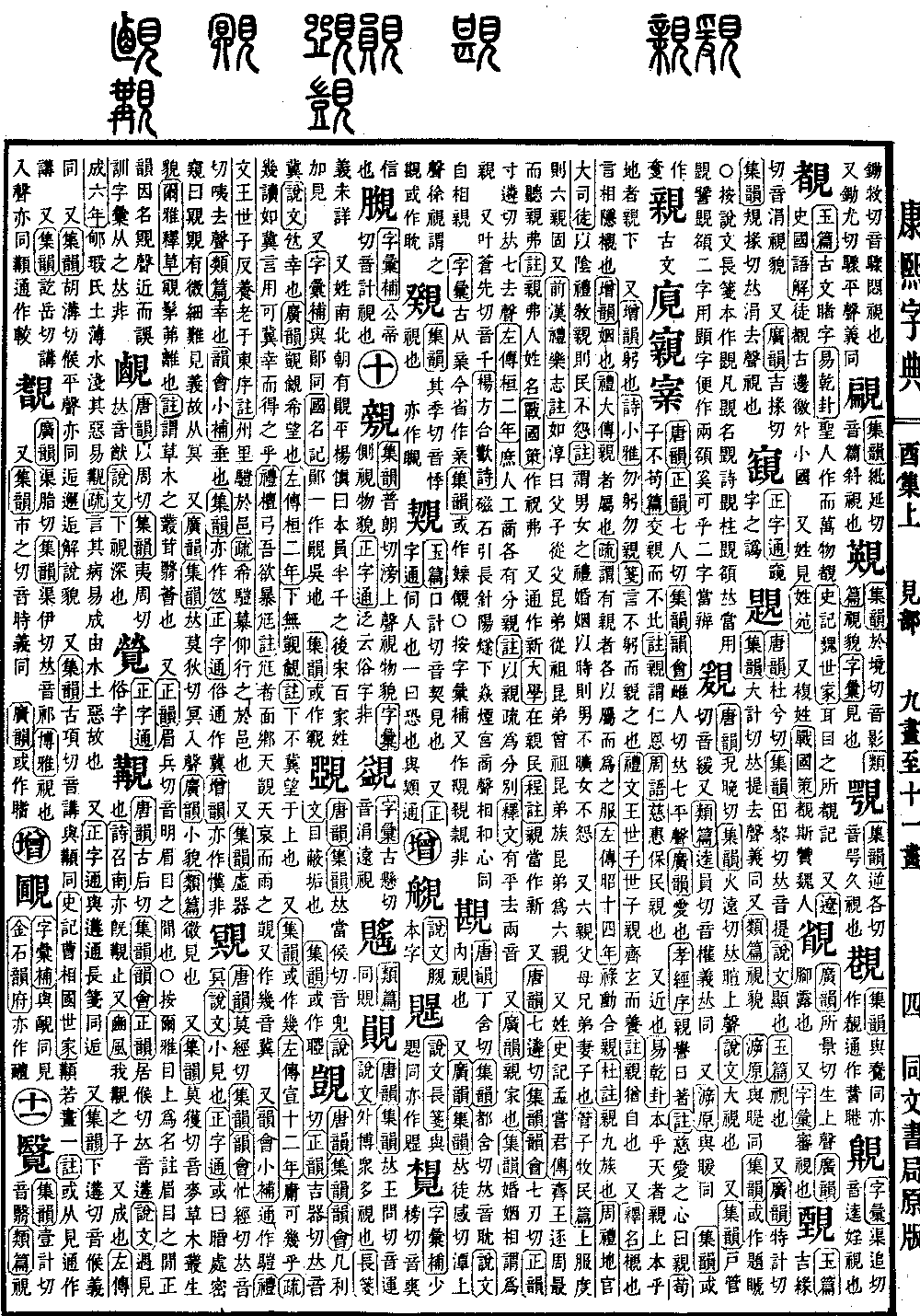
You Collection, Upper Volume
Radical: See (jiàn)
Kangxi Strokes: 17
Page 1136, Entry 28
Tang Rhymes (Tangyun), Collected Rhymes (Jiyun), and Dictionary of Rhymes (Yunhui) all state the pronunciation is ji, with the same sound as ji (fourth tone).
According to the Explaining Graphs and Analyzing Characters (Shuowen), it means to hope for something through luck or to have improper desires.
Broad Rhymes (Guangyun) states that the compound term ji-yu refers to hoping to obtain something one does not deserve.
Zuo Tradition (Zuozhuan), Year 2 of Duke Huan: The inferiors have no improper ambitions. Commentary: Subordinates do not harbor unrealistic expectations regarding their superiors.
Collected Rhymes (Jiyun) notes it is sometimes written in a variant form (ji).
Zuo Tradition (Zuozhuan), Year 12 of Duke Xuan: Can it be obtained through luck? Commentary: Here, the character is read as ji (fourth tone), meaning is it possible to obtain it by chance?
Book of Rites (Liji), Tan Gong, commentary on the section regarding exposing the crippled: Those who are crippled face the sky, hoping for heaven to show pity and bring rain. The term ji is also written as a variant form (ji), and is pronounced ji (fourth tone).
Supplement to the Dictionary of Rhymes (Yunhui Xiaobu) states it is interchangeable with another form.
Book of Rites (Liji), Wenwang Shizi, commentary on ancestral pension in the Eastern Hall: Implementation is extended from the districts to the towns. Commentary: To look up to and yearn for, implemented within the local towns.
Collected Rhymes (Jiyun) also provides a pronunciation of xu-qi (fourth tone), similar to the falling tone of the character yi.
Classified Anthology (Leipian) defines it as hoping for something through luck or having improper desires.
Supplement to the Dictionary of Rhymes (Yunhui Xiaobu) defines it as to covet or to plot.
Collected Rhymes (Jiyun) also notes it is written in a variant form.
Correct Characters (Zhengzitong) notes that the common vulgar form is written as ji (fourth tone).
Increased Rhymes (Zengyun) notes it is also written as ji (fourth tone), which is incorrect.